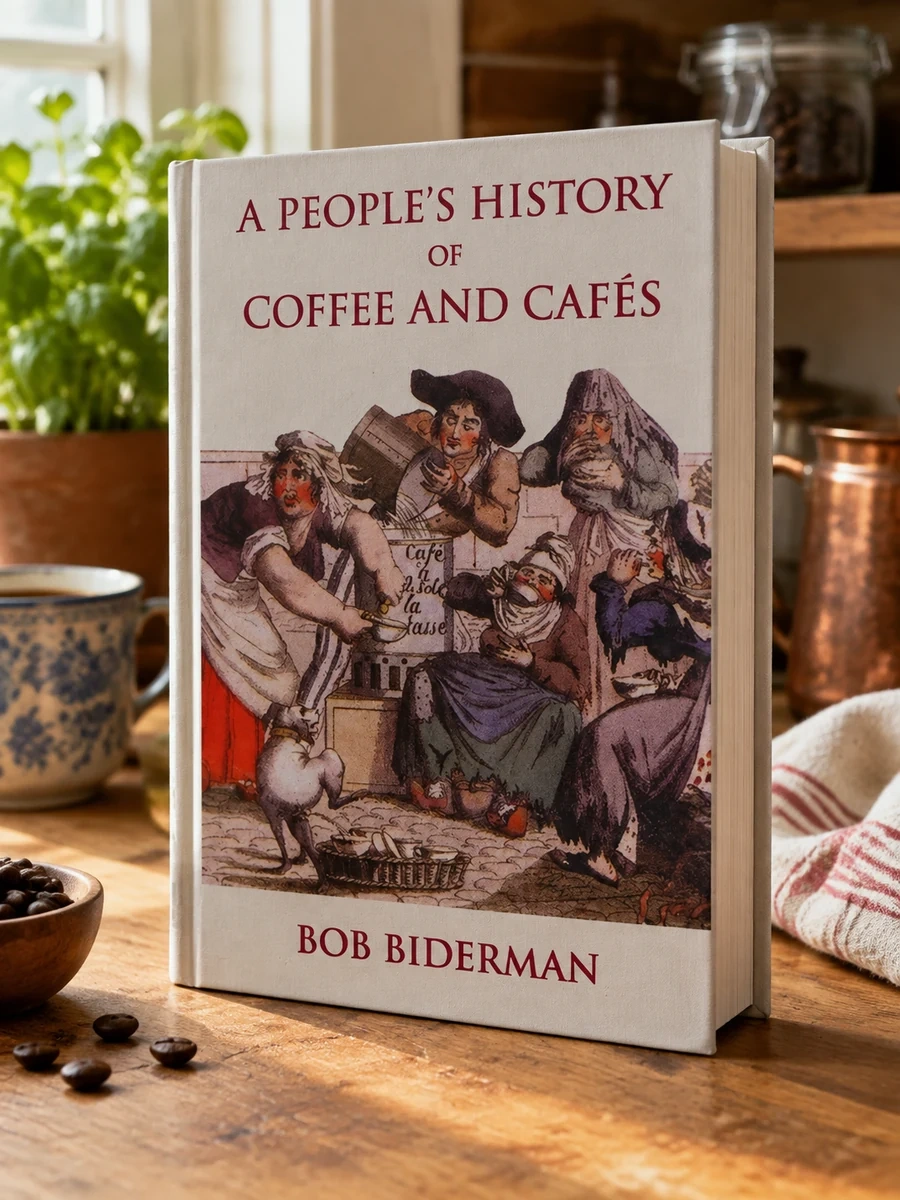
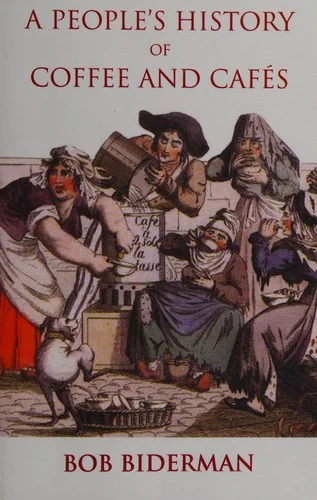
A People's History of Coffee and Cafes
✍️ Biderman, BobA historical account of coffee's rise as a global commodity and its impact on social history.
Biderman investigates the origins of coffee and its sudden appearance in Europe, challenging assumptions about its dissemination. He analyzes the role of coffeehouses as rare public spaces where social hierarchies dissolved. The author uses his experience as a lecturer and writer to frame the narrative, connecting past events to modern urban life. His research spans from the early 1960s to his work in major European cities decades later. This approach provides a unique perspective on how a beverage influenced political science and public policy regarding agriculture. The book avoids technical details, focusing instead on the human stories behind the commodity. It highlights the paradox of coffee bringing people together while also tearing them apart through economic disparity. Readers will find a coherent account of how a plant became central to modern awakening.
Published in 2013, this work sits at the intersection of social science and culinary history. It reflects on decades of research beginning in the 1960s, linking the American espresso revolution with European coffee cultures in Paris, Amsterdam, and London.


📝 Description: A People's History of Coffee and Cafes
💎 Expert review
⭐ Reader reviews
Reader rating
Biderman delivers a compelling narrative that connects the origins of coffee to modern political and social dynamics. The strength lies in its accessible storytelling, which avoids dense academic jargon while highlighting human stories behind the commodity. However, this book will not suit readers looking for brewing instructions or café recipes. It is purely an intellectual exploration of history and sociology. Those expecting practical kitchen guidance will find it lacking, but fans of social commentary will appreciate the coherent account of how a plant influenced global policy.
❓ Frequently asked questions
📖 Who should read this
History enthusiasts and social scientists interested in how beverages shape public policy and urban life. This book suits readers seeking narrative depth over technical instruction, ideal for those curious about the cultural mechanics behind modern coffee consumption and its historical roots.
📜 Historical context
You might also like
See more →











Have a question about this item?
Ask about the edition, condition, delivery or anything else — we reply by email or phone, usually within a day.
