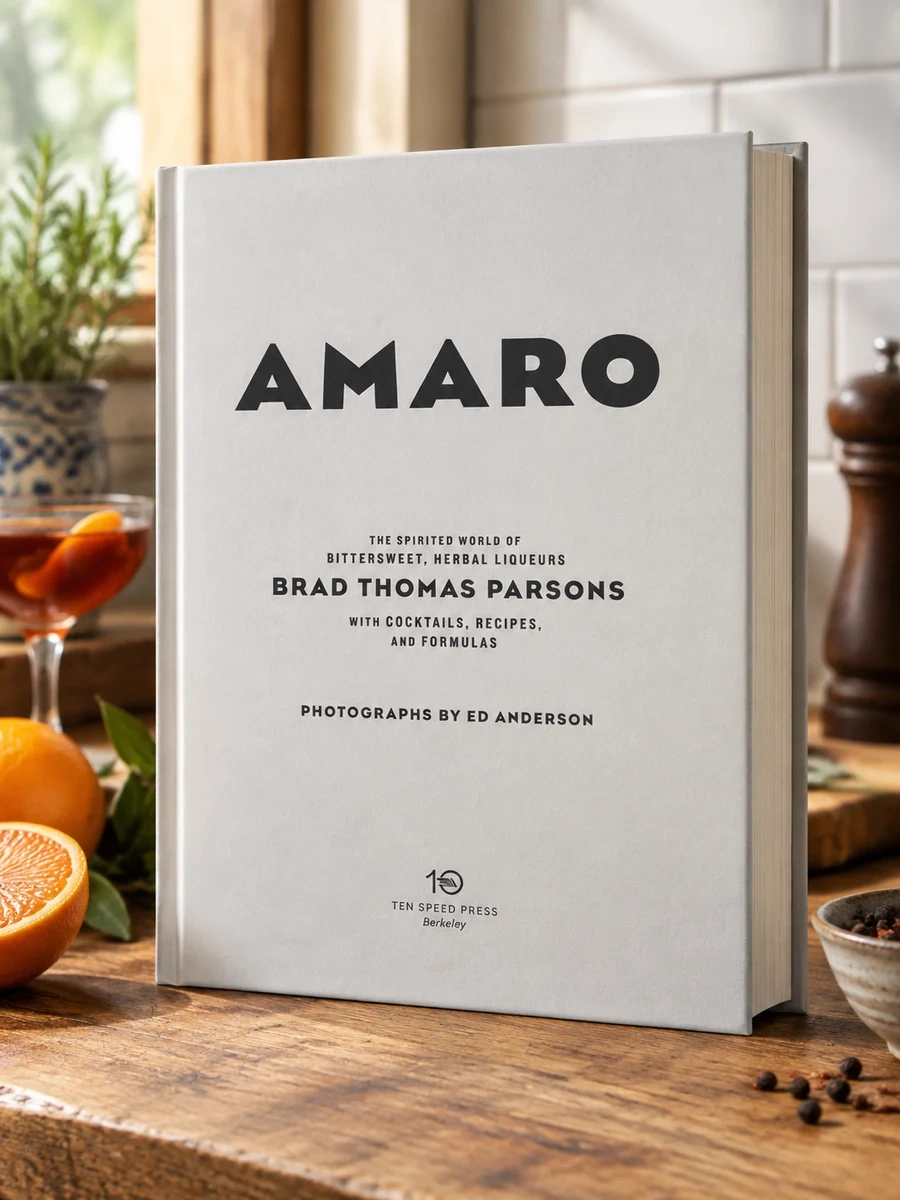
Amaro: The Spirited World of Bittersweet, Herbal Liqueurs, with Cocktails, Recipes, Andformulas
✍️ Parsons, Brad ThomasA guide to the history, culture, and recipes of herbal amaro liqueurs by Brad Thomas Parsons.
Parsons connects the centuries-old European tradition of making bittersweet liqueurs with their current popularity in American bars. The work examines how these herbaceous digestifs transitioned from dusty shelves to center stage on modern cocktail lists. It covers the spiritual home of amaro in Italy and the growing category of regional, American-made versions. The text offers practical applications through recipes for cocktails, homemade formulas, and sweet treats, bridging historical context with contemporary usage.
The book traces the European tradition of making bittersweet liqueurs called amari in Italian. It documents how these spirits moved from the past to center stage in the United States, becoming key ingredients in the country's best bars and restaurants.


📝 Description: Amaro: The Spirited World of Bittersweet, Herbal Liqueurs, with Cocktails, Recipes, Andformulas
💎 Expert review
📖 Why choose it
Why this book is worth reading
Home cocktail enthusiasts and industry professionals seeking to deepen their understanding of bittersweet liqueurs will find this guide invaluable. It bridges the gap between historical context and modern application, offering over one hundred recipes for cocktails, homemade formulas, and desserts. Readers interested in the cultural shift of amaro from dusty shelves to center stage on cocktail menus will appreciate the exploration of both Italian traditions and emerging American regional productions. The book provides practical tools for creating these spirits, making it essential for those wishing to master this specific niche of mixology rather than general sweet liqueurs.
⭐ Reader reviews
Reader rating
Parsons delivers a comprehensive examination of amaro, connecting centuries-old European traditions with their current popularity in US bars. While the historical context and cultural tour of Italian distilleries provide rich background, the book’s utility lies in its practical recipes and DIY formulas. It is strictly for those interested in herbal digestifs; readers seeking standard sweet liqueurs or non-alcoholic beverages will likely find the scope too narrow. The text successfully bridges history with contemporary usage, though its appeal is specialized. It serves as a robust reference for expanding knowledge of bittersweet spirits, but lacks the breadth required for general cocktail novices unfamiliar with this specific spirit category.
❓ Frequently asked questions
📖 Who should read this
Home bartenders and cocktail enthusiasts eager to master herbal liqueurs will find this essential. It suits readers interested in Italian culture and DIY mixology who want to craft complex drinks from scratch using historical formulas and modern techniques.


![Kitchen Simple: Essential Recipes for Everyday Cooking [A Cookbook]](/img/kitchen-simple-essential-recipes-for-everyday-cooking-a-cookbook-83188-scene.webp)
![Essential Ottolenghi [Special Edition, Two-Book Boxed Set]: Plenty More and Ottolenghi Simple](/img/essential-ottolenghi-special-edition-two-book-boxed-set-plenty-more-an-58337-scene.webp)
![College Cooking: Feed Yourself and Your Friends [A Cookbook]](/img/college-cooking-feed-yourself-and-your-friends-a-cookbook-88268-scene.webp)

![Mixt Salads: A Chef's Bold Creations [A Cookbook]](/img/mixt-salads-a-chef-s-bold-creations-a-cookbook-80576-scene.webp)
![In the Charcuterie: The Fatted Calf's Guide to Making Sausage, Salumi, Pates, Roasts, Confits, and Other Meaty Goods [A Cookbook]](/img/in-the-charcuterie-the-fatted-calf-s-guide-to-making-sausage-salumi-pa-43439-scene.webp)
![Tender: A Cook and His Vegetable Patch [A Cookbook]](/img/tender-a-cook-and-his-vegetable-patch-a-cookbook-40377-scene.webp)
![The River Cottage Meat Book: [A Cookbook]](/img/the-river-cottage-meat-book-a-cookbook-88435-scene.webp)
![Mezcal and Tequila Cocktails: Mixed Drinks for the Golden Age of Agave [A Cocktail Recipe Book]](/img/mezcal-and-tequila-cocktails-mixed-drinks-for-the-golden-age-of-agave-57743-scene.webp)
![Death & Co Welcome Home: [A Cocktail Recipe Book]](/img/death-co-welcome-home-a-cocktail-recipe-book-58412-scene.webp)
