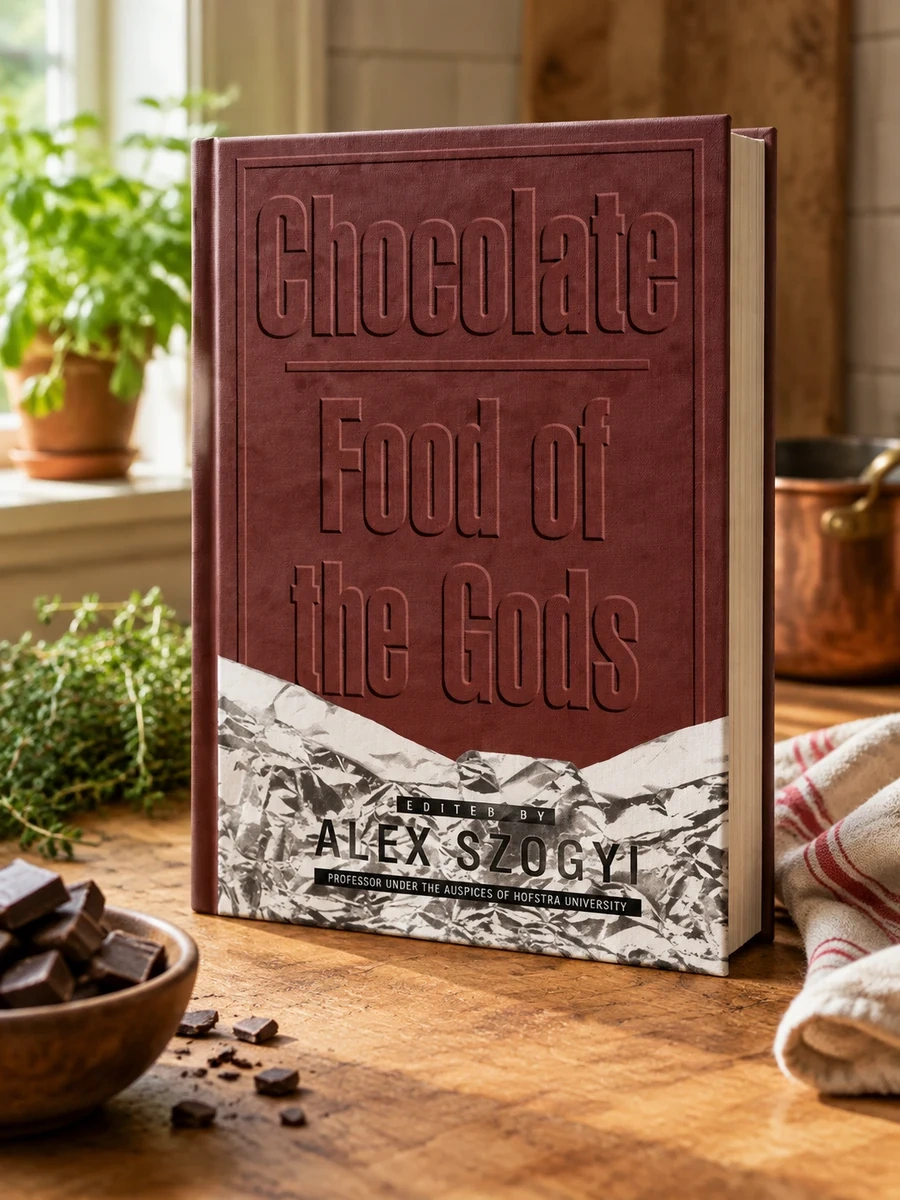
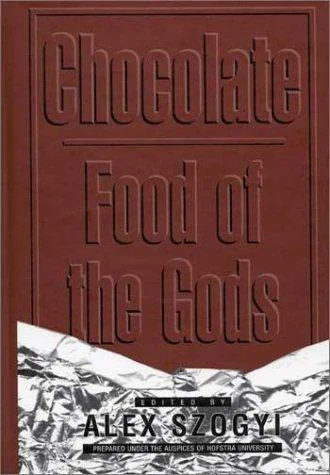
Chocolate: Food of the Gods
✍️ Szogyi, AlexA scholarly look at chocolate's history, culture, and business from Mexico to Europe.
This volume treats chocolate as a subject for social science rather than just a food item. It covers the ingredient’s path through European nations and its presence in various art forms. The text also discusses chocolate’s influence on psychology and childrearing. Practical recipes are included alongside this cultural analysis. The work is organized to serve scholars in multiple disciplines interested in food history.
Published by Praeger in 1997, this book sits at the intersection of cooking and social science. It examines chocolate’s journey from Mexico through Spain, France, Austria, Switzerland, and Belgium, reflecting its status as a universal commodity across different eras.


📝 Description: Chocolate: Food of the Gods
💎 Expert review
📖 Why choose it
Why this book is worth reading
Scholars and researchers studying food history, popular culture, and social science will gain profound insights from this volume. It treats chocolate as a complex subject of academic scrutiny across multiple disciplines rather than merely a culinary ingredient. Readers interested in the broader business landscape of food production, as well as chocolate's historical spread, psychological influences, and presence in literature, art, music, and folklore, will find the text exceptionally rewarding. Additionally, the inclusion of practical recipes for novel uses of chocolate successfully balances the rigorous theoretical examination and historical analysis, providing a multidimensional perspective on a universal commodity consumed across all ages and social classes.
⭐ Reader reviews
Reader rating
This scholarly hardcover volume offers a fascinating look at chocolate through the lens of social science, tracing its path from Mexico to Europe. It brilliantly connects historical analysis, folklore, and economic business landscapes with practical recipes for novel chocolate applications. However, prospective buyers should note that this text is built for academic inquiry rather than casual baking. It is explicitly suited for scholars examining food history and cultural traditions, and it may not appeal to readers seeking only standard dessert recipes without historical context. Those willing to engage with its deep interdisciplinary focus will uncover a rich exploration of cacao's societal impact, while casual sweet-tooths might find the heavy academic and psychological analysis unsuited to their kitchen needs.
❓ Frequently asked questions
📖 Who should read this
Scholars and students of food history seeking a rigorous academic resource. Readers interested in the social science aspects of chocolate will find this hardcover edition valuable for understanding its cultural impact across Europe and its role in psychology and childrearing practices.



![The River Cottage Meat Book: [A Cookbook]](/img/the-river-cottage-meat-book-a-cookbook-88435-scene.webp)