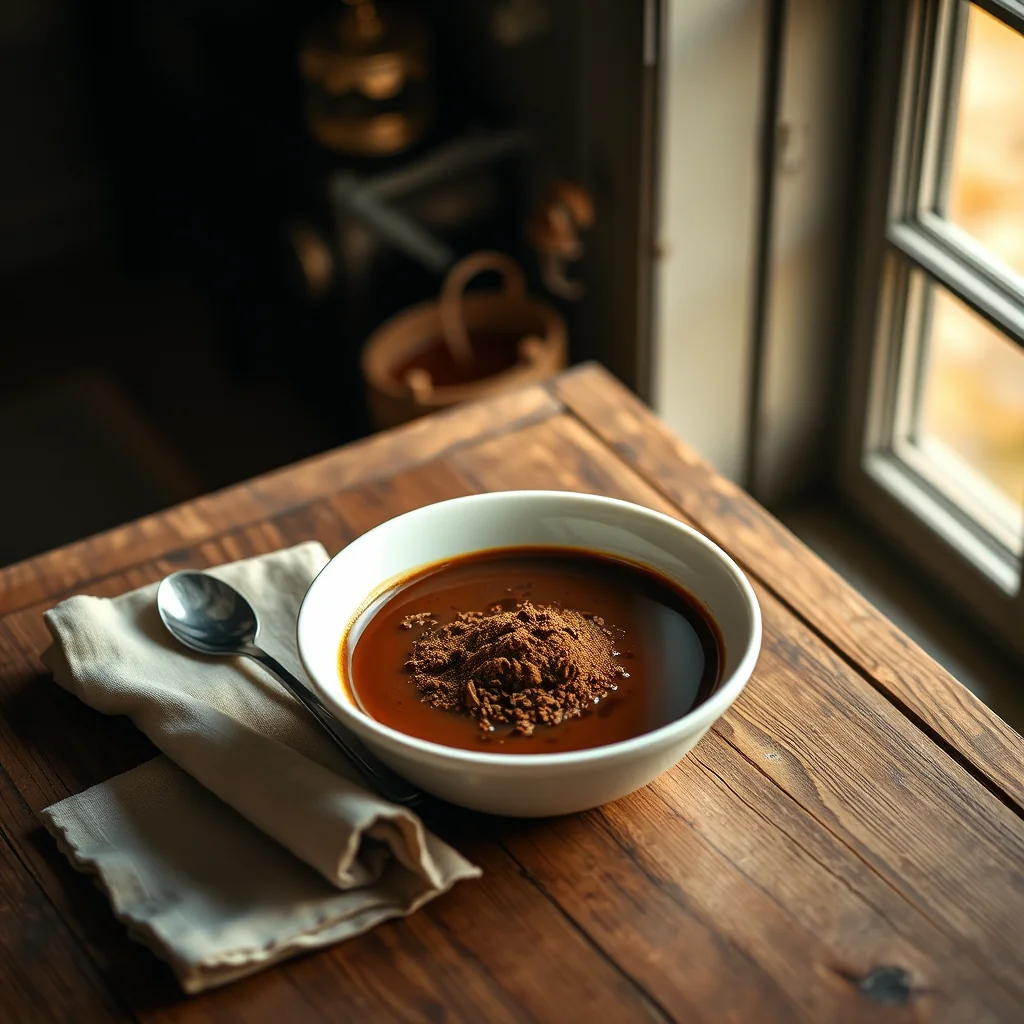


📝 Description
 76
76

🥘 Ingredients
Allow 4 oz., or 1 tablespoonful, of ground coffee to each person; to every oz. of coffee allow 1/3 pint of water.
👨🍳 Method
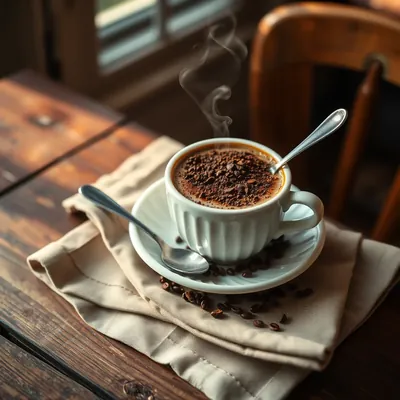
To make coffee good, _it should never be boiled_, but the boiling water merely poured on it, the same as for tea. The coffee should always be purchased in the berry,--if possible, freshly roasted; and it should never be ground long before it is wanted for use. There are very many new kinds of coffee-pots, but the method of making the coffee is nearly always the same; namely, pouring the boiling water on the powder, and allowing it to filter through. Our illustration shows one of Loysel's Hydrostatic Urns, which are admirably adapted for making good and clear coffee, which should be made in the following, manner:--Warm the urn with boiling water, remove the lid and movable filter, and place the ground coffee at the bottom of the urn. Put the movable filter over this, and screw the lid, inverted, tightly on the end of the centre pipe. Pour into the inverted lid the above proportion of boiling water, and when all the water so poured has disappeared from the funnel, and made its way down the centre pipe and up again through the ground coffee by _hydrostatic pressure_, unscrew screw the lid and cover the urn. Pour back direct into the urn, _not through the funnel_, one, two, or three cups, according to the size of the percolater, in order to make the infusion of uniform strength; the contents will then be ready for use, and should run from the tap strong, hot, and clear. The coffee made in these urns generally turns out very good, and there is but one objection to them,--the coffee runs rather slowly from the tap. This is of no consequence where there is a small party, but tedious where there are many persons to provide for. A remedy for this objection may be suggested; namely, to make the coffee very strong, so that not more than 1/3 of a cup would be required, as the rest would be filled up with milk. Making coffee in filters or percolaters does away with the necessity of using isinglass, white of egg, and various other preparations to clear it. Coffee should always be served very hot, and, if possible, in the same vessel in which it is made, as pouring it from one pot to another cools, and consequently spoils it. Many persons may think that the proportion of water we have given for each oz. of coffee is rather small; it is so, and the coffee produced from it will be very strong; 1/3 of a cup will be found quite sufficient, which should be filled with nice hot milk, or milk and cream mixed. This is the 'cafe au lait' for which our neighbours over the Channel are so justly celebrated. Should the ordinary method of making coffee be preferred, use double the quantity of water, and, in pouring it into the cups, put in more coffee and less milk. [Illustration: LOYSEL'S HYDROSTATIC URN.]
📜 From Mrs Beeton's Book of Household Management (1861). Public domain.
⭐ Reader Reviews
Honest opinions from readers who have explored this book.
I tried my hand at Mrs. Beeton's vintage coffee recipe this week, and I must say, it was an adventure. I found the hydrostatic pressure method intriguing, and I was delighted by how clear and strong the resulting coffee was. The biggest surprise was how little water was used compared to modern recipes — just a third of a pint per tablespoon of coffee. It made a surprisingly robust brew, perfect for a strong morning kickstart. This recipe is a treat for coffee connoisseurs or anyone seeking a unique, old-world experience. It's not your typical weeknight brew, but if you have the time and curiosity, it's worth a try. Just be prepared to spend a bit more time than usual, as the coffee does run slowly from the urn. I found it to be a lovely, indulgent way to start the day, and I can see why our ancestors enjoyed their cafe au lait with such fervor. Next time, I'll be sure to have some fresh croissants on hand.