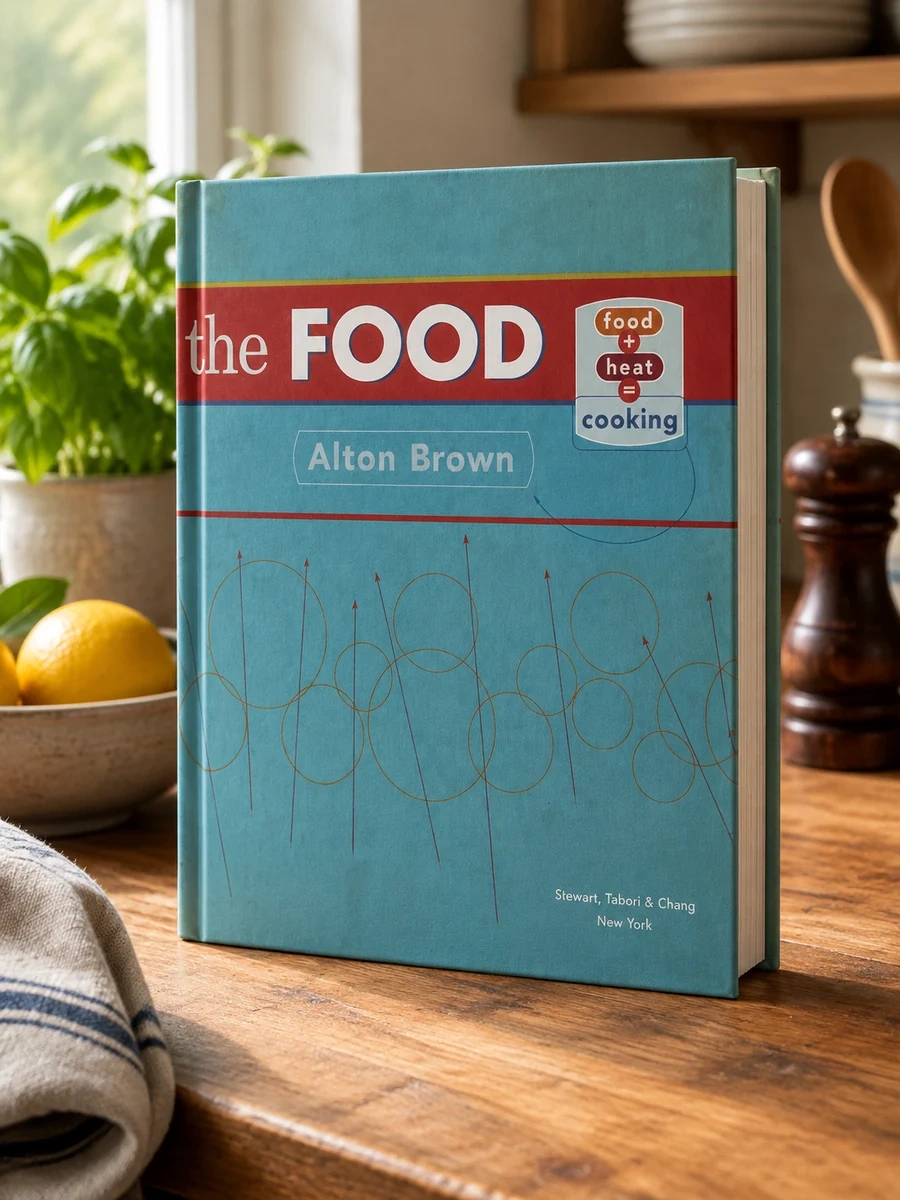
Alton Brown is an unusual cookbook author because his appeal has never been limited to recipes. Through Good Eats, he built a reputation for explaining what happens when ingredients meet heat, why certain kitchen tools work better than others, and how understanding a cooking process can make someone a more confident cook. His books carry that same interest in the reasoning behind the food, making them appealing to people who enjoy learning as much as eating.
That variety can make choosing among Alton Brown cookbooks surprisingly difficult. Some volumes are closely associated with Good Eats, while others concentrate on cooking fundamentals, baking, or personal reflections about food. There are also different Good Eats collections covering different periods of the show's history, so the title alone does not always tell you which one belongs on your shelf.
Our catalog includes eight books by Brown. Below, we compare them by subject, approach, and likely audience, with particular attention to the differences between the Good Eats volumes. The goal is to help you choose a book that suits the way you actually cook, rather than simply collecting titles because you recognize the author.
Start with Good Eats: The Books Behind Alton Brown's Cooking Philosophy
If you know Brown primarily from television, the Good Eats collections are the natural starting point. The appeal of this approach is the connection between recipes and explanations: cooking becomes a process that can be understood, tested, and improved. These books make the most sense for readers who appreciate a little context alongside practical kitchen instruction.
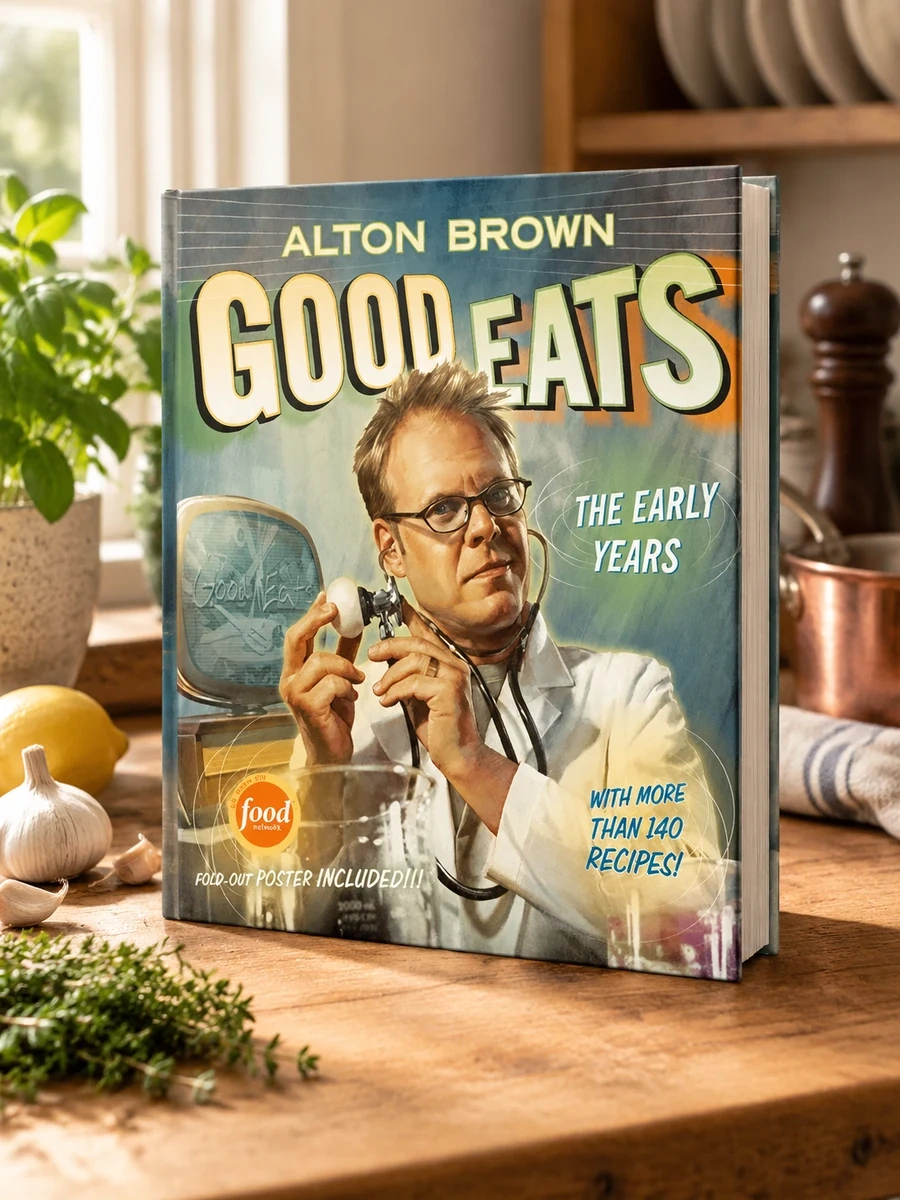
1. Good Eats: The Early Years Volume 1 — Alton Brown
This is the logical starting point for anyone interested in the development of Brown's Good Eats approach. Its place in the early-years collection makes it particularly appealing to readers who want to explore the foundations of the show's food-centered teaching style. Rather than treating a recipe as an isolated set of directions, Brown's broader approach encourages readers to consider ingredients, equipment, and technique together. Choose this volume if you want an introduction to the earlier Good Eats material and enjoy learning the reasoning behind familiar kitchen tasks.
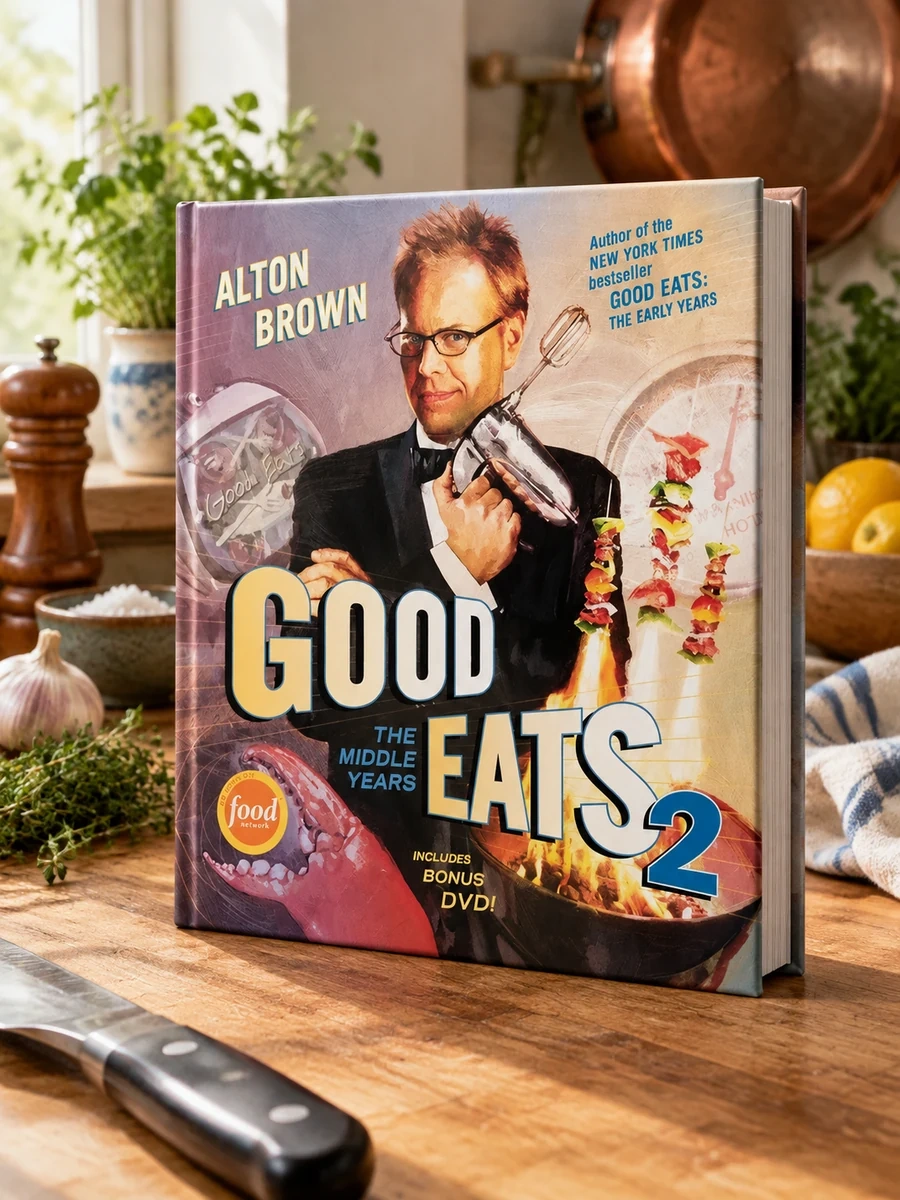
2. Good Eats 2: The Middle Years Volume 2 — Alton Brown
The middle-years collection offers another stage in the Good Eats story. It is a sensible choice for readers who already enjoy Brown's style and want to continue through the material beyond the earliest period. Its place in the series also makes it useful for collectors building a more complete shelf of Good Eats books. If you enjoy the combination of food instruction and an entertaining presentation, this volume belongs on your shortlist.
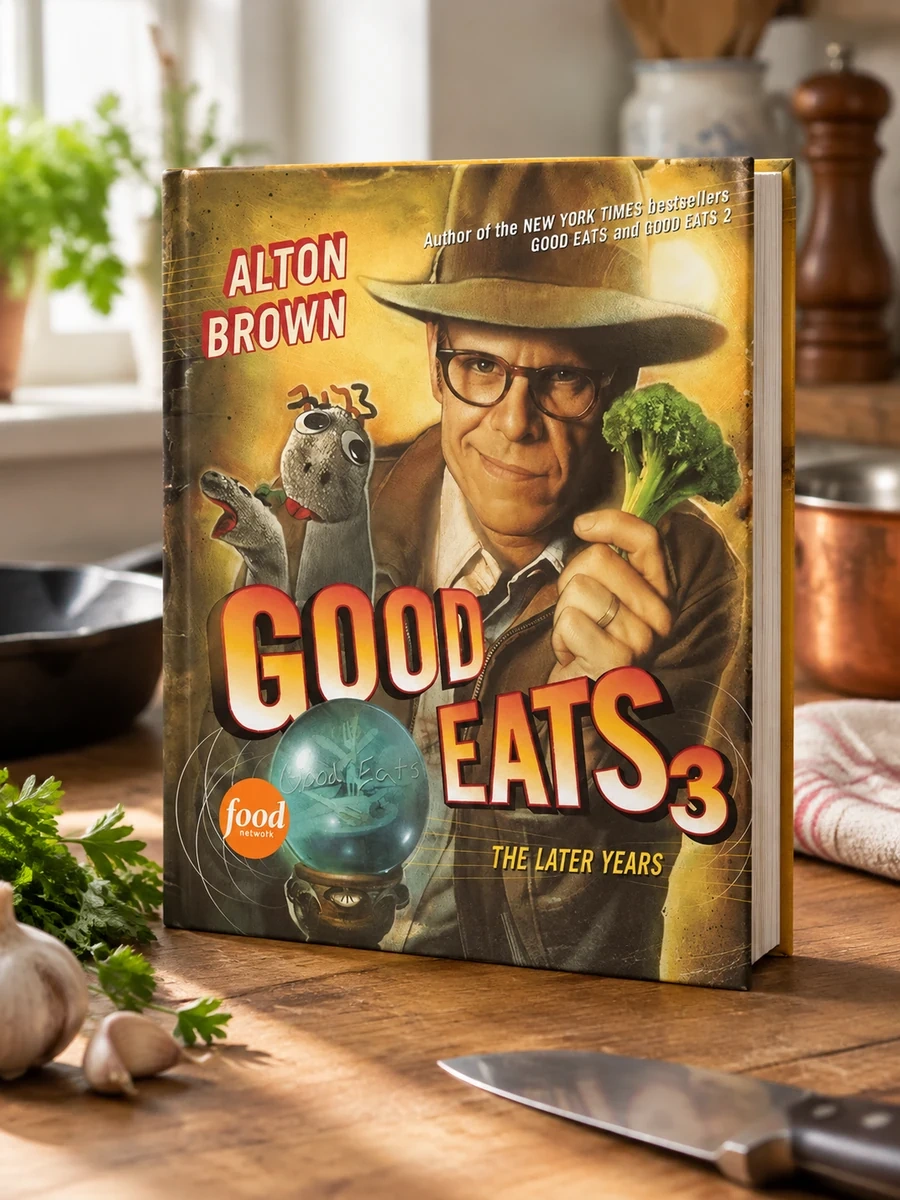
3. Good Eats 3: The Later Years — Alton Brown
For readers more interested in the later Good Eats material, this is the corresponding collection to consider. Its appeal lies in following Brown's established cooking-and-explanation format into a later period, rather than beginning with the earliest material. The book is a strong candidate for experienced Good Eats viewers, collectors, and home cooks who want another substantial collection from the series. It also makes sense if you already own an earlier volume and want to extend your collection chronologically.
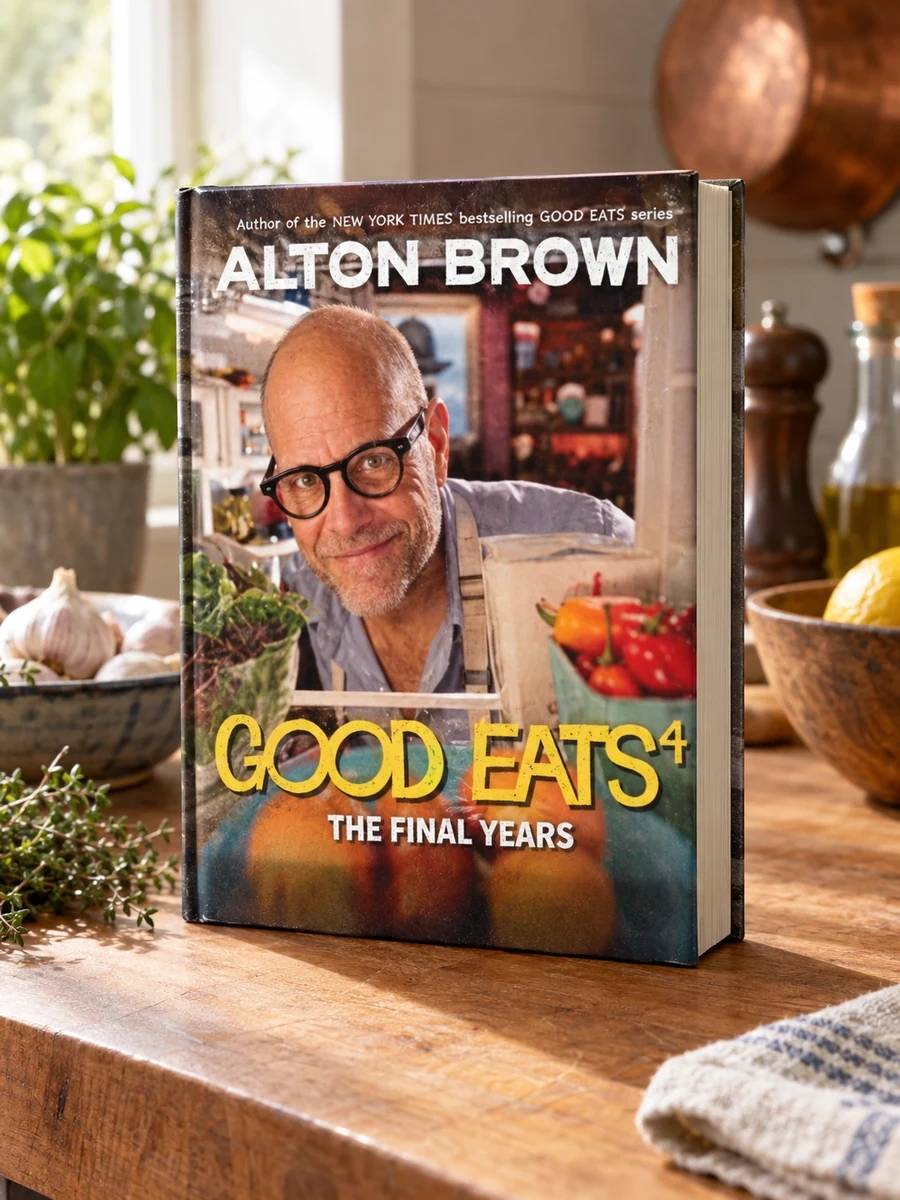
4. Good Eats: The Final Years — Alton Brown
The final-years collection is the natural choice for readers particularly interested in the closing period of Good Eats. It complements the earlier and middle-years books, giving fans another way to follow the development of Brown's television work through its different stages. Its placement in our Food Writing & History selection also makes it an appealing choice for people who approach cookbooks as records of culinary media and food culture, not just practical recipe references. If you are collecting the series, this is an important period to include.
For Cooks Who Want Better Techniques and More Control
Not everyone looking for an Alton Brown cookbook wants a chronological collection of Good Eats material. Some readers want a practical reference they can turn to when a cooking method is unfamiliar or a result is inconsistent. For that purpose, the more technique-focused books are especially relevant.
5. I'm Just Here for the Food: Version 2.0 — Alton Brown
This is one of the most straightforward choices for readers interested in the mechanics of cooking. The title signals Brown's characteristic emphasis on food itself and the processes that transform ingredients into finished dishes. It suits home cooks who want to think beyond following instructions and become more deliberate about how they prepare food. If you enjoy understanding why a particular cooking method produces a particular result, this is a particularly relevant book to investigate.
It is also a good option for someone who appreciates Brown's explanatory style but does not necessarily want to begin with a large collection of television-related material. Consider it when your main interest is improving your practical understanding of cooking rather than following the history of Good Eats.
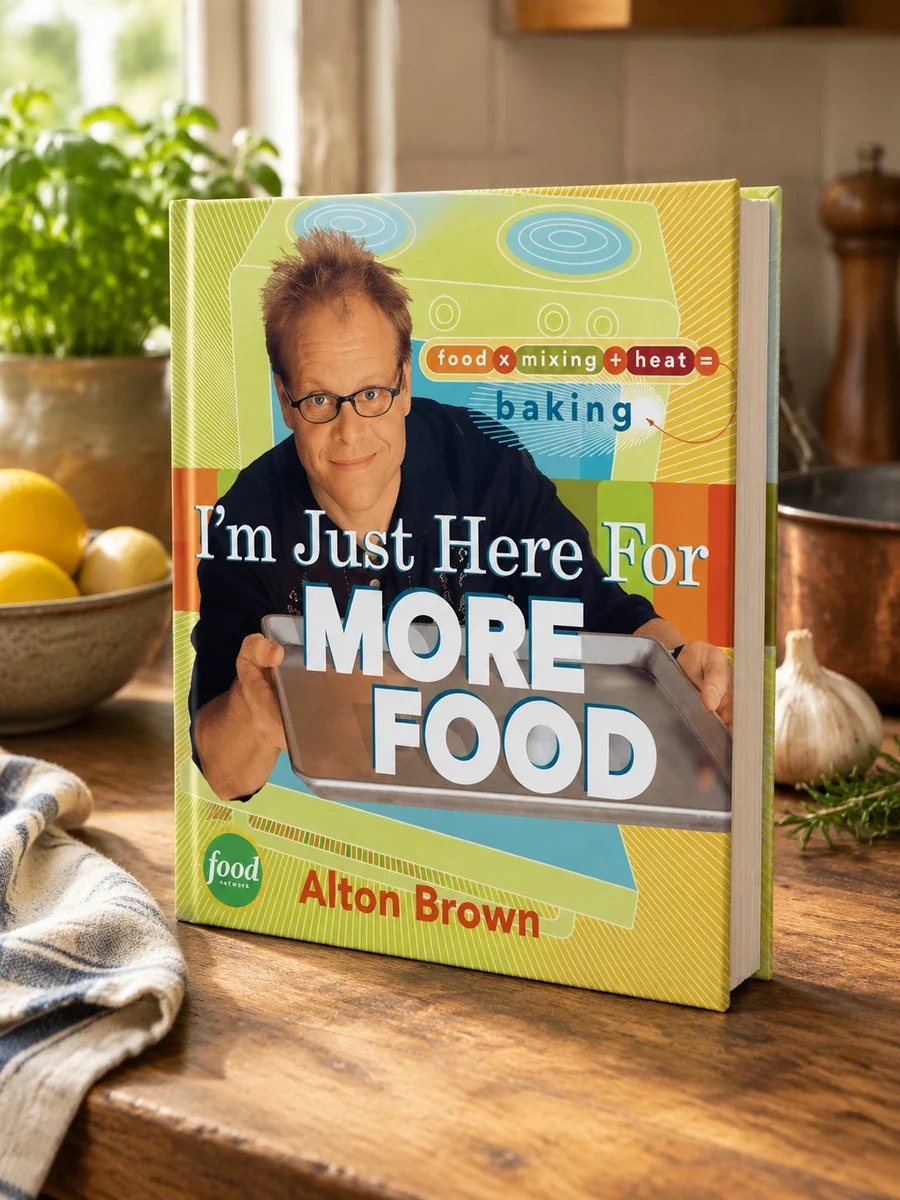
6. I'm Just Here for More Food: Food X Mixing + Heat = Baking — Alton Brown
Baking rewards precision, and this book addresses that side of the kitchen through the relationship between food, mixing, and heat. The title itself points toward a method-oriented treatment of baking rather than a collection built solely around finished desserts. That makes it especially interesting for bakers who want to understand the processes involved in producing consistent results.
It is a natural companion to I'm Just Here for the Food, but the two serve different interests. Choose this one if baking is your priority and you want to pay closer attention to the mechanics behind baked goods. It is particularly appropriate for curious bakers who like knowing what a technique is doing, not simply which step comes next.
For Readers Interested in Brown's Personality and Food Writing
Cookbooks can do more than teach dinner preparation. Some capture an author's perspective on food, the culture surrounding it, and the experiences that shape an approach to cooking. Brown's writing-oriented books offer an alternative to the more instructional titles, particularly for readers who enjoy his personality and commentary.
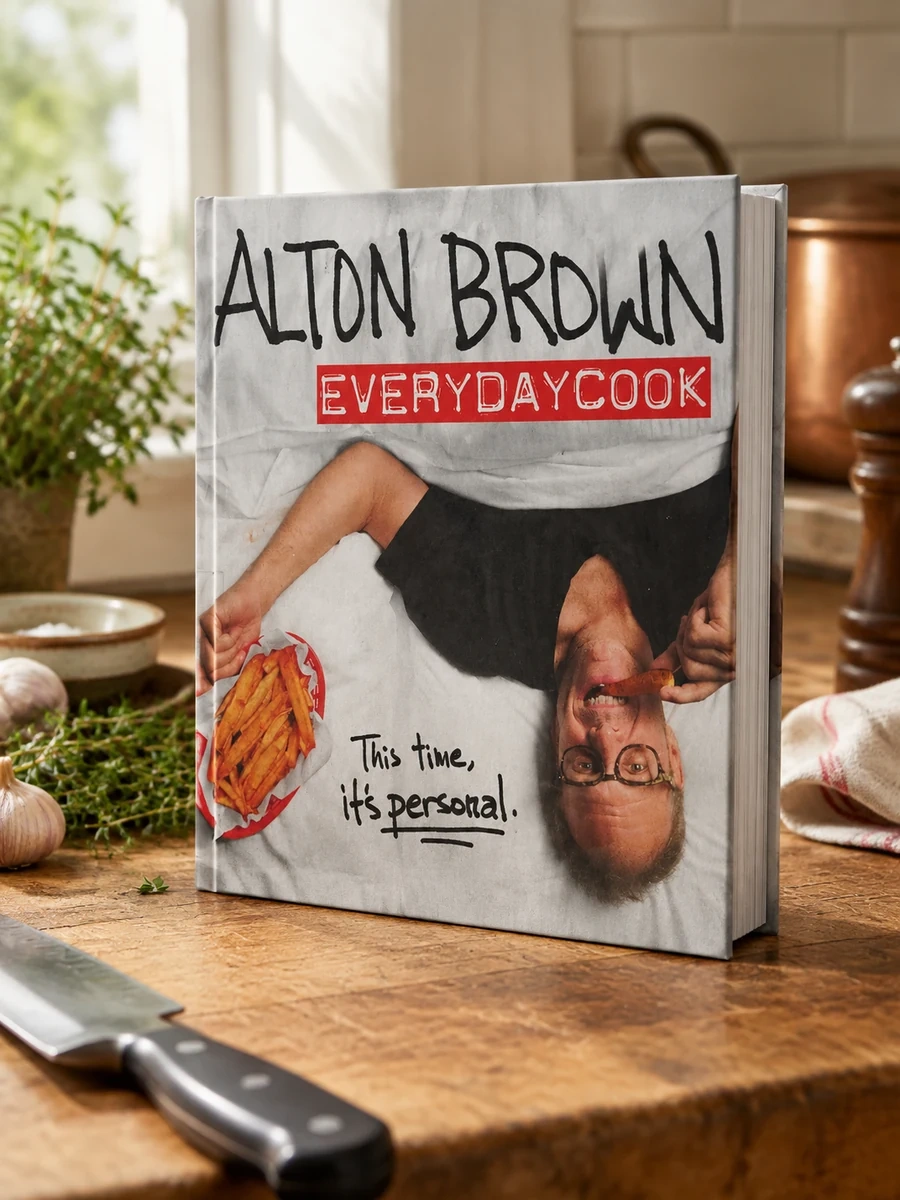
7. Alton Brown: Everydaycook: A Cookbook — Alton Brown
Everydaycook is the title to consider when you want a cookbook associated with Brown's everyday cooking rather than a collection organized around a particular period of Good Eats. It offers an alternative entry point for readers who recognize his television personality but want a standalone cookbook on their shelf. Its classification in our Food Writing & History category also makes it a natural consideration for readers who appreciate the personality and perspective that an author brings to cooking.
This is a useful choice if you would rather explore Brown outside the chronological Good Eats collections. It is also worth considering when choosing a gift for someone who already knows his work and would appreciate another expression of his approach to food.
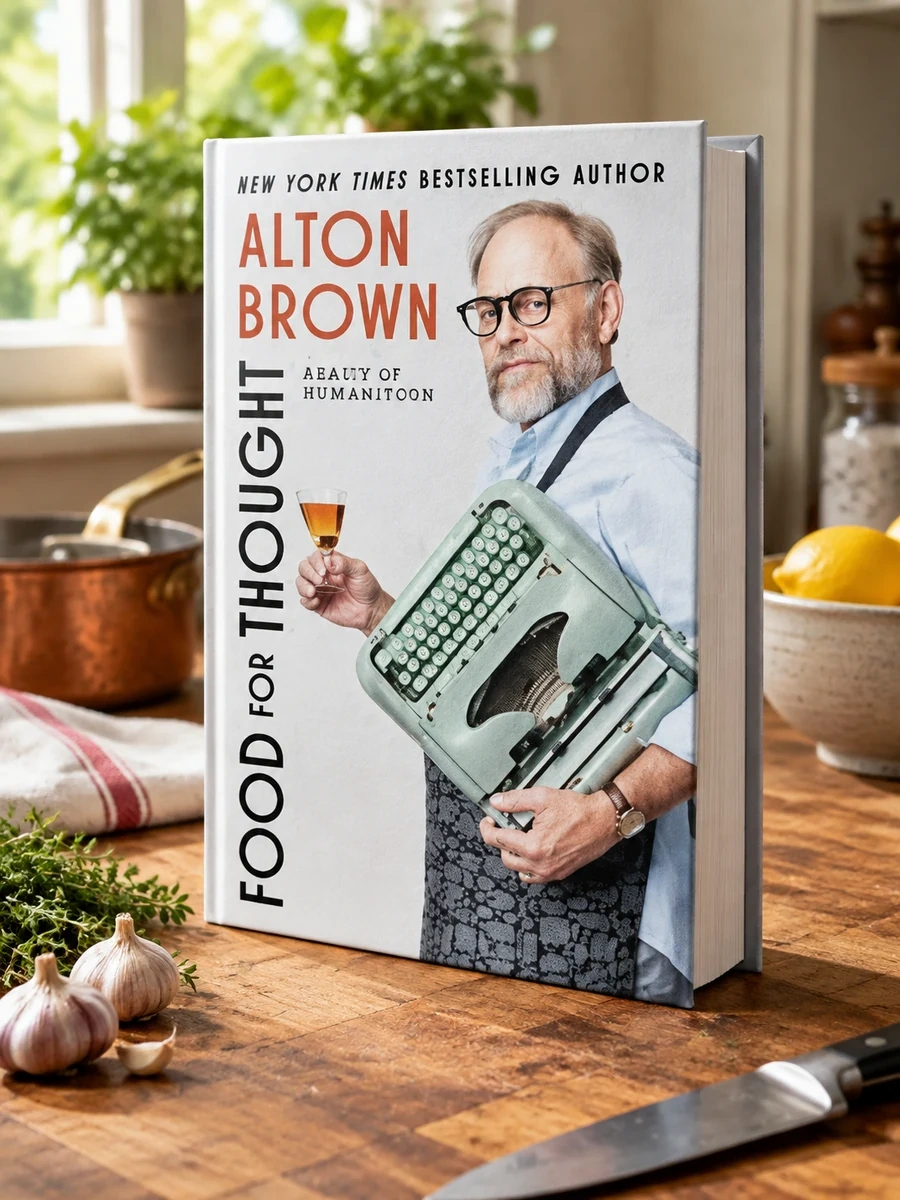
8. Food for Thought: Essays and Ruminations — Alton Brown
Not every food-related book needs to be a working kitchen manual. Food for Thought: Essays and Ruminations is the strongest choice in this selection for readers whose interest extends to Brown's thoughts and observations about food. Its essay-oriented format distinguishes it from the more technique-driven titles, making it suitable for reading away from the kitchen as well as browsing alongside other cookbooks.
Choose this book if what you enjoy most about Brown is his voice, perspective, and willingness to think about food beyond the plate. It is also a good addition for someone who already owns several of his instructional books and wants something different from another collection of cooking directions.
How to Choose the Right Alton Brown Cookbook
The best choice depends on what you want a book to do for you. Although all eight titles share an author, they are not interchangeable. A reader building a reference shelf has different needs from someone who wants to improve baking results or revisit the television series that introduced Brown's approach.
- For the Good Eats experience: Begin with Good Eats: The Early Years Volume 1 if you want to start chronologically. The middle-years, later-years, and final-years collections offer ways to continue through different periods.
- For cooking fundamentals: Choose I'm Just Here for the Food: Version 2.0 if you are most interested in the mechanics of preparing food and understanding cooking methods.
- For baking: I'm Just Here for More Food: Food X Mixing + Heat = Baking is the most directly relevant title in this collection. It is the clear starting point when mixing and heat are your primary interests.
- For a standalone cookbook: Consider Alton Brown: Everydaycook: A Cookbook if you want to explore Brown beyond the Good Eats collections.
- For food-related reading: Choose Food for Thought: Essays and Ruminations if you are more interested in commentary and essays than step-by-step kitchen instruction.
There is also a sensible way to approach the Good Eats books if you are not ready to collect all four. Start with the period that interests you most, or choose the early-years volume if you prefer to follow the material in chronological order. You do not have to treat the collections as a single purchase or assume that owning one makes the others redundant.
Price can help narrow the decision, too. The Brown titles in this selection generally sit in a relatively accessible cookbook price range, with the essay collection and some of the larger instructional collections occupying different positions. Check current listings rather than relying on an old price reference, especially when comparing editions.
For a first Alton Brown cookbook, our recommendation is to match the title to your strongest interest: cooking fundamentals, baking, television history, or food writing. If you want a practical place to begin, I'm Just Here for the Food is the clearest technique-oriented choice. If Good Eats is what brought you to Brown in the first place, start with the early-years collection. And if you already know his cooking books, Food for Thought offers a welcome change of pace. The best Alton Brown cookbook is ultimately the one you will return to, whether that means testing a method, improving a bake, or simply enjoying the way he thinks about food.