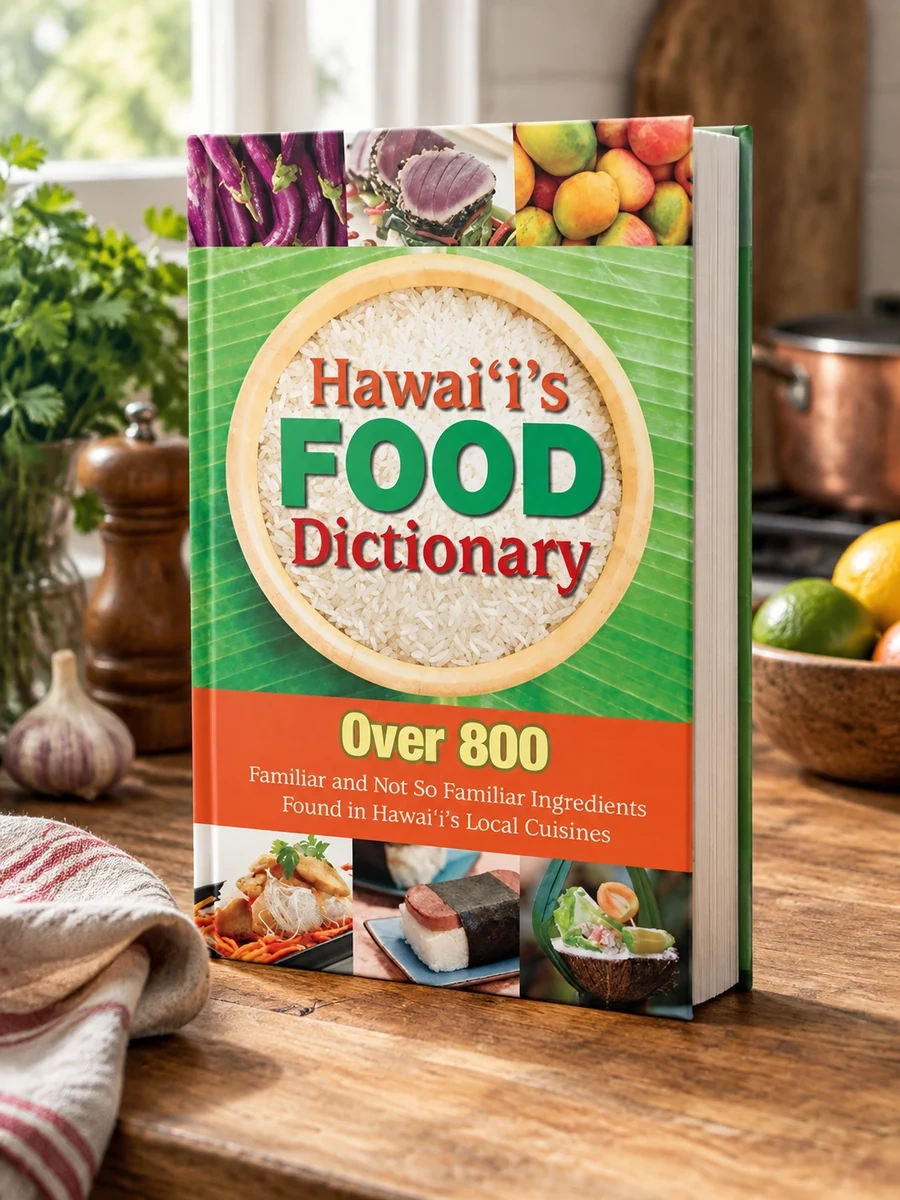
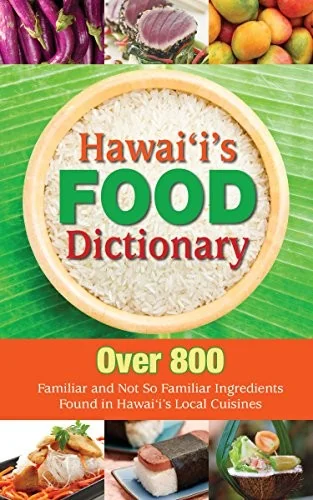
Hawaii's Food Dictionary
✍️ Wilson, AudreyA practical guide decoding Hawaiian culinary terms and pidgin for shoppers and diners.
Wilson’s text functions as a lexical aid for those encountering unfamiliar food words in Hawaii. It addresses the gap between standard English and local pidgin usage in commercial settings. The book helps users identify ingredients they might otherwise overlook or misunderstand. It is designed for people who need quick answers to specific vocabulary questions rather than broad historical context.
This book sits within the realm of regional American cooking references, specifically focusing on the unique linguistic landscape of Hawaii. It addresses the intersection of diverse ethnic heritages and local pidgin in food culture.


📝 Description: Hawaii's Food Dictionary
💎 Expert review
📖 Why choose it
Why this book is worth reading
This book is essential for travelers, new residents, and culinary enthusiasts who find themselves bewildered by Hawaiian supermarket aisles or restaurant menus. It resolves the confusion caused by local pidgin and regional terms that differ significantly from standard English usage. Even long-term residents may struggle to recall specific ingredient definitions, making this a reliable quick-reference tool. It does not offer broad historical context but rather functions as a lexical aid for immediate clarity. Shoppers and diners gain confidence in identifying ingredients they might otherwise overlook or misunderstand. By decoding the specific vocabulary of Hawaiian food culture, it transforms potential intimidation into informed purchasing and ordering decisions.
⭐ Reader reviews
Reader rating
While useful for its intended audience, this volume is not suitable for those seeking deep historical analysis or complex recipe development. It is a sparse reference work rather than a narrative culinary journey. Readers expecting comprehensive cooking instruction will be disappointed by its dictionary format. However, for anyone facing the linguistic barrier of Hawaiian commerce, it provides necessary clarity. The tone is practical and direct, acknowledging that familiarity with all local ingredients is impossible. It serves as a functional bridge between standard English and local pidgin usage in commercial settings.
❓ Frequently asked questions
📖 Who should read this
Travelers visiting Hawaii who want to order food confidently without confusion. Shoppers seeking clarity on local pidgin terms in markets or restaurants. Anyone needing a quick reference for specific ingredient names rather than deep culinary history or complex cooking techniques.