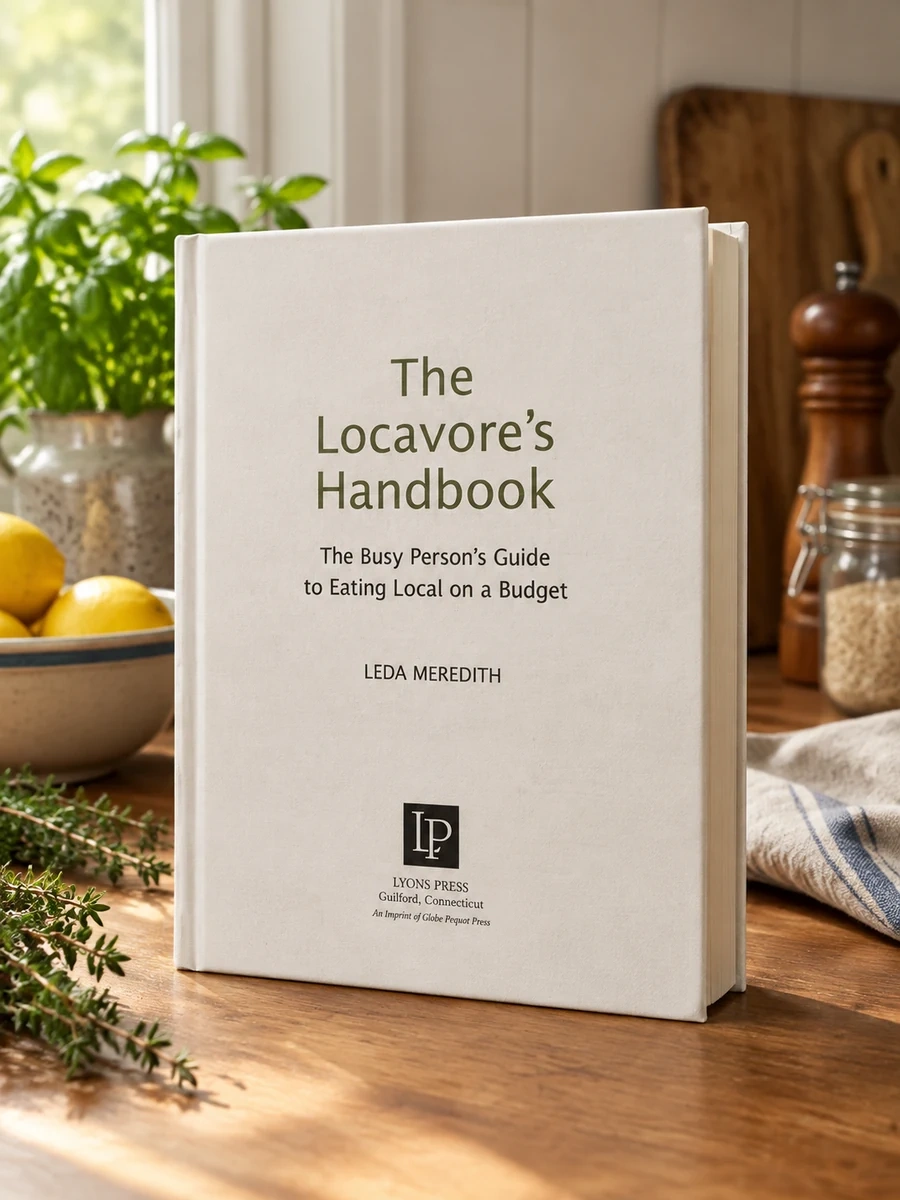
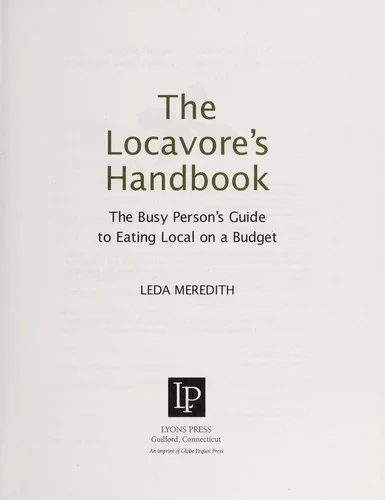
Locavore's Handbook: The Busy Person's Guide to Eating Local on a Budget
✍️ Meredith, LedaA practical guide for busy people to eat local on a budget.
This work bridges the gap between ethical food choices and financial reality. Meredith focuses on the logistical challenges of sourcing seasonal ingredients without breaking the bank. She offers concrete methods for preserving harvests and shopping efficiently at local markets. The content is tailored for those with limited kitchen space or storage capacity. It avoids theoretical discussions in favor of immediate, applicable steps for integrating regional produce into standard meals. The approach remains grounded in the author's own practices rather than abstract ideals.
The book emerged during a period when eating green and local became a widespread desire among consumers. It addresses the specific cultural pressure to support ethical food systems while managing modern constraints like tight schedules and limited urban living spaces.


📝 Description: Locavore's Handbook: The Busy Person's Guide to Eating Local on a Budget
💎 Expert review
📖 Why choose it
Why this book is worth reading
This book serves busy individuals who wish to eat locally but feel constrained by time, money, or limited kitchen storage. Meredith offers concrete strategies for sourcing seasonal ingredients without overspending, making sustainable eating accessible to those with tight schedules. It is ideal for urban dwellers with small refrigerators who want to support local merchants and reduce environmental impact. The guide provides actionable advice on preserving harvests and efficient shopping, bridging the gap between ethical food choices and financial reality through grounded, personal practices rather than theoretical discussions.
⭐ Reader reviews
Reader rating
The text succeeds as a pragmatic manual for the financially conscious eater, focusing on logistical challenges rather than gourmet aspirations. It is particularly valuable for those with minimal storage space seeking to integrate regional produce into daily routines. However, readers expecting elaborate recipes, international cuisine, or extensive theoretical discourse on food ethics will find this resource less relevant. The tone remains grounded in immediate applicability, which may disappoint those seeking culinary inspiration over logistical instruction. It is a functional tool for the skeptical or time-poor, rather than a celebratory feast for the palate.
❓ Frequently asked questions
📖 Who should read this
Busy professionals with limited kitchen space seeking practical ways to eat locally without overspending. Ideal for beginners who want concrete steps for preserving harvests and shopping efficiently at farmers markets rather than theoretical discussions about ethical eating.