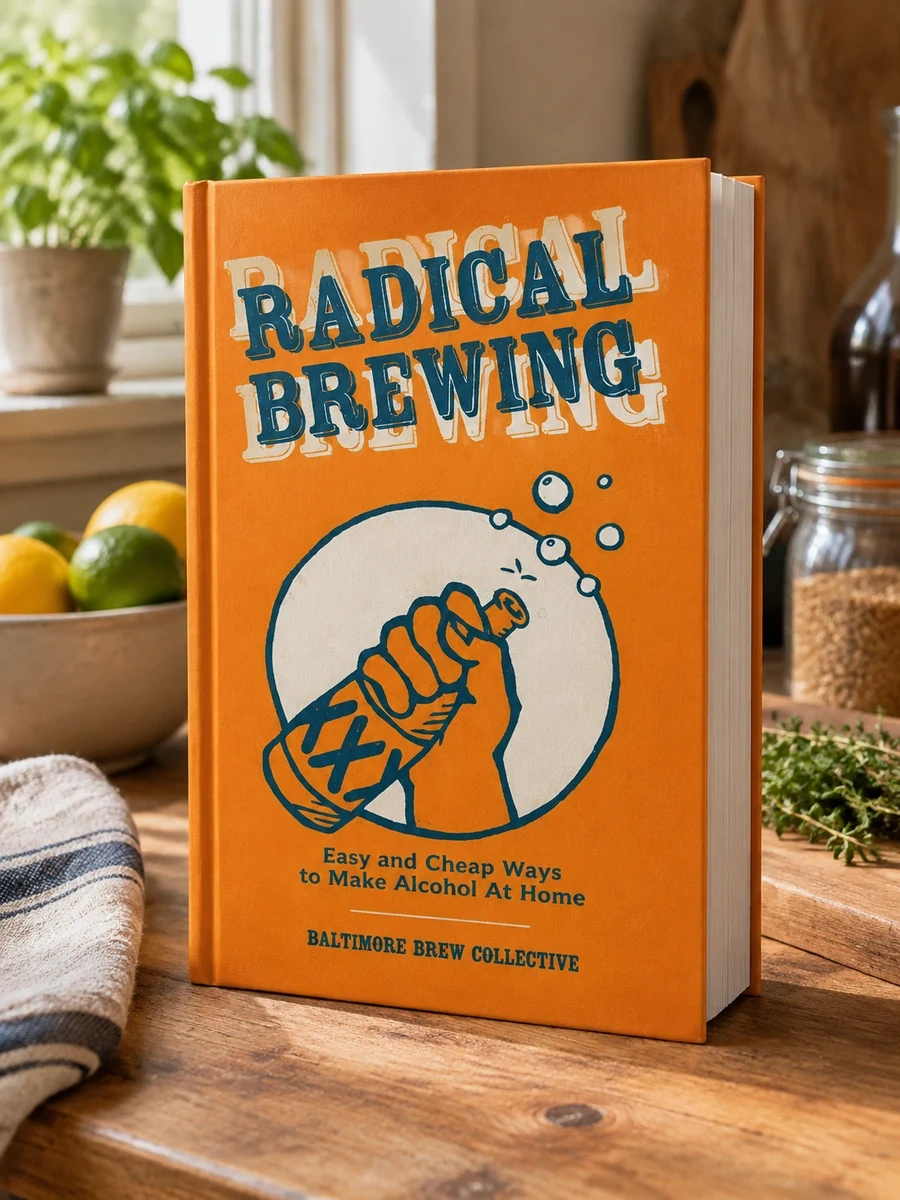

Radical Brewing: Easy and Cheap Ways to Make Alcohol at Home
✍️ Collective, Baltimore BrewA forty-page zine on making homemade alcoholic drinks and building local brewing communities.
The authors focus on the political and social aspects of fermentation rather than just the chemistry. They argue that making your own alcohol is an act of resistance against corporate control. The guide includes practical steps for sourcing ingredients and starting a local chapter. It also provides vegan recipes that use beer as a primary ingredient. The text teaches readers about the history of beer and the slang associated with drinking. It covers a wide range of drinks including mead, cider, and whiskey. The approach is hands-on and community-oriented.
Published in August 2021 by Microcosm Publishing, this zine reflects a DIY ethos rooted in Baltimore's brewing scene. It connects home fermentation to broader movements for sustainability and local autonomy. The work challenges mainstream alcohol culture by promoting self-sufficiency and collective action among enthusiasts.


📝 Description: Radical Brewing: Easy and Cheap Ways to Make Alcohol at Home
💎 Expert review
📖 Why choose it
Why this book is worth reading
Readers seeking to decouple alcohol production from industrial supply chains will find this guide empowering. It offers practical, affordable methods for crafting diverse beverages like mead and cider while fostering local networks. The inclusion of vegan recipes using beer provides a unique culinary bridge for those interested in plant-based diets combined with homebrewing traditions. Those motivated by the history of beer slang and the political implications of autonomous food production will appreciate its comprehensive cultural context and hands-on approach to sustainable ingredient sourcing.
⭐ Reader reviews
Reader rating
This compact zine serves as a manifesto for the radical brewer, blending technical instructions with anarchist ideology. It is an essential resource for those wishing to establish Brew Not Bombs chapters or explore non-traditional ingredients like dandelions. However, it explicitly excludes readers seeking conventional culinary refinement or those indifferent to political activism. The tone is instructional yet deeply ideological, making it unsuitable for casual hobbyists who prefer neutral, corporate-sanctioned brewing guides. It stands as a niche artifact for the politically engaged home fermenter.
❓ Frequently asked questions
📖 Who should read this
Home fermenters seeking low-cost methods for mead, cider, and whiskey. Ideal for activists valuing community building over chemical precision. Perfect for kitchens prioritizing vegan recipes and political resistance against corporate control in beverage production.