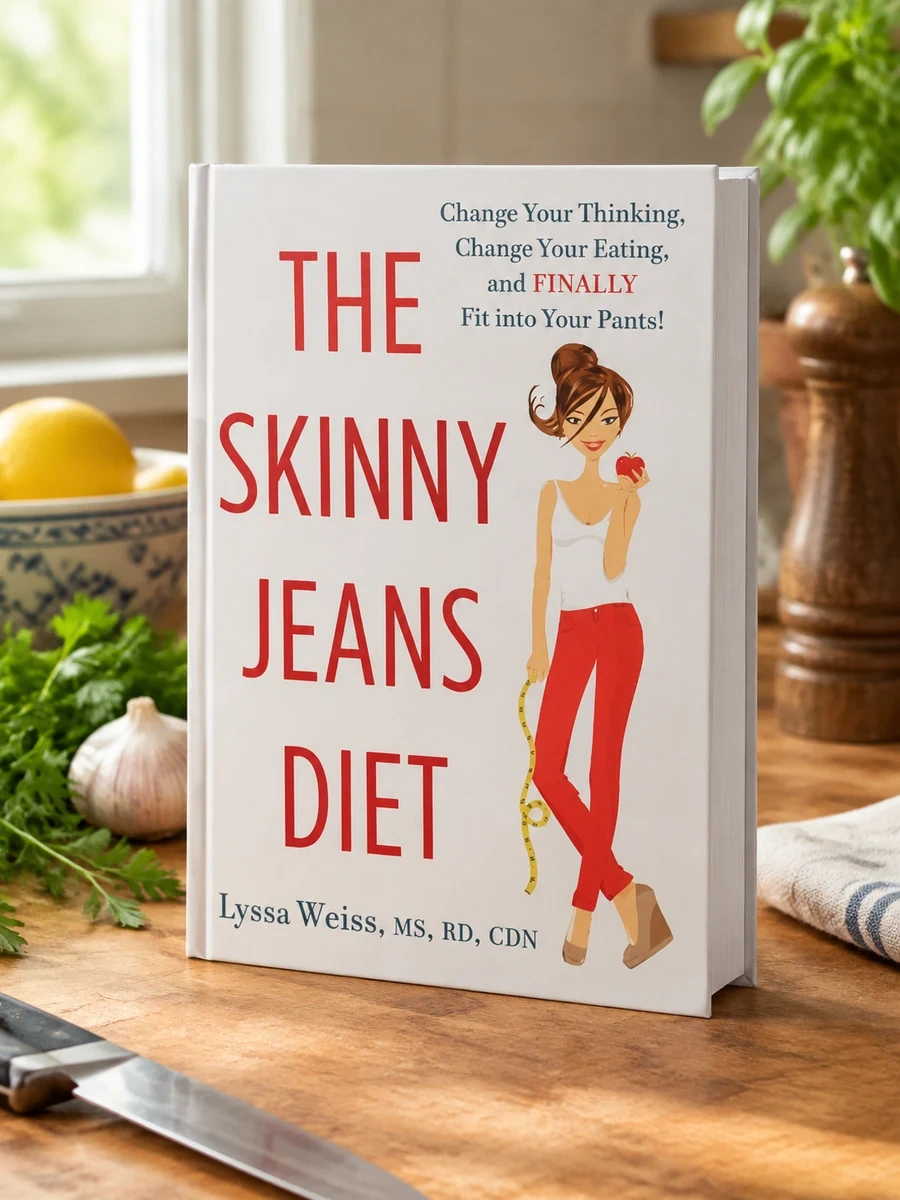
The Skinny Jeans Diet: Change Your Thinking, Change Your Eating, and Finally Fit Into Your Pants!
✍️ Weiss, LyssaA nutritionist's mindset-focused plan for permanent weight loss and habit change.
Lyssa Weiss combines personal history with professional training to offer a sustainable alternative to calorie counting. Her method emerged from small group sessions where women supported each other through dietary changes. The book emphasizes swapping familiar dishes for healthier alternatives during social gatherings. Readers learn to manage emotional triggers that lead to overeating. The content covers practical scenarios such as traveling and eating out without abandoning flavor or enjoyment. Weiss structures the advice to fit individual needs rather than enforcing a rigid regimen. This perspective shifts the focus from temporary restriction to long-term behavioral change.
The book emerged from a phenomenon in the New York-metro area where small-group weight loss meetings at suburban fitness centers gained popularity. Weiss introduced her methods to women attending mahjong and book clubs, creating a local trend before publishing.


📝 Description: The Skinny Jeans Diet: Change Your Thinking, Change Your Eating, and Finally Fit Into Your Pants!
💎 Expert review
📖 Why choose it
Why this book is worth reading
Readers who have exhausted traditional calorie-counting methods and seek a sustainable, mindset-focused approach to weight management will find this guide valuable. Lyssa Weiss offers a realistic three-part program grounded in her professional training and personal experience with emotional eating. The book is particularly useful for those struggling with compulsive eating or fatigue from diet failures. It provides practical strategies for navigating social gatherings, traveling, and dining out without abandoning flavor or enjoyment. By emphasizing habit change over restriction, it helps readers alter their relationship with food permanently.
⭐ Reader reviews
Reader rating
This volume appeals to individuals tired of traditional dieting failures and those seeking a psychological framework for eating. However, it does not suit readers seeking quick fixes or purely mathematical nutritional tracking. The guide remains grounded in practical adjustments for daily life, from grocery aisles to restaurant tables. It is a useful companion for those ready to shift their thinking rather than just their ingredients.
❓ Frequently asked questions
📖 Who should read this
This book is for women who have struggled with traditional calorie counting and seek a sustainable, mindset-based approach to weight loss. It suits those looking to change eating habits without rigid rules, particularly individuals who want to manage emotional triggers while maintaining enjoyment of food during social gatherings or travel.