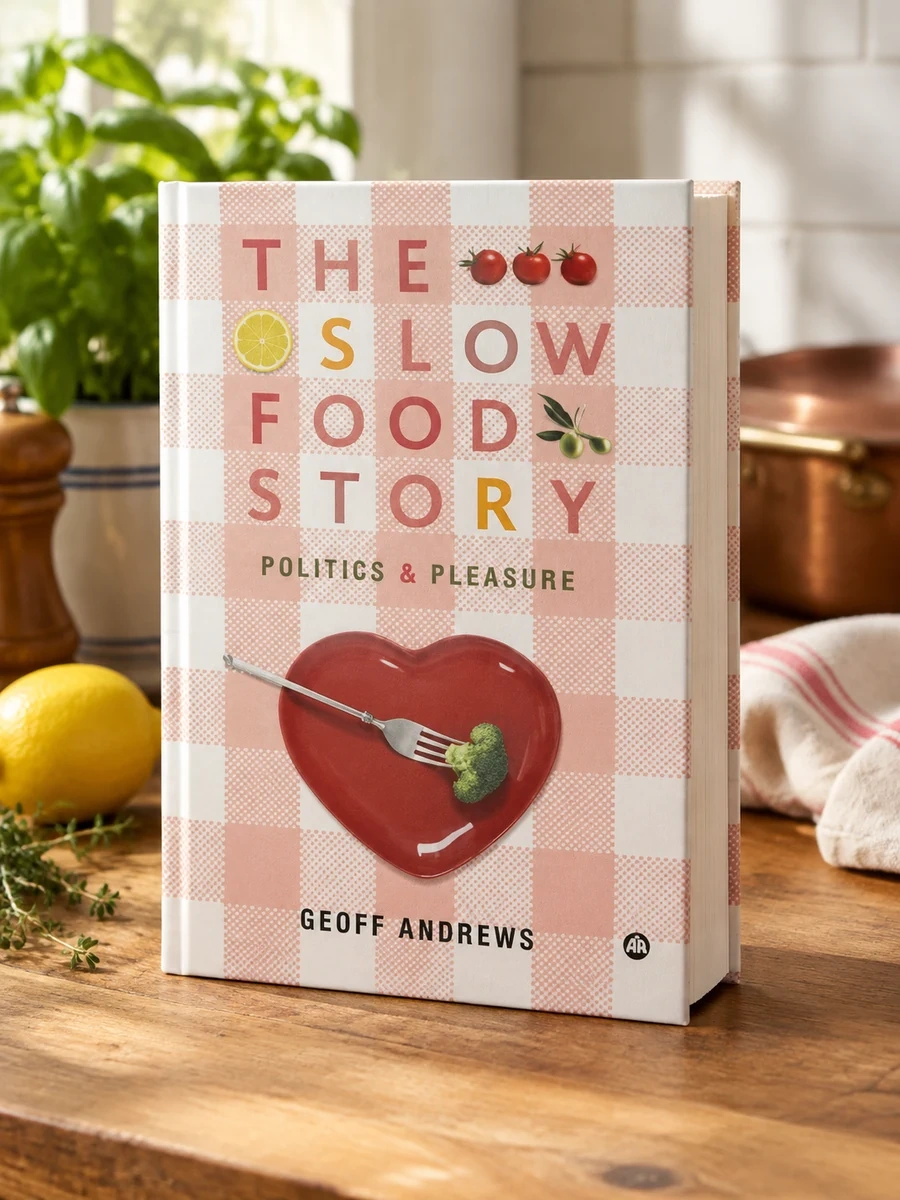
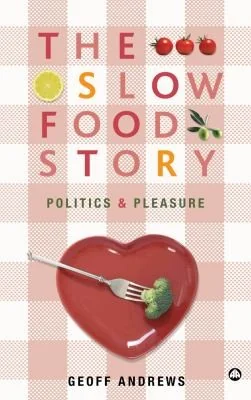
The Slow Food Story: Politics And Pleasure
✍️ Andrews, GeoffA political analysis of the Slow Food movement's impact on culture and policy.
Andrews positions Slow Food as a significant counter-movement to contemporary capitalist norms. The work highlights how the organization unites gastronomic pleasure with ecological ethics. It explores the group's growth from an Italian reaction to global fast food dominance into a worldwide network. The analysis covers the tension between preserving rural traditions and embracing new forms of global connection. Andrews argues that this movement offers a comprehensive critique of modern production methods.
The movement emerged in Italy during the late twentieth century as a reaction to fast food chains and supermarkets. It draws on 1960s and 1970s counter-culture traditions. The book was published by Pluto Press in 2008, addressing the rise of large-scale agribusiness.


📝 Description: The Slow Food Story: Politics And Pleasure
💎 Expert review
📖 Why choose it
Why this book is worth reading
Readers seeking a theoretical framework for understanding the ideological shift from industrial food systems to sustainable local practices will find this text invaluable. It appeals specifically to those analyzing non-governmental organizations or social advocacy within political science, offering a comprehensive critique of modern production methods. The book is ideal for scholars and activists interested in the intersection of gastronomy and policy, demonstrating how culinary goals connect to broader environmental responsibility. By examining the tension between preserving rural traditions and embracing global connection, it provides essential context for understanding how food politics shapes contemporary culture and challenges work-obsessed capitalist structures.
⭐ Reader reviews
Reader rating
Geoff Andrews delivers a rigorous political analysis rather than a practical guide, making this edition unsuitable for cooks seeking recipes or meal planning advice. It serves readers interested in the sociology of food and the mechanics of social change. The tone is academic and analytical, focusing on the movement's growth from an Italian reaction to fast food into a worldwide network. While it lacks culinary instruction, it offers a compelling argument for viewing gastronomic pleasure as an ecological ethic. This volume is best appreciated by those willing to engage with dense political theory and understand how food advocacy influences policy beyond the kitchen.
❓ Frequently asked questions
📖 Who should read this
Readers interested in political science and environmental policy will find this text essential. It suits scholars analyzing NGO advocacy or activists seeking a critique of capitalist norms. Those wanting to understand the cultural shift from fast food dominance to ecological ethics will appreciate this focused study on global movements.
📜 Historical context
You might also like
See more →










Have a question about this item?
Ask about the edition, condition, delivery or anything else — we reply by email or phone, usually within a day.
