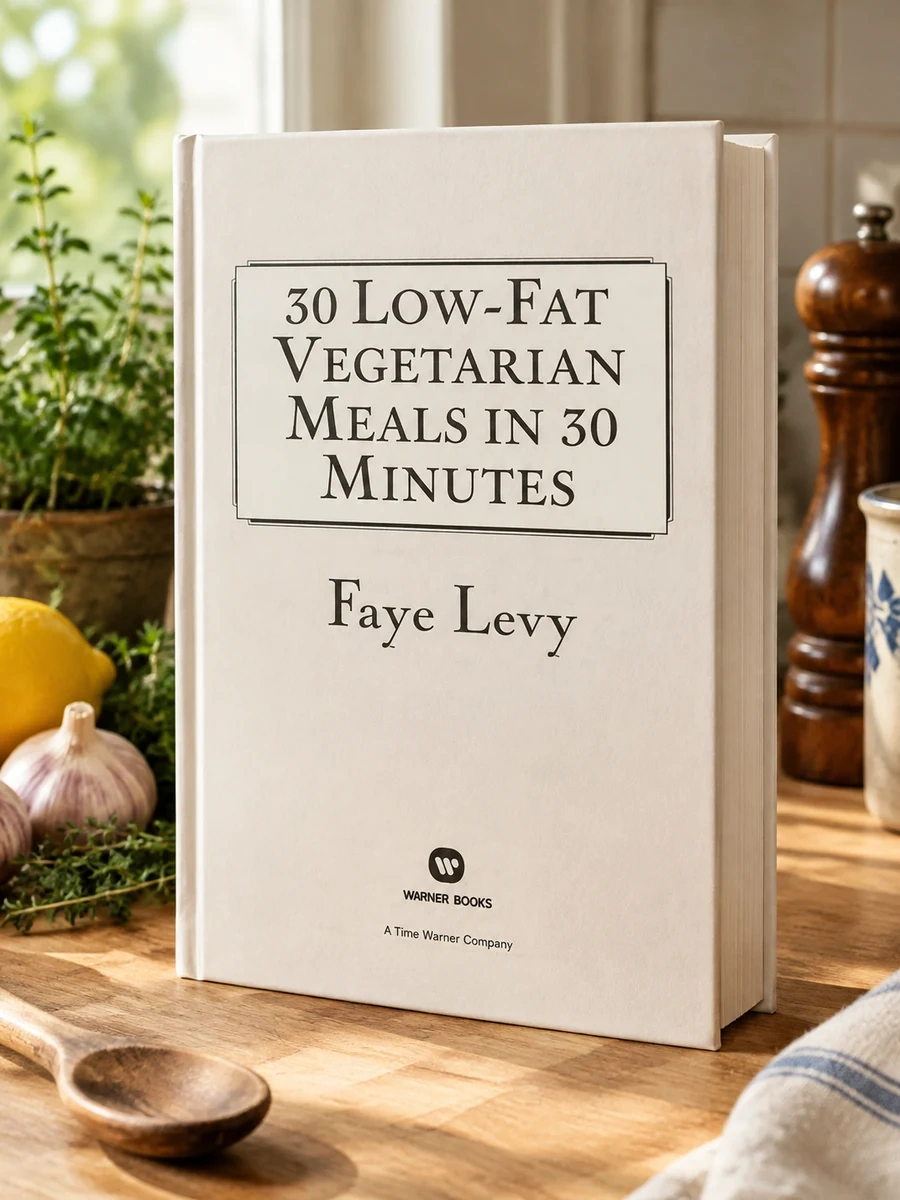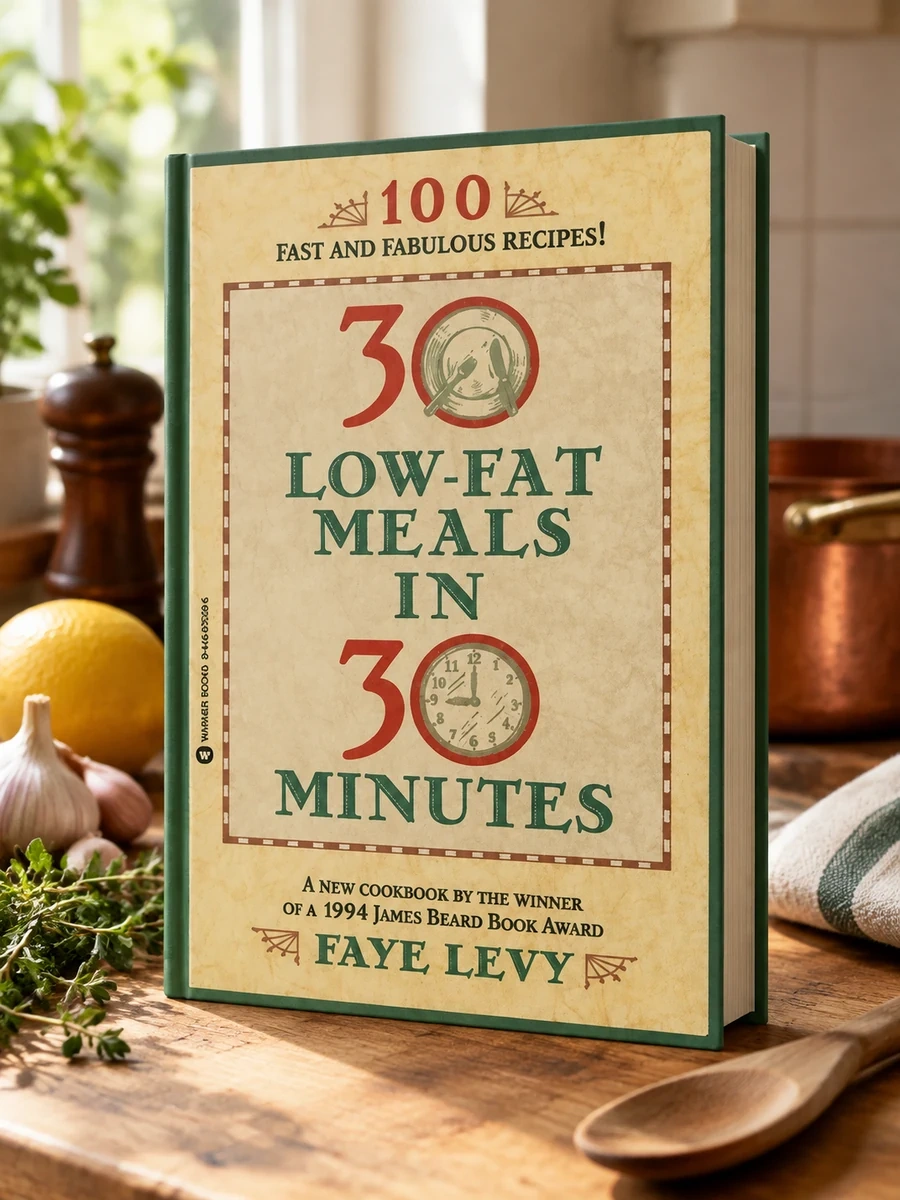
30 Low-Fat Meals in 30 Minutes
✍️ Levy, FayeA collection of one hundred quick low-fat recipes using bold seasonings.
Levy structures this volume around practical menu planning rather than isolated recipes. The chapters divide by protein type, including poultry, meat, fish, seafood, vegetarian items, and pasta. This organization supports modern dining preferences where meals might consist of a main course with two sides rather than a full three-course spread. The text acknowledges that not every menu includes dessert, offering suggestions such as seasonal fruit or frozen yogurt to complete the meal. The introductory material focuses on efficiency, teaching readers how to pick fresh ingredients and stock their pantries for speed. This approach prioritizes maximum taste with minimum preparation time, using bold seasonings to replace long cooking processes.
Published in 1995 by Grand Central Publishing, this paperback reflects the mid-nineties American interest in health-conscious eating and efficient meal preparation. The author draws on her experience with international Jewish and vegetable cuisines to create accessible menus for busy households.


📝 Description: 30 Low-Fat Meals in 30 Minutes
💎 Expert review
📖 Why choose it
Why this book is worth reading
Busy home cooks seeking to reduce fat intake while maintaining robust flavors will find this guide invaluable. Faye Levy addresses the modern need for speed by offering one hundred recipes that utilize bold seasonings to replace long cooking times. The book’s strength lies in its practical menu planning approach, organizing content by protein type to support flexible dining habits. It teaches essential skills for selecting fresh ingredients and stocking a pantry for efficiency. Readers who appreciate structured yet adaptable meal plans, including options for two or four people, will benefit from the clear guidance on creating balanced plates with minimal effort.
⭐ Reader reviews
Reader rating
Levy’s work is a functional tool for the time-poor cook, emphasizing speed and low-fat preparation through strategic seasoning. It suits those who want straightforward menus organized by main protein categories rather than complex culinary narratives. However, it may not appeal to foodies seeking intricate techniques or traditional multi-course dining experiences. The text acknowledges that dessert is optional, suggesting simple alternatives like fruit, which might disappoint readers expecting elaborate sweet finishes. It remains a solid resource for those prioritizing practicality over gastronomic exploration.
❓ Frequently asked questions
📖 Who should read this
Busy home cooks seeking quick, low-fat meals for weeknight dinners. Ideal for those who prefer planning menus by protein type rather than isolated dishes. Perfect for kitchens where efficiency and bold flavors matter more than elaborate three-course spreads or traditional desserts.