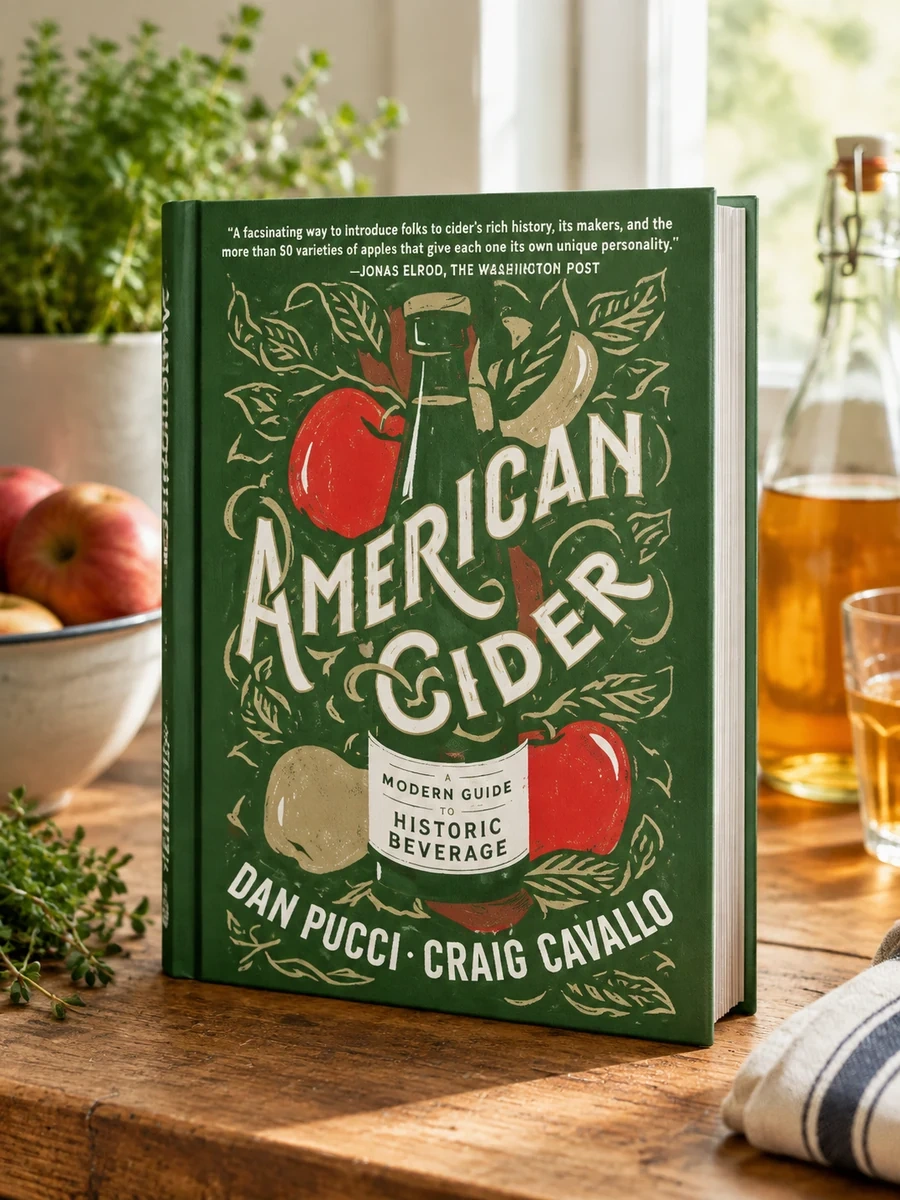
American Cider: A Modern Guide to a Historic Beverage
✍️ Pucci, DanA regional guide to American cider history, agriculture, and tasting by Dan Pucci.
Pucci and Cavallo analyze the cultural and agricultural roots of US cider. They challenge common myths about Johnny Appleseed while detailing how policy affected growers. The authors offer a framework for tasting ciders based on apple varieties and fermentation methods. This approach helps readers understand the differences between sweet, dry, and funky styles. The book emphasizes the role of sustainable orchardists in preserving apple diversity. It connects historical consumption patterns to current craft production.
The authors explore cider as America’s first popular alcoholic beverage, tracing its roots to apples brought from England. They examine the impact of industrial development and government policies on white male beneficiaries, while highlighting modern orchardists preserving apple culture through sustainable practices.


📝 Description: American Cider: A Modern Guide to a Historic Beverage
💎 Expert review
📖 Why choose it
Why this book is worth reading
Readers interested in the intersection of history, agriculture, and sensory evaluation will find significant value in this comprehensive guide. Pucci and Cavallo provide essential context for understanding how government policy and industrial development shaped American cider, moving beyond romanticized myths like Johnny Appleseed. The practical tasting framework empowers consumers to distinguish between sweet, dry, and funky profiles based on apple varieties and fermentation methods. This knowledge supports sustainable orchardists and preserves apple diversity. It is ideal for those seeking to deepen their appreciation of fermented beverages while connecting with local producers and the modern craft cider community.
⭐ Reader reviews
Reader rating
This work excels as a cultural and agricultural primer rather than a simple recipe collection. It offers a rigorous examination of how historical forces influenced current practices, providing readers with tools to navigate the complex landscape of American cider production. The regional structure effectively highlights how local conditions dictate flavor profiles. However, it does not suit casual drinkers seeking quick recipes or those uninterested in the socio-political history of agriculture. Readers wanting only entertainment may find the focus on policy and farming dry. It is best for those willing to engage with the material's educational depth regarding sustainable farming and beverage heritage.
❓ Frequently asked questions
📖 Who should read this
This book suits curious drinkers and enthusiasts eager to explore American cider culture, sustainability, and tasting profiles. Readers wanting cocktail recipes or brewing instructions will be disappointed, as this focuses on history and flavor tasting rather than production.