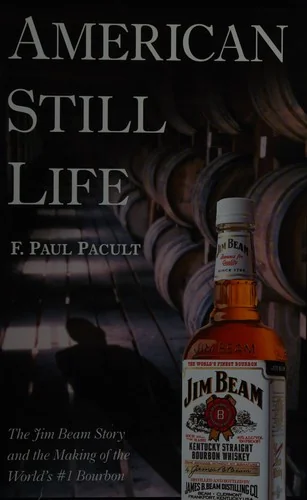
American Still Life: The Jim Beam Story and the Making of the World's #1 Bourbon
✍️ Pacult, F PaulA detailed corporate history of the Beam family dynasty and Jim Beam Bourbon Whiskey.
Pacult focuses on the business mechanics behind Jim Beam’s rise to dominance. He analyzes how the Beams adapted to regulatory environments and market changes while preserving their identity. The work emphasizes the intersection of family legacy and commercial strategy, showing how consistent quality and advertising shaped a global icon. It is not merely a biography but an examination of industrial endurance in a volatile sector.
Published by Wiley in 2003, the book sits within the context of American business history and the spirits industry. It reflects on the 207-year existence of Jim Beam, recognized by Congress in 1964 as America's native spirit, and its status as a premier global brand during the early twenty-first century.


📝 Description: American Still Life: The Jim Beam Story and the Making of the World's #1 Bourbon
💎 Expert review
📖 Why choose it
Why this book is worth reading
Readers interested in the intersection of family legacy and commercial strategy will find significant value here. Pacult provides a detailed examination of how the Beam dynasty navigated regulatory environments, prohibition, and global competition to build a top-selling brand. It appeals to those who prefer concrete business details and industrial endurance over casual anecdotes or simple recipes. The book offers insight into the advertising and quality control that shaped a global icon, making it essential for students of corporate history and bourbon enthusiasts seeking depth beyond the bottle.
⭐ Reader reviews
Reader rating
This volume serves as a rigorous case study in brand longevity rather than a narrative-driven biography. It is an excellent resource for understanding the business mechanics behind Jim Beam’s rise, focusing on consistency and adaptation to market changes. However, it explicitly excludes technical distillation manuals or unrelated spirits histories. Readers seeking romanticized pioneer tales or simple tasting notes will likely find the scope too narrow and the tone too analytical. It is a dense examination of industrial strategy, best suited for those who appreciate the structural analysis of corporate survival in volatile sectors over emotional storytelling.
❓ Frequently asked questions
📖 Who should read this
Readers interested in corporate history, bourbon heritage, and family business dynamics. Ideal for collectors of industry narratives or those studying how legacy brands survive regulatory shifts. Not for casual drink recipes.