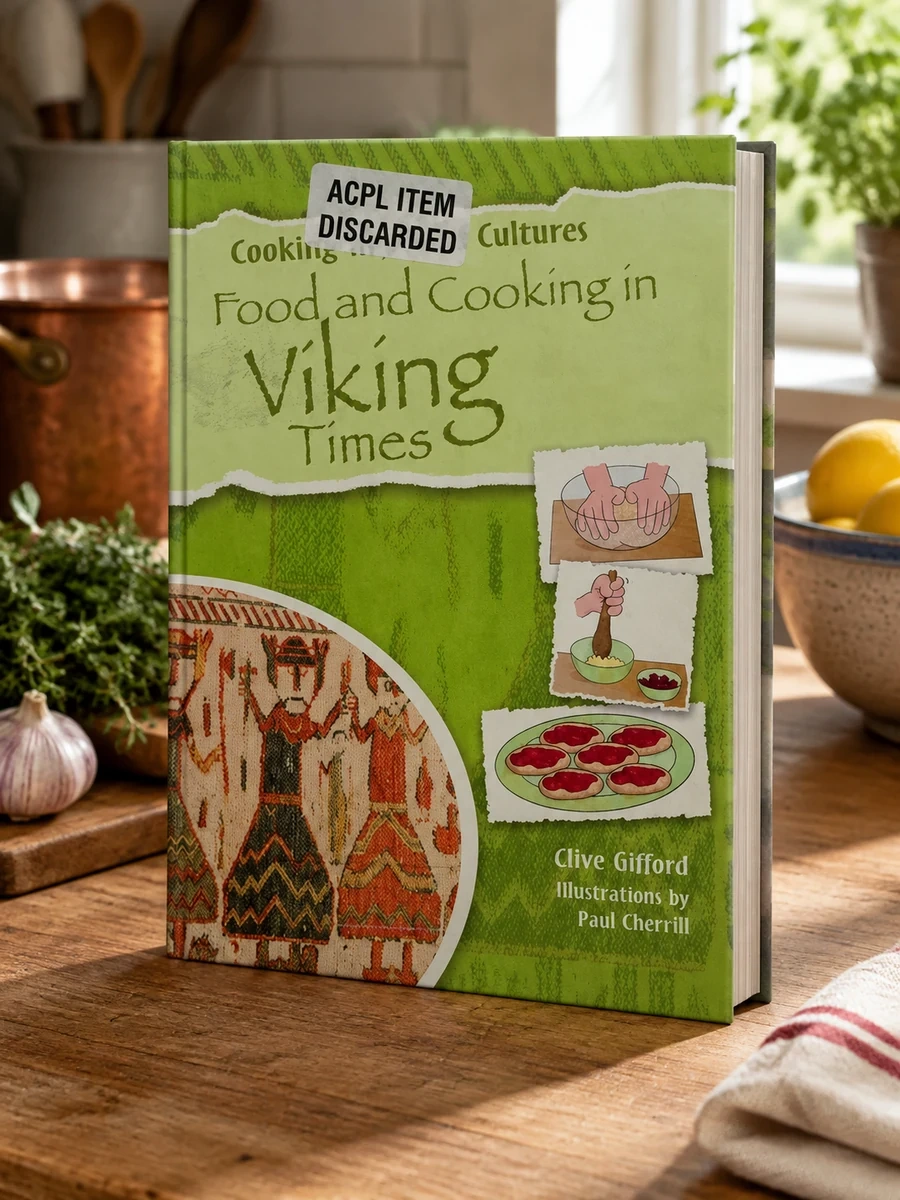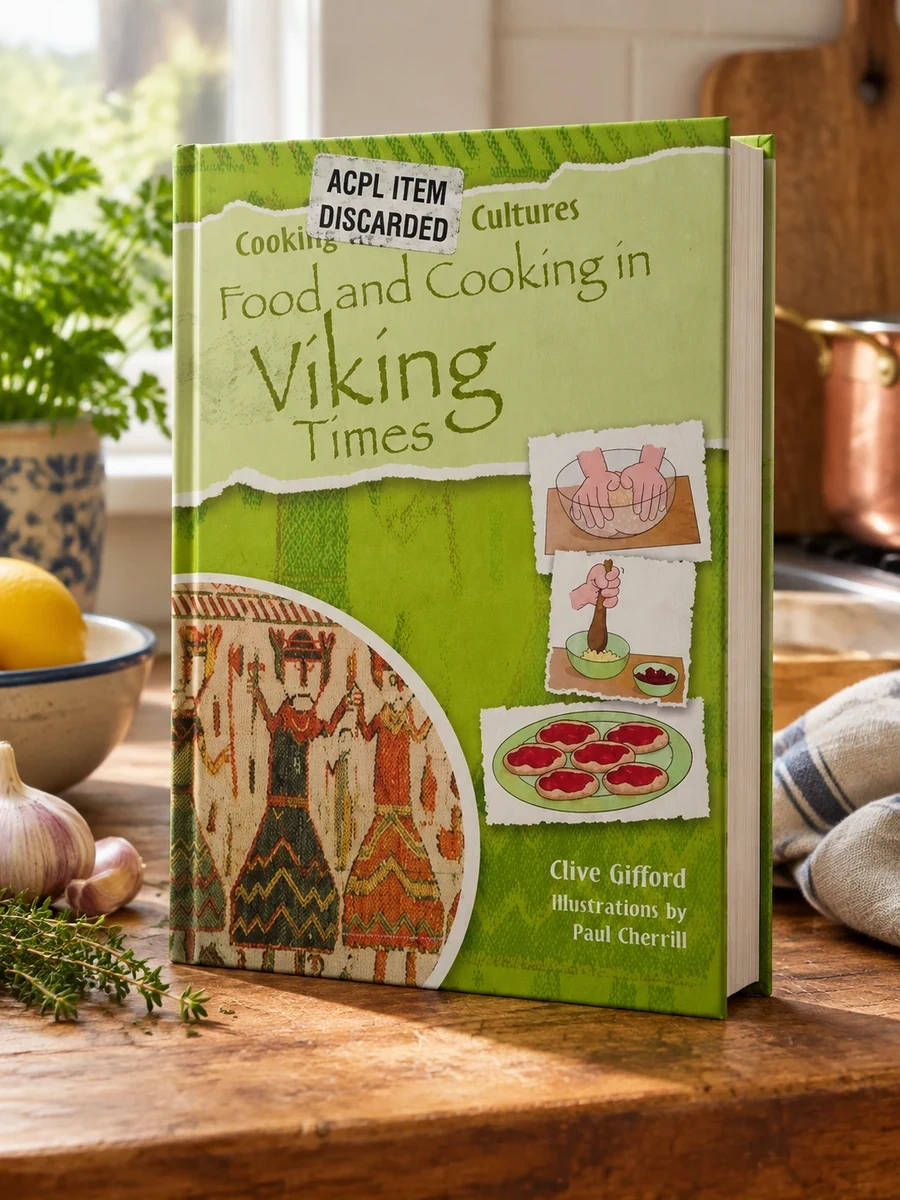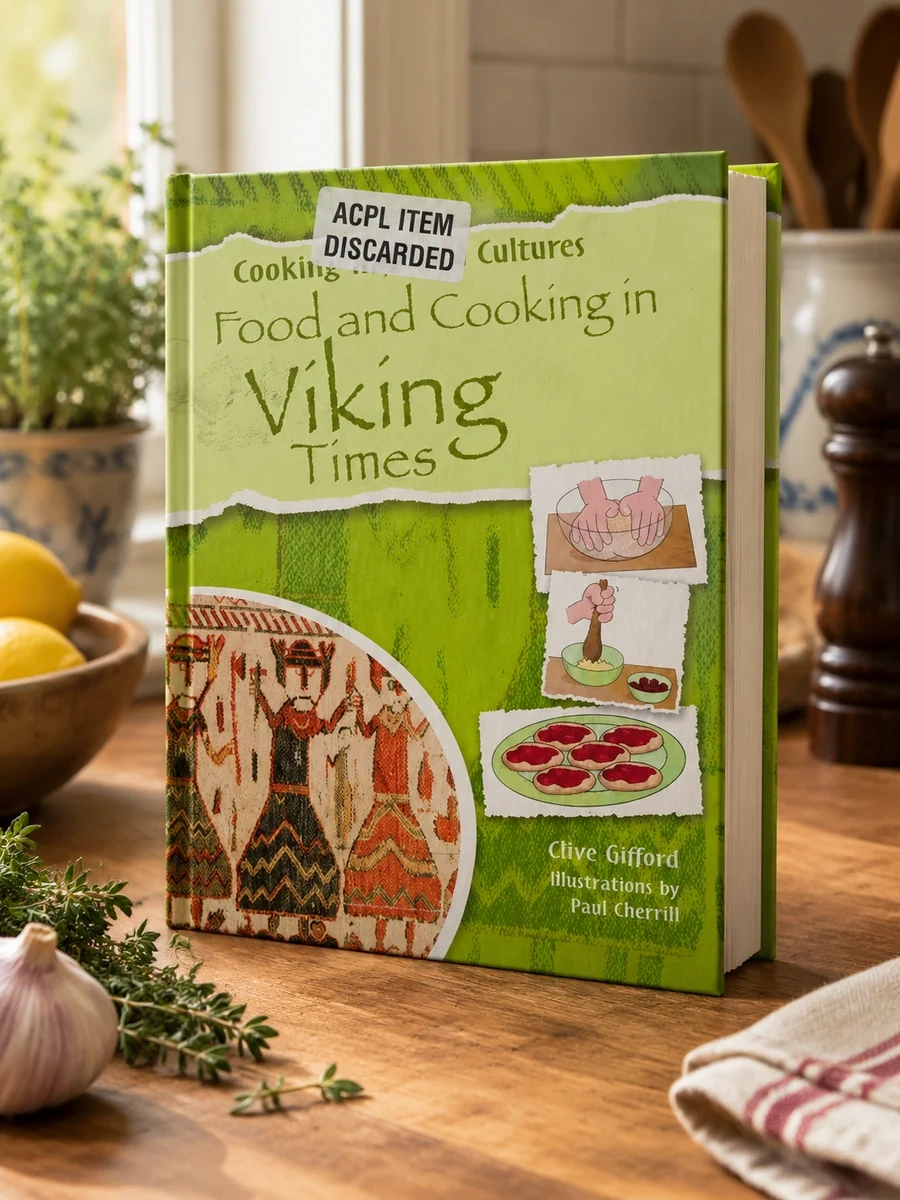
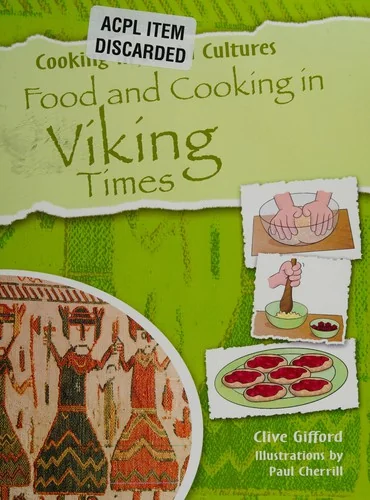
Food and Cooking in Viking Times
✍️ Gifford, CliveA juvenile guide to Viking food, farming, and feasting traditions.
Gifford traces the connection between Viking exploration and their dietary needs. The text moves from agricultural basics in Farms and food to specific preparations in Bread. It describes domestic life in Life in the longhouse and cooking methods in The meal-fire. Social aspects appear in Mealtimes and A Viking feast, showing how communities gathered. Trade routes are discussed in Towns and trade, explaining how ingredients moved. The section on Viking drinks complements the food topics. Hunting and gathering details show resource acquisition. Fresh fish highlights aquatic diets. The book ends with Off to Valhalla, linking food to mythology. This approach connects daily sustenance with broader cultural practices for a young audience.
The book focuses on the Viking Age, a period of Scandinavian exploration and colonization across Europe. It examines how these warriors managed their appetites while raiding and settling new territories. The content reflects the dietary habits of this specific historical era in European history.


📝 Description: Food and Cooking in Viking Times
💎 Expert review
⭐ Reader reviews
Reader rating
Gifford effectively connects Viking dietary habits to their broader cultural practices, making history accessible for young learners. The book excels at explaining how ingredients moved through trade routes and how communities gathered for meals. However, it is strictly educational and contains no actual recipes or cooking instructions. Readers seeking practical culinary guidance or detailed nutritional analysis will find this volume lacking in utility. It serves best as a historical overview for school projects or casual interest in ancient European cultures rather than a kitchen reference.
❓ Frequently asked questions
📖 Who should read this
Young readers curious about Viking history and daily life will enjoy this guide. It suits students researching ancient diets or children who love learning how early farmers grew crops and prepared meals in longhouses without needing advanced culinary skills.