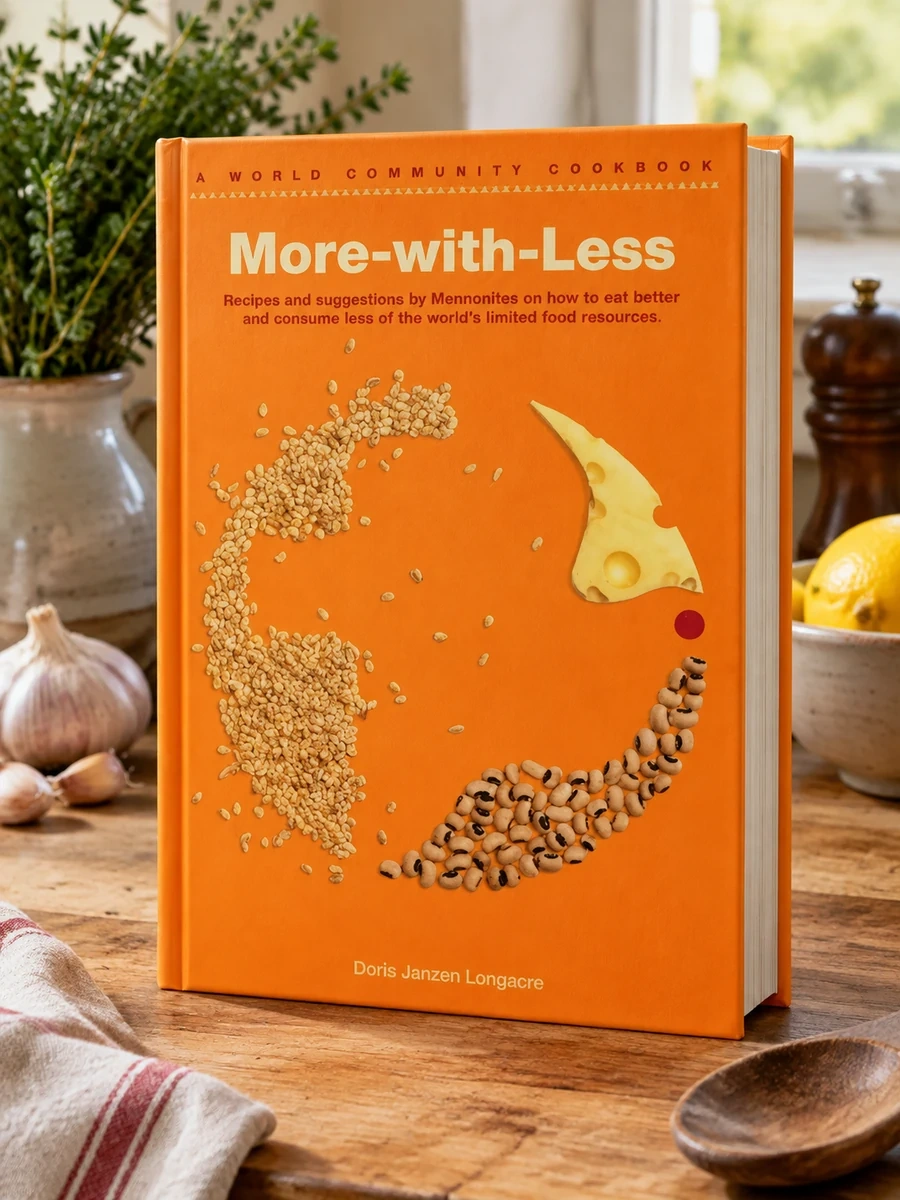
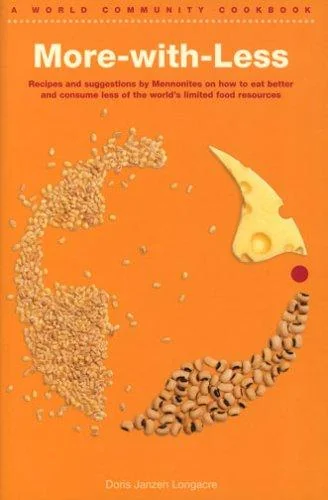
More-With-Less Cookbook: Recipes and Suggestions by Mennonites on How to Eat Better and Consume Less of the World's Limited Food Resources
✍️ Longacre, Doris JanzenA practical guide to eating more vegetables and less meat using Mennonite resourcefulness.
This volume bridges personal health and global ethics by encouraging reduced consumption of animal products and processed sugars. Longacre updates her earlier work to align with current nutritional standards in the United States and Canada. The inclusion of My Plate alongside Canadian guidelines provides a visual tool for meal planning. The text emphasizes that eating less meat and saturated fat contributes to both individual well-being and relief efforts worldwide. It targets households seeking to lower their environmental footprint through daily food choices rather than abstract activism.
Published in 2003 by Herald Press, this edition updates a 1976 classic. It reflects Mennonite values of peace and relief work through the Mennonite Central Committee partnership. The text addresses contemporary American and Canadian health issues and diet guidelines.


📝 Description: More-With-Less Cookbook: Recipes and Suggestions by Mennonites on How to Eat Better and Consume Less of the World's Limited Food Resources
💎 Expert review
📖 Why choose it
Why this book is worth reading
Readers seeking to align their daily meals with ethical and environmental values will find this guide indispensable. It offers a practical framework for reducing meat and sugar intake without sacrificing nutritional health, drawing on Mennonite resourcefulness. Households aiming to lower their carbon footprint or save money on groceries will appreciate the straightforward advice. The inclusion of My Plate and Canadian guidelines provides clear visual tools for meal planning. It is ideal for those who view eating as a moral act toward global hunger relief rather than just a culinary pursuit.
⭐ Reader reviews
Reader rating
This book serves as a functional manual for sustainable living rather than a source of culinary inspiration. It appeals to readers interested in budget-conscious cooking and ethical consumption, offering straightforward suggestions for simpler ingredient choices. However, it does not suit those seeking complex gourmet techniques or purely recreational food writing. The tone is earnest and instructional, prioritizing global ethics over taste innovation. While the connection to Mennonite traditions provides a unique cultural lens, the content remains focused on health guidelines and resource conservation. It is best viewed as an educational tool for establishing mindful eating habits within the home.
❓ Frequently asked questions
📖 Who should read this
Grab this if you want wholesome, budget-friendly everyday meals built on whole grains and veggies. It demands basic kitchen tools and a bit of patience, but rewards you with nourishing, down-to-earth food. Skip it if you are hunting for elaborate gourmet techniques or heavy meat dishes.