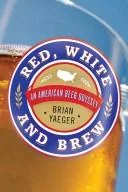
Red, White, and Brew: An American Beer Odyssey
✍️ Yaeger, BrianA journey through fourteen American breweries and their brewing families.
Yaeger investigates how brewing traditions survived and adapted in America. He connects past immigrant practices with modern microbrewery culture. The narrative relies on direct conversations with industry insiders rather than abstract theory. This approach reveals the human element behind commercial production. Readers learn about the specific challenges faced by family-run companies compared to newer independent operations. The focus remains on the continuity of craft and the people who maintain it across generations.
The book examines the American beer industry as an enterprise as old as the New World. It highlights how brewers brought their skills from their homelands to establish a lasting tradition in the United States, covering the period leading up to its publication in 2008.


📝 Description: Red, White, and Brew: An American Beer Odyssey
💎 Expert review
📖 Why choose it
Why this book is worth reading
Readers interested in the social history of American beverages and the human stories driving commercial production will find much to value here. By journeying across fourteen breweries from Portland, Maine, to Portland, Oregon, the narrative connects past immigrant practices directly to modern microbrewery culture. Through conversations with founders, owners, brewmasters, and consumers, the text reveals the distinct challenges faced by fifth-generation family enterprises versus first-wave microbreweries. It serves as an engaging exploration for those who appreciate the intersection of travel, family heritage, and craft production, emphasizing the eclectic characters and shrewd businesspeople who sustain this ancient industry across generations.
⭐ Reader reviews
Reader rating
Brian Yaeger's journey offers an engaging genealogical study of beer families and homebrewers, moving away from abstract theory to focus on the human element behind commercial production. Rather than relying on dry statistics, the book highlights the contributions of brewers who sustain a sector described as producing liquid philanthropy one keg at a time. However, prospective buyers should note its limitations. The work is explicitly less suitable for individuals seeking technical brewing instructions or purely economic analyses of the alcohol market.
❓ Frequently asked questions
📖 Who should read this
This book is for home brewers interested in American craft history and travelers planning brewery tours. It suits readers who value personal stories over technical brewing manuals. Ideal for those curious about family-run businesses and the cultural shift from immigrant traditions to modern microbrewery operations across the United States.