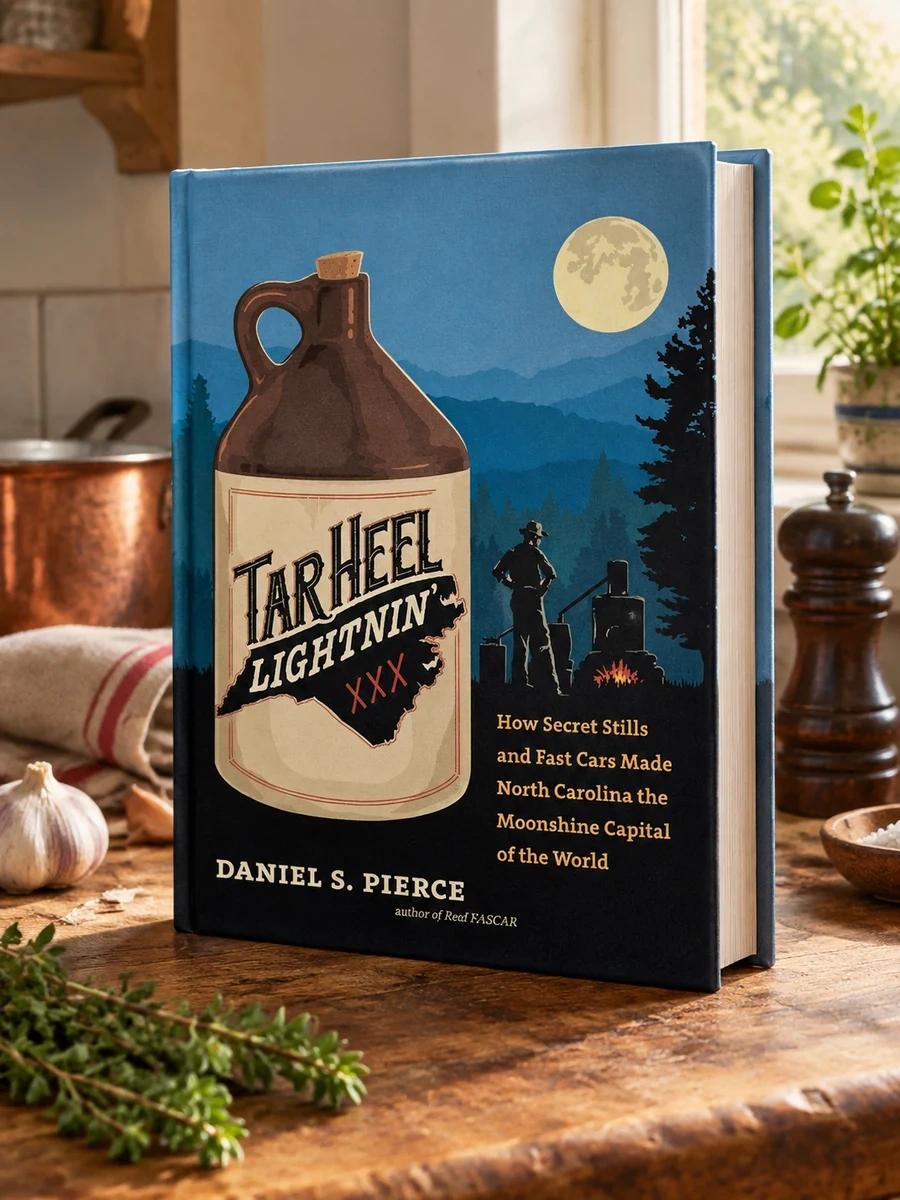
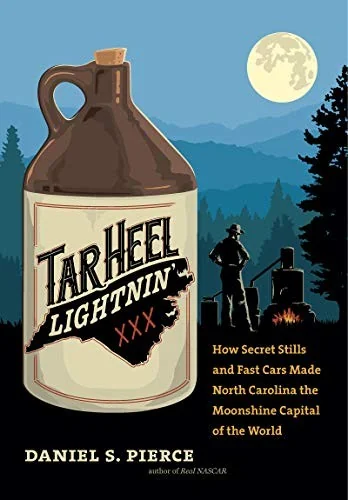
Tar Heel Lightnin': How Secret Stills and Fast Cars Made North Carolina the Moonshine Capital of the World
✍️ Pierce, Daniel SA non-fiction history of North Carolina's moonshine industry and its social impact
Pierce moves beyond Hollywood stereotypes to show how illegal distilling functioned as a widespread economic activity. The text highlights how hard times drove diverse groups, including churchgoing individuals, to produce liquor without a formal safety net. This approach reveals the practical motivations behind the trade rather than just the romanticized mythos.
The book covers North Carolina from the late nineteenth century into the 1960s, a period when the state enforced restrictive alcohol laws while simultaneously becoming the nation's leading producer of bootleg liquor.


📝 Description: Tar Heel Lightnin': How Secret Stills and Fast Cars Made North Carolina the Moonshine Capital of the World
💎 Expert review
📖 Why choose it
Why this book is worth reading
Readers interested in regional culture and Southern social history will gain a grounded, well-researched perspective on how economic pressures and legal changes shaped North Carolina's identity. Daniel S. Pierce moves past Hollywood stereotypes to examine how illegal distilling functioned as a widespread economic activity across Tidewater swamps, Piedmont forests, and mountain coves. The text highlights how hard times drove diverse groups, including churchgoing individuals and respectable citizens, to produce liquor without a formal safety net. By relying on historical records and local accounts rather than romanticized myths, this illustrated volume reveals the complex reality of bootlegging and the actual people who operated the stills.
⭐ Reader reviews
Reader rating
Daniel S. Pierce presents a thorough historical examination of North Carolina's moonshine industry, emphasizing economic and legal pressures over sensationalized folklore. While the book succeeds as a detailed social history tracing the trade from early state days through Prohibition and modern times, it does have specific limitations. Readers seeking simple drink recipes, cocktail guides, or pure entertainment may find the deep historical detail less appealing. Furthermore, the provided catalogue text cuts off before finishing its final sentence, indicating a sparse promotional entry, yet the book's strong grounding in regional culture justifies its place on the shelf for serious history enthusiasts.
❓ Frequently asked questions
📖 Who should read this
Readers interested in Southern history and regional culture will appreciate this exploration of North Carolina's past. It suits those who enjoy detailed historical narratives about rural economies and the social dynamics of prohibition era America rather than just culinary enthusiasts.