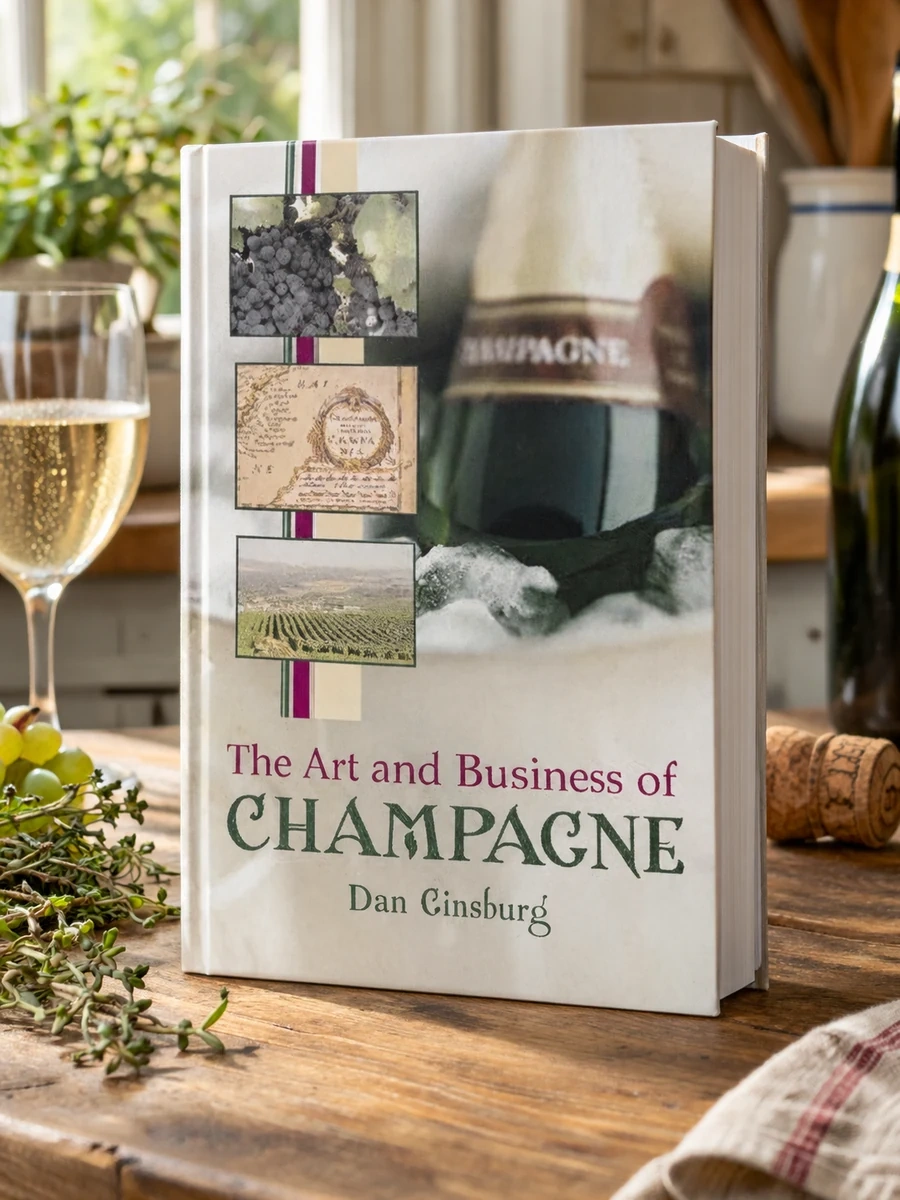
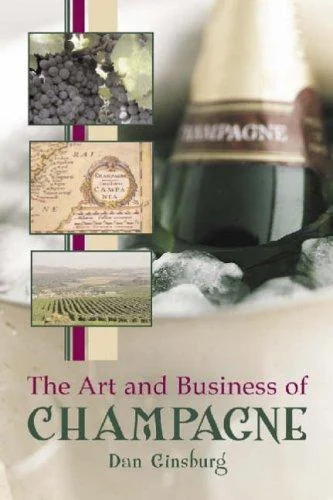
The Art and Business of Champagne
✍️ Ginsburg, DanAn insider look at champagne production, business, and history by Dan Ginsburg.
This guide bridges the gap between agricultural practice and commercial reality. Ginsburg explains how decisions in the vineyard affect the final product. He outlines the specific steps involved in creating quality champagne. The work also explores the economic pressures facing producers. It highlights the role of family businesses in maintaining standards. The text offers a structured view of the industry rather than a romanticized one.
Published in 2006, this book reflects the state of the champagne market at that time. It focuses on the Champagne region of France as the sole source of authentic champagne. The vintage coverage extends through 2003, providing a historical snapshot of the industry during that period.


📝 Description: The Art and Business of Champagne
💎 Expert review
📖 Why choose it
Why this book is worth reading
Readers seeking a grounded understanding of the champagne industry will find this volume particularly valuable for its unvarnished perspective on production economics. Dan Ginsburg leverages his background as a manufacturer to clarify how agricultural decisions directly impact commercial outcomes, offering a structured view that bridges vineyard practice and market reality. It is ideal for professionals or serious enthusiasts who want to understand the balance between quality standards and timely scheduling. Those interested in the historical context of the region, supported by vintage data from 1900 to 2003, will appreciate the factual depth. This book serves as a practical guide for understanding the machinery behind sparkling wine, appealing to those who prefer substantive industry insight over superficial tasting notes or romanticized tales.
⭐ Reader reviews
Reader rating
Ginsburg delivers a pragmatic examination of champagne production that prioritizes commercial reality over poetic allure. The text effectively details the workflow from grape selection to storage, highlighting how family businesses maintain standards under economic pressure. However, readers seeking pure enjoyment through tasting notes may find the heavy focus on business schedules and agricultural mechanics dry. It is not a definitive technical manual on winemaking science, nor does it offer romanticized narratives of French viticulture. Instead, it stands as a sobering look at the industry's operational backbone. For those who appreciate the structural integrity of food writing that explains the 'how' and 'why' of production economics, this is a solid resource. Others may find its lack of sensory guidance limiting.
❓ Frequently asked questions
📖 Who should read this
This book serves professionals in the beverage industry and serious collectors who want to understand the commercial realities of champagne production. It is ideal for those interested in the economic pressures facing family businesses rather than casual readers seeking simple drinking guides or romanticized stories about sparkling wine history.