Alton Brown is an unusual cookbook author because he approaches cooking as both a practical skill and an intellectual puzzle. A recipe might tell you to sear a steak, fold a batter, or roast a chicken. Brown wants you to understand what happens when you do those things, why the ingredients behave as they do, and how changing a technique affects the finished dish. That combination of culinary instruction, science, history, and humor is what made Good Eats distinctive and gives his books their lasting appeal.
The difficulty for a first-time reader is deciding which book captures that approach best. His collection includes technique manuals, a dedicated baking book, an everyday recipe collection, several substantial Good Eats volumes, and food-related essays. Reading them in publication order is possible, but it is not necessarily the most useful way to build a home cooking library. A better approach is to begin with the fundamentals, choose a specialized direction, and then explore the books that expand on his television work.
Here is our recommended eight-book path. It starts with the clearest introduction to Brown's food-science philosophy and gradually moves toward broader collections and more reflective writing. You do not need all eight to benefit from his work: the best starting point depends on whether you want better everyday cooking, more confident baking, or the experience of bringing Good Eats into your kitchen.
Start with the fundamentals: understand how cooking works
For most readers, the first two books should establish a foundation. Brown's strongest educational approach is to explain a method before asking you to reproduce it. These books are particularly useful if you want to become a more adaptable cook rather than accumulate recipes you might only make once.
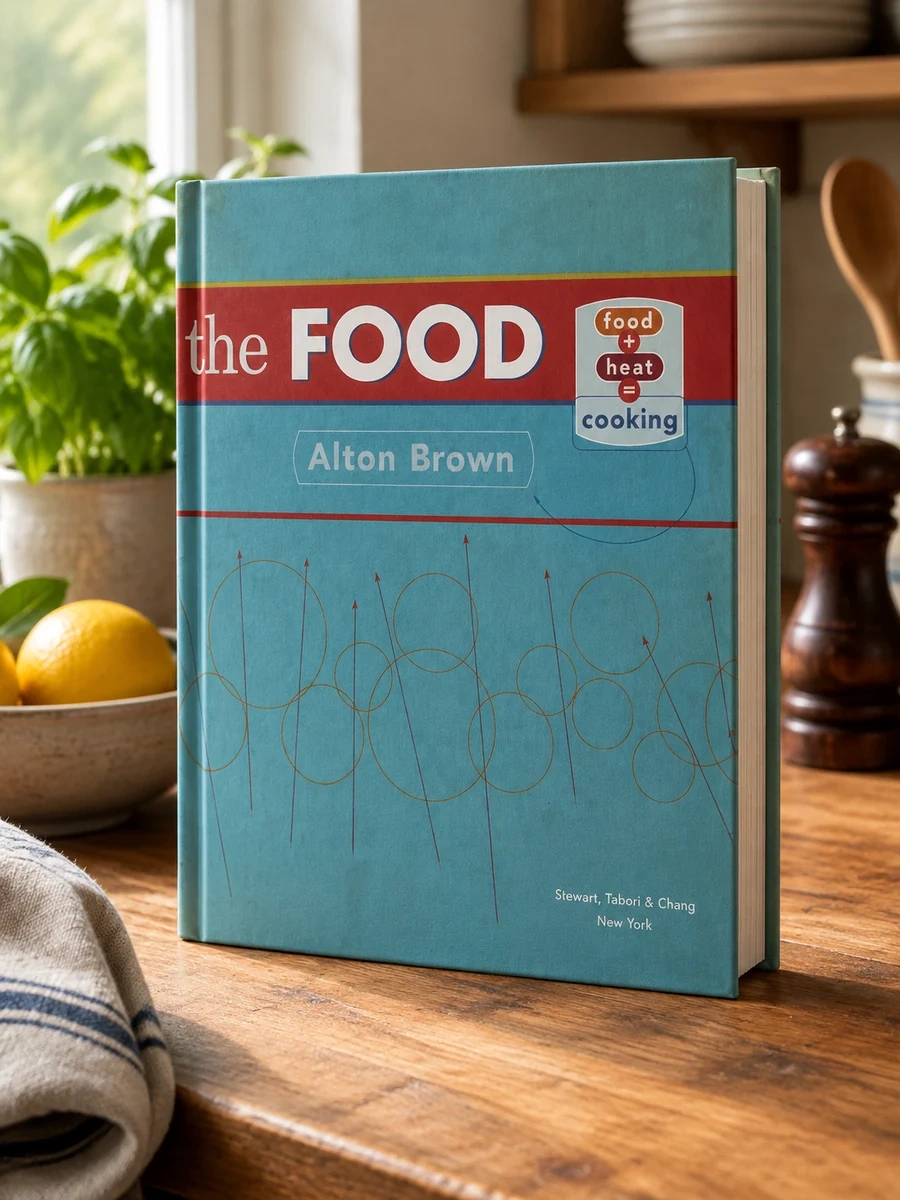
1. I'm Just Here for the Food: Version 2.0 — Alton Brown
Best for: curious beginners and home cooks who want to understand cooking fundamentals.
This is our first recommendation and the most logical entry point into Brown's particular way of thinking. Rather than organizing everything around finished dishes, the book approaches cooking through individual methods. Its fifteen sections cover techniques such as pan searing, grilling, roasting, frying, boiling, braising, and steaming, among other subjects. Each method is treated as something to understand, practice, and apply across different recipes.
That structure makes the book more useful than a conventional collection of unrelated dinner ideas. Once you understand what a cooking method accomplishes, you can recognize opportunities to use it with different ingredients. Brown also incorporates food facts, history, and science, so the explanations have the curiosity and personality associated with Good Eats. Version 2.0 adds new recipes and supplementary material to the original instructional approach.
For a complete beginner, this is the book to read slowly, with a notebook and a willingness to experiment. Confident cooks will also find value in revisiting familiar techniques with more deliberate attention. If you purchase only one Alton Brown cookbook, this is the strongest place to begin.
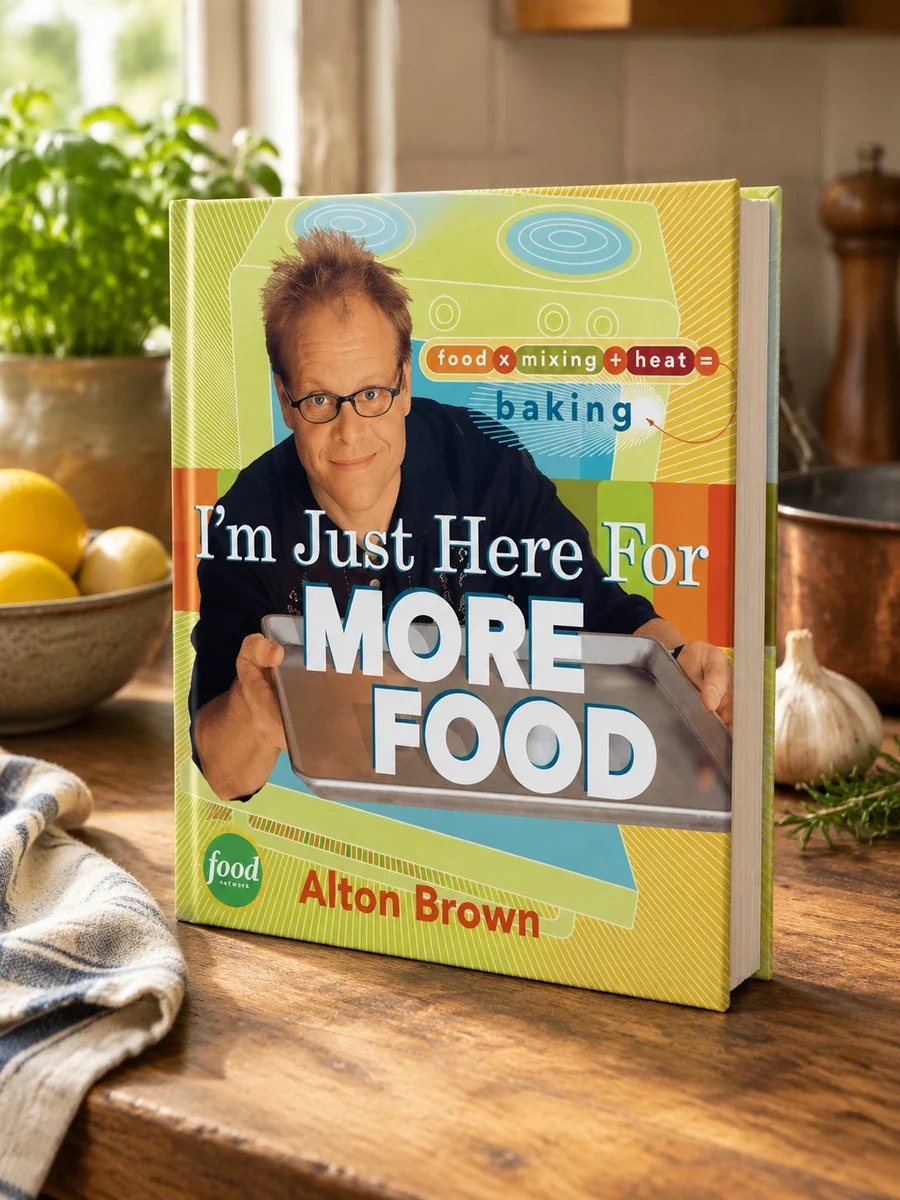
2. I'm Just Here for More Food: Food X Mixing + Heat = Baking — Alton Brown
Best for: aspiring bakers and cooks who want a scientific explanation of baking.
After learning how Brown approaches general cooking, turn to this companion volume for a subject where technique and measurement become especially consequential. Baking is less forgiving than many savory cooking methods. The relationship between ingredients, mixing, and heat can determine whether a cake rises properly, a crust holds together, or a bread develops the intended texture.
Brown applies his explanatory style to breads, cakes, cookies, pies, and custards. Importantly, the book approaches baking through the science of ingredients and mixing methods rather than simply presenting a long list of desserts. Recipes range from familiar baking projects to more involved preparations, including pie crust, funnel cake, and cheese soufflé. Diagrams, equipment information, and ingredient explanations help make the material instructional rather than purely inspirational.
This is an excellent second book if baking is part of your regular kitchen routine. It is also a sensible standalone purchase for someone whose primary interest is pastry and baking science. Readers who are not interested in baking can comfortably postpone it and continue to the broader cooking collections.
Build a practical cooking library: recipes and everyday inspiration
Once you have explored the underlying methods, the next step is to see how Brown's ideas translate into a more personal collection of food. These books offer a different reading experience from the instructional manuals. They are useful when you want recipes to cook regularly while retaining the author's characteristic attention to ingredients, equipment, and technique.
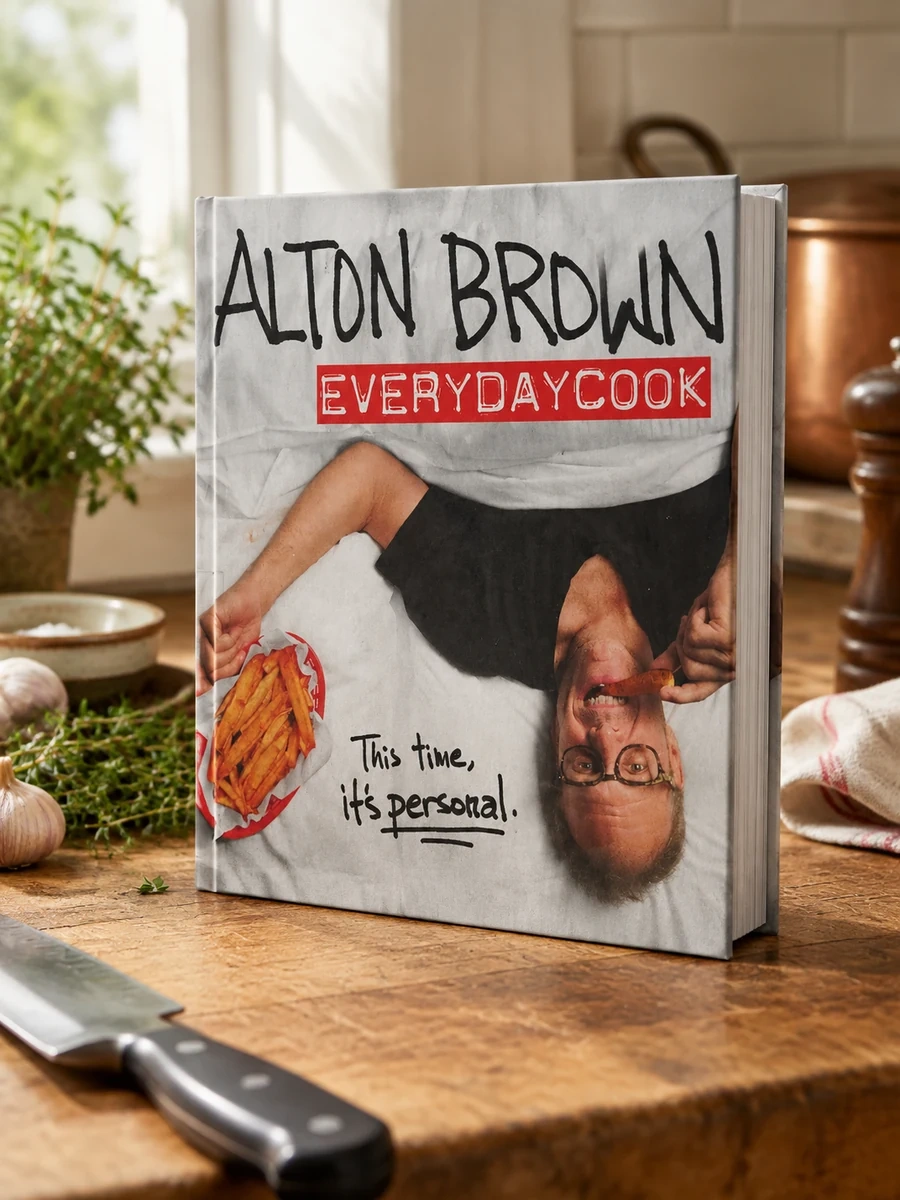
3. Alton Brown: Everydaycook: A Cookbook — Alton Brown
Best for: confident home cooks looking for an approachable, versatile recipe collection.
After two books that emphasize how cooking works, Everydaycook offers a more direct route into what to prepare. Its 101 recipes are organized by time of day, giving the collection a practical structure for cooks who want ideas for different parts of their routine. Brown also brings his familiar food-science perspective to the methods, tools, and ingredients behind the recipes.
The distinction matters. This is not simply another technical manual, nor is it a collection designed exclusively for experienced cooks. Its appeal is the combination of usable recipes and the author's explanations of the decisions that make them work. The book includes photographs and the conversational perspective that makes Brown's writing recognizable.
We recommend it for readers who understand the basic cooking concepts but want a collection they can return to for actual meals. It also makes a good first purchase for someone who prefers a conventional cookbook format over a technique-by-technique instructional book. If you are buying for a Brown fan who wants something different from the television-related collections, this is a strong candidate.
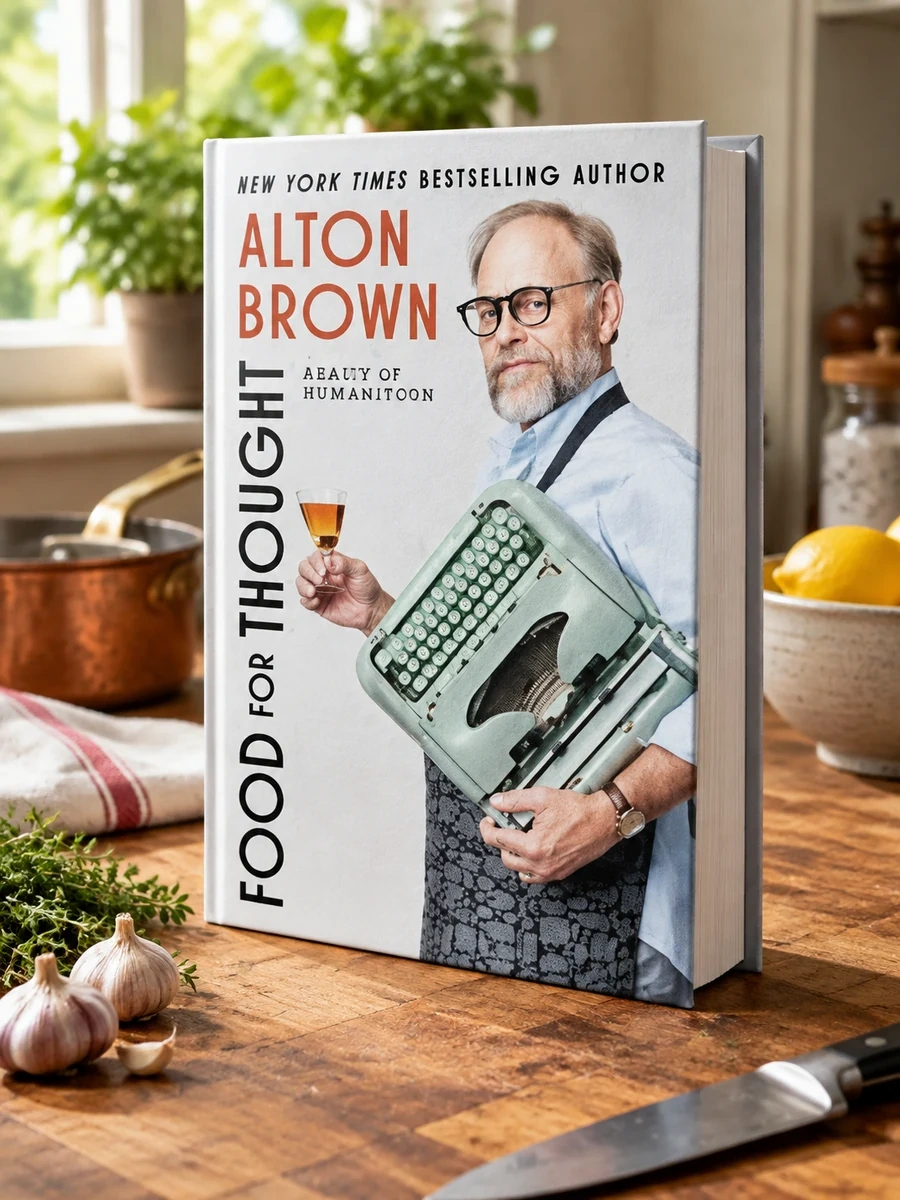
4. Food for Thought: Essays and Ruminations — Alton Brown
Best for: existing fans interested in Brown's voice beyond the recipe page.
Not every Alton Brown book needs to be treated as a cooking lesson. Food for Thought offers a different kind of entry into his work through essays and ruminations. Its title signals a more reflective approach to food writing, rather than the method-focused instruction of the earlier books.
This is the natural choice for readers who enjoy Brown's commentary as much as his recipes. His appeal has never depended entirely on the food itself: curiosity, observation, humor, and the ability to make an ordinary kitchen subject interesting are central to his public personality. An essay collection allows readers to engage with those qualities without approaching every chapter as a practical exercise.
It is not the book we would recommend as someone's first Alton Brown purchase if the immediate goal is to improve cooking skills. Instead, consider it a complementary volume after the technique books, particularly if you enjoy food history, culinary observations, and personal writing. It adds variety to a collection that might otherwise consist entirely of recipe and reference books.
Explore the Good Eats library: from early episodes to later years
For many people, Alton Brown is inseparable from Good Eats. The television series made food science entertaining by connecting practical cooking demonstrations with explanations of ingredients, equipment, history, and technique. The books bearing the show's name offer a way to explore that identity in a substantial cookbook format.
We recommend reading the available volumes in their broad chronological progression. This gives fans a natural way to explore the series' different periods, while newcomers can see how the material fits into the larger collection. These are particularly appealing to people who already enjoy Brown's television work and want more of that personality in their home library.
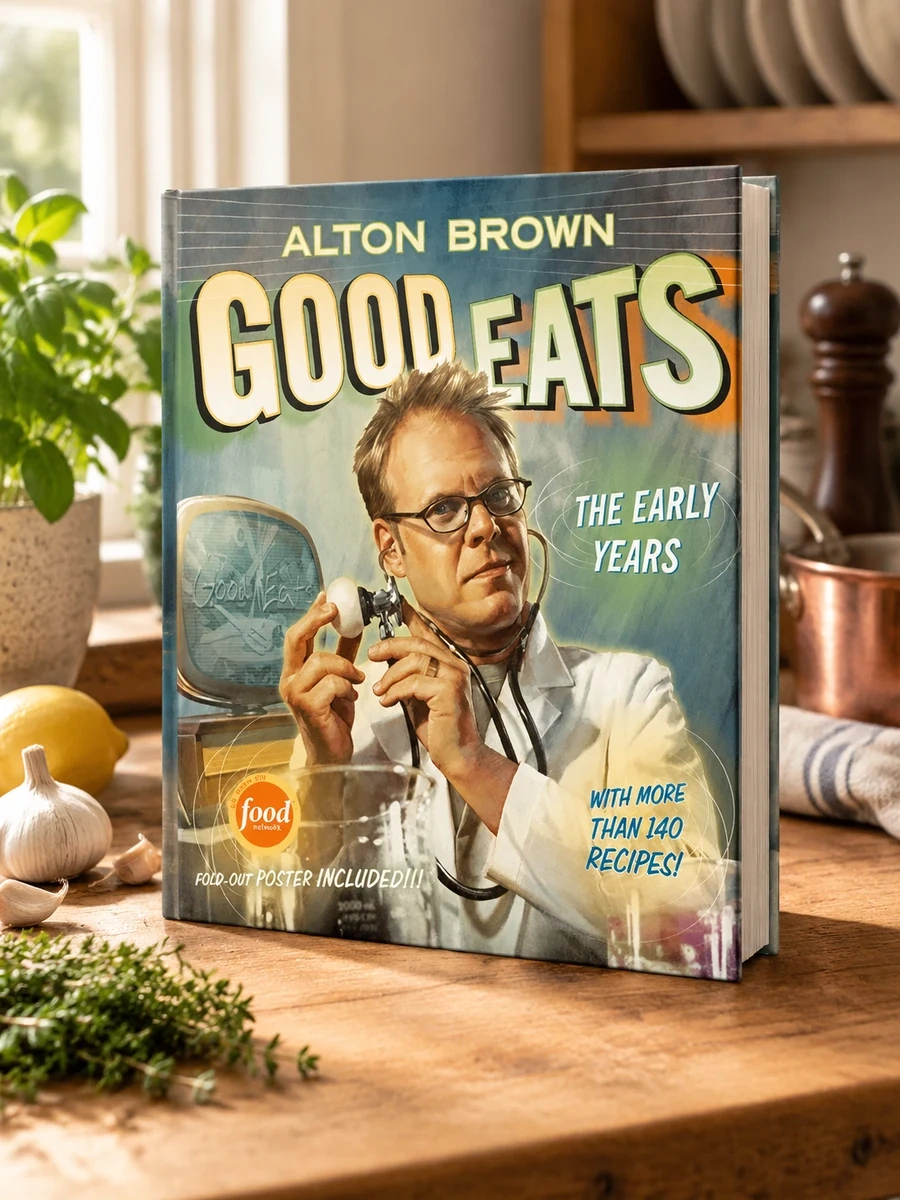
5. Good Eats: The Early Years Volume 1 — Alton Brown
Best for: new Good Eats readers and longtime fans interested in the show's beginnings.
The early-years volume is the natural first stop for readers who want to approach the television collection in chronological order. It provides an entry into the earlier period of Good Eats, making it a useful companion for people who appreciate the show's original educational personality and want to explore that material through a book.
Its position in the reading order is deliberate. By starting here, readers can move through the available collections without jumping immediately to later material. Fans who already know the show may particularly appreciate having an early-period volume as part of a broader collection. Newcomers should not feel obligated to have watched the original episodes first, though the book's appeal is strongest when you enjoy Brown's distinctive combination of cooking instruction and entertainment.
For readers primarily interested in practical cooking, the first two books in this guide remain better educational starting points. For television fans, however, this is where the Good Eats portion of the collection should begin.
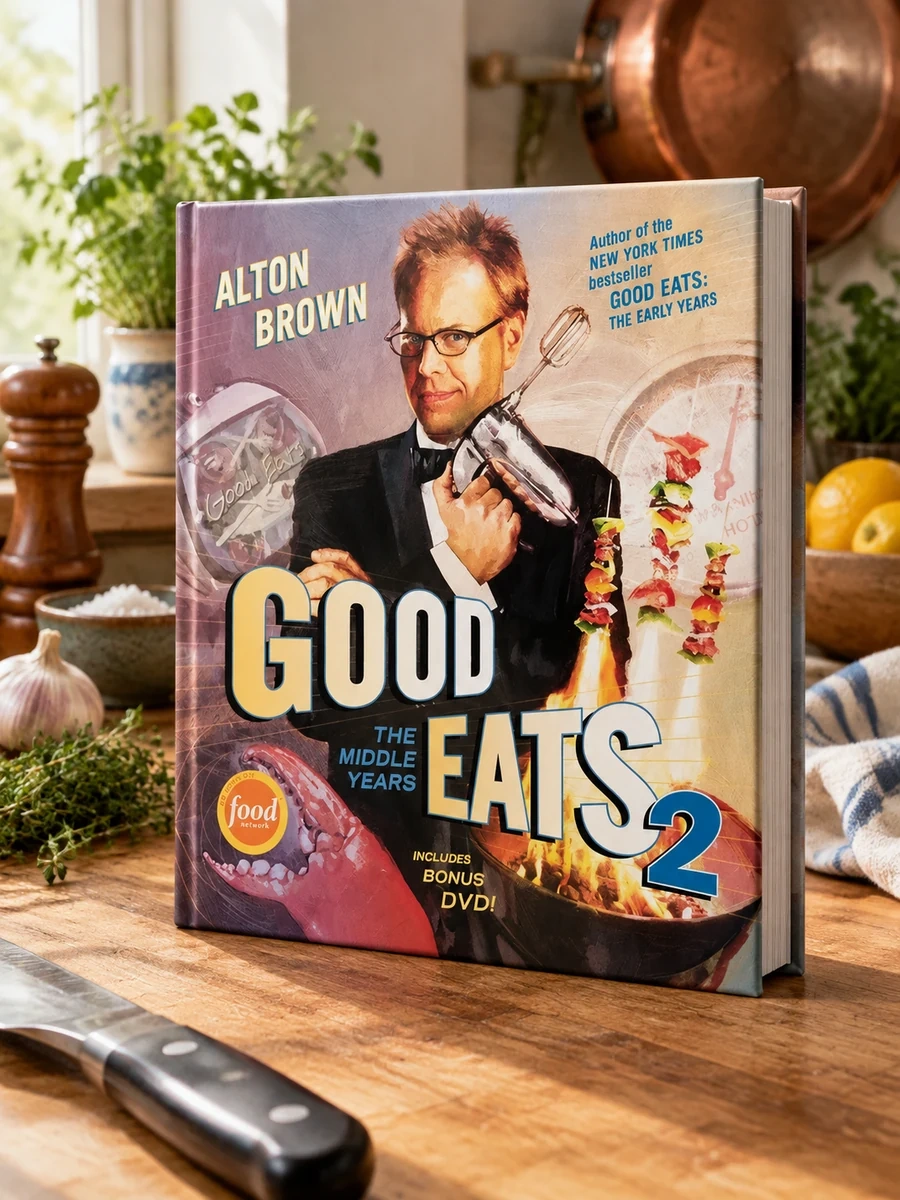
6. Good Eats 2: The Middle Years Volume 2 — Alton Brown
Best for: Good Eats fans building a collection beyond the early material.
The second volume moves the reading path into the middle years of the series. It is a logical follow-up to Good Eats: The Early Years Volume 1 for anyone who wants to explore the available books in a chronological sequence. Rather than treating the books as interchangeable recipe collections, this approach gives the series a sense of progression.
It is also a useful purchase for readers who already own the early-years volume and want to continue collecting Brown's television-related work. The title itself makes its place in the sequence clear, so there is little confusion about where it belongs on the shelf.
We would not put this ahead of I'm Just Here for the Food for a reader who has never cooked from Brown's books. Its strongest appeal is the connection to the Good Eats collection. If the show's approach to explaining food is what brought you to Brown in the first place, though, this is an easy next step.
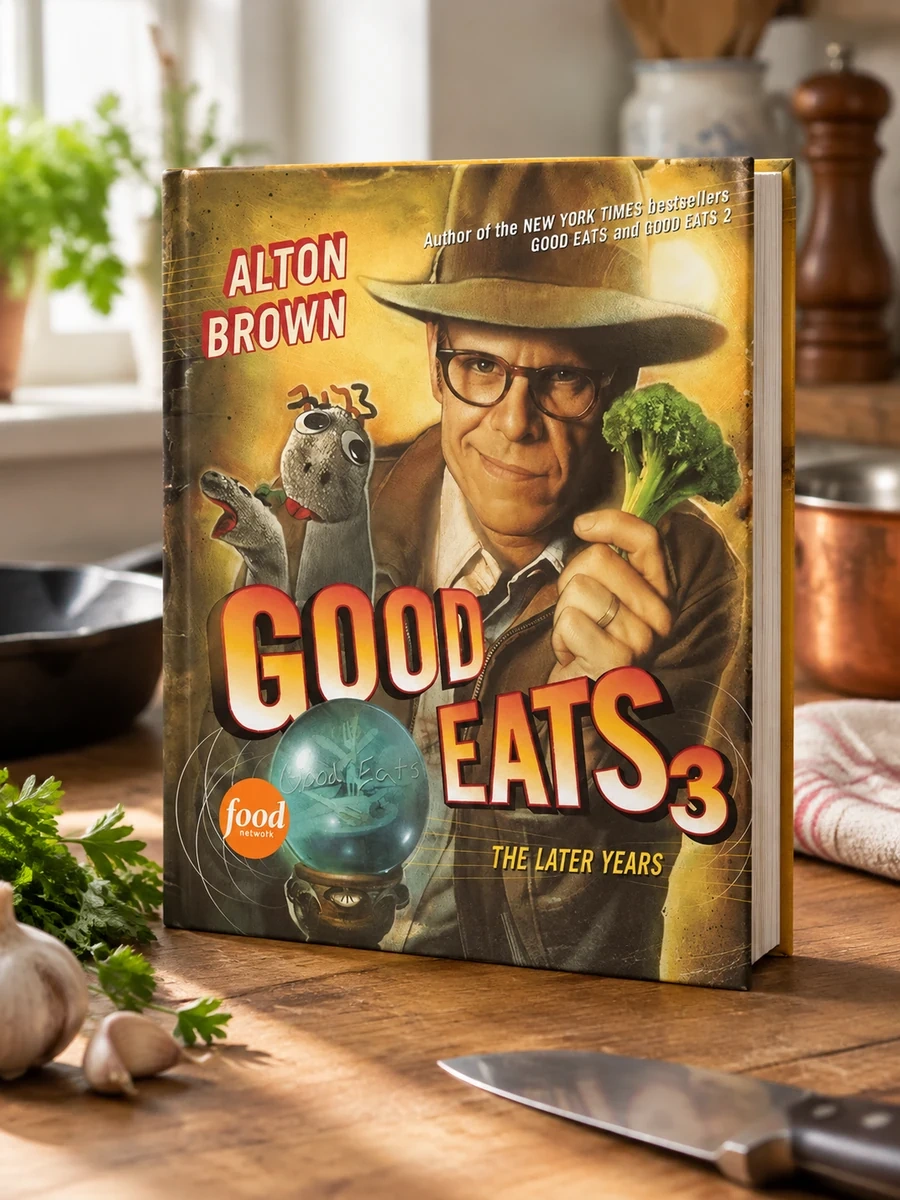
7. Good Eats 3: The Later Years — Alton Brown
Best for: established fans who want to continue through the show's later material.
After the early and middle-years volumes, Good Eats 3: The Later Years continues the chronological collection. Its place in the series makes it particularly suitable for readers who have already begun assembling the earlier books and want to extend their coverage of Brown's television work.
There is a practical reason to keep the volumes together: they represent different periods of the same recognizable cooking and teaching project. Collectors can follow the progression through the available titles, while cooks can use their interest in the show as motivation to revisit food topics and techniques. It is less of a first-purchase recommendation than a continuation volume, but an important one for anyone assembling the series.
If you are choosing between this and one of Brown's foundational technique books, consider your main purpose. For learning new cooking skills, start with I'm Just Here for the Food. For extending a Good Eats collection, this is the next logical book.
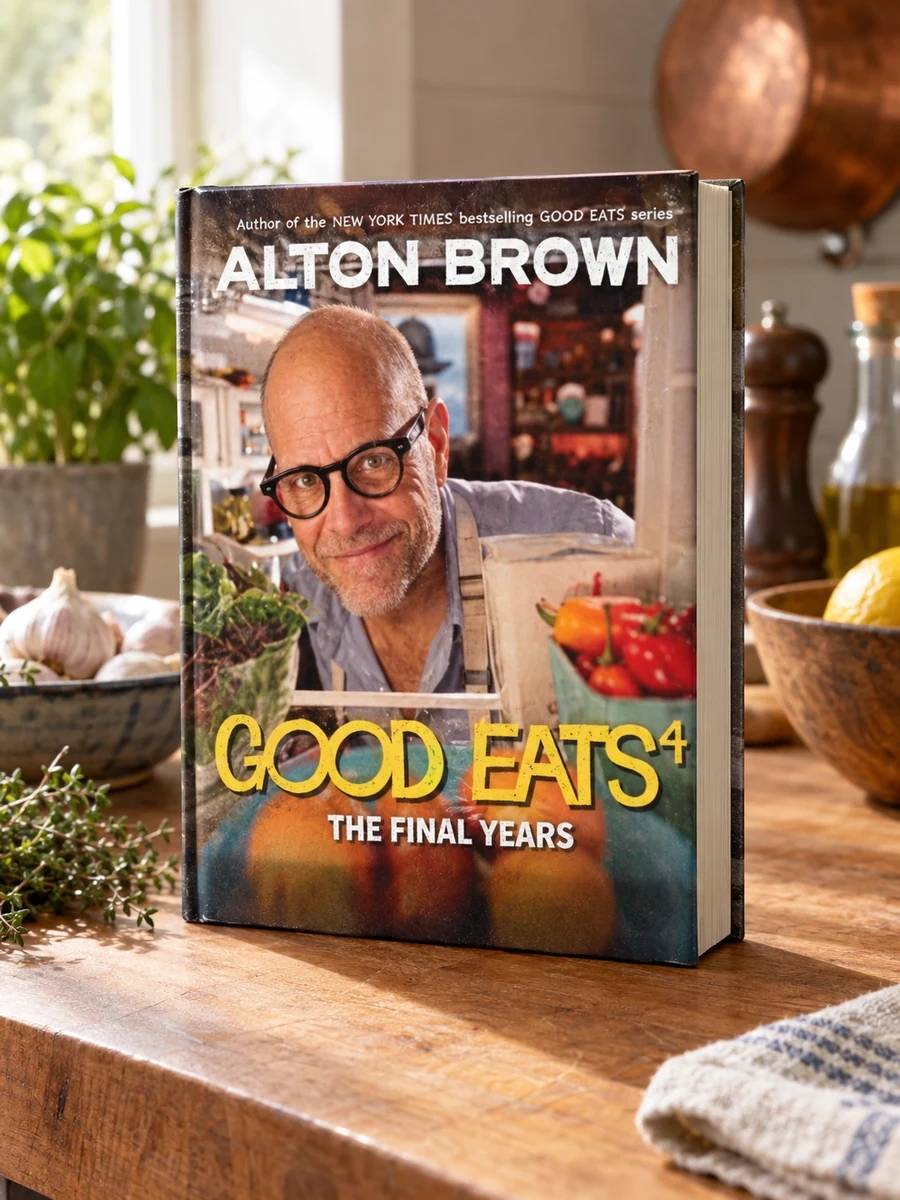
8. Good Eats: The Final Years — Alton Brown
Best for: dedicated Good Eats fans and collectors completing their available chronological sequence.
The final-years volume completes the reading path through the four Good Eats titles in our catalog. For someone who has worked through the early, middle, and later-years collections, it provides the natural next book. It also makes sense for longtime viewers who are especially interested in the later period of Brown's television work.
We would place this last in the Good Eats sequence, not because it is necessarily less interesting, but because its greatest value comes from having the earlier volumes as context. Taken together, the four books make a more substantial collection than any one of them can provide on its own.
There is no need to purchase the complete series immediately. Start with the early-years volume if the television material is your priority, then add the remaining books according to your interest and budget. Readers who mainly want cooking instruction may find that the first three recommendations in this guide deliver more immediate practical value.
Which Alton Brown book should you choose first?
The best reading order is not necessarily the order in which everyone should purchase these books. Your starting point should reflect what you want to get out of Brown's work. Here is how we would narrow the decision:
- If you are a complete beginner: Choose I'm Just Here for the Food: Version 2.0. Its method-based structure provides a foundation that can improve your understanding of many different dishes.
- If you love baking: Choose I'm Just Here for More Food. Its focus on mixing, ingredients, and baking science makes it the most specialized educational choice in this selection.
- If you are a confident home cook: Choose Everydaycook for a collection of recipes that brings Brown's approach into everyday cooking.
- If you are a Good Eats fan: Begin with Good Eats: The Early Years Volume 1 and continue through the middle, later, and final-years volumes.
- If you enjoy food writing: Add Food for Thought for a more reflective experience beyond recipes and cooking instruction.
There is also a sensible way to build the collection gradually. Start with one foundational book rather than buying every title at once. Cook from it, identify the methods or subjects you want to understand better, and then choose the next volume accordingly. Someone who discovers a passion for baking has a clear reason to move toward I'm Just Here for More Food; someone who becomes interested in Brown's television work can begin collecting the Good Eats books.
For a balanced two-book introduction, pair I'm Just Here for the Food: Version 2.0 with Everydaycook. The first explains techniques, while the second gives you a more conventional collection of recipes to put your growing knowledge into practice. Bakers should substitute I'm Just Here for More Food for the second title. And if you are buying a gift for someone who already knows the cooking basics but loves Brown's television personality, one of the Good Eats volumes may be the more satisfying choice.
Ultimately, Alton Brown is at his most useful when he encourages readers to think about food rather than simply follow directions. Start with the science, move toward the techniques that interest you, and then explore the television collections and essays. That path gives you more than a shelf of recipes: it builds a practical understanding of the ideas that make Brown's cooking philosophy distinctive.