Choosing a first Madhur Jaffrey cookbook can be surprisingly difficult. Her bibliography covers much more than the familiar restaurant-style curries that many American cooks associate with Indian food. There are books devoted to everyday meals, vegetarian traditions, regional specialties, international meatless cooking, and the personal food memories behind her work.
The right starting point depends on what you want to accomplish in the kitchen. Someone learning to make dal and rice for weeknight dinners needs a different book from someone who wants to investigate the relationship between curries and kebabs across Asia. A vegetarian cook might want a substantial reference work, while an established Jaffrey fan may be more interested in a specialized collection than another general introduction.
This list is organized by practical usefulness rather than publication date or a strict ranking of literary importance. It starts with the strongest general-purpose choices, moves into more specialized collections, and finishes with a book that explains the personal history behind Jaffrey's cooking. All seven titles are available in our catalog, although this is a selection of her work rather than a complete bibliography.
The best Madhur Jaffrey cookbooks for getting started
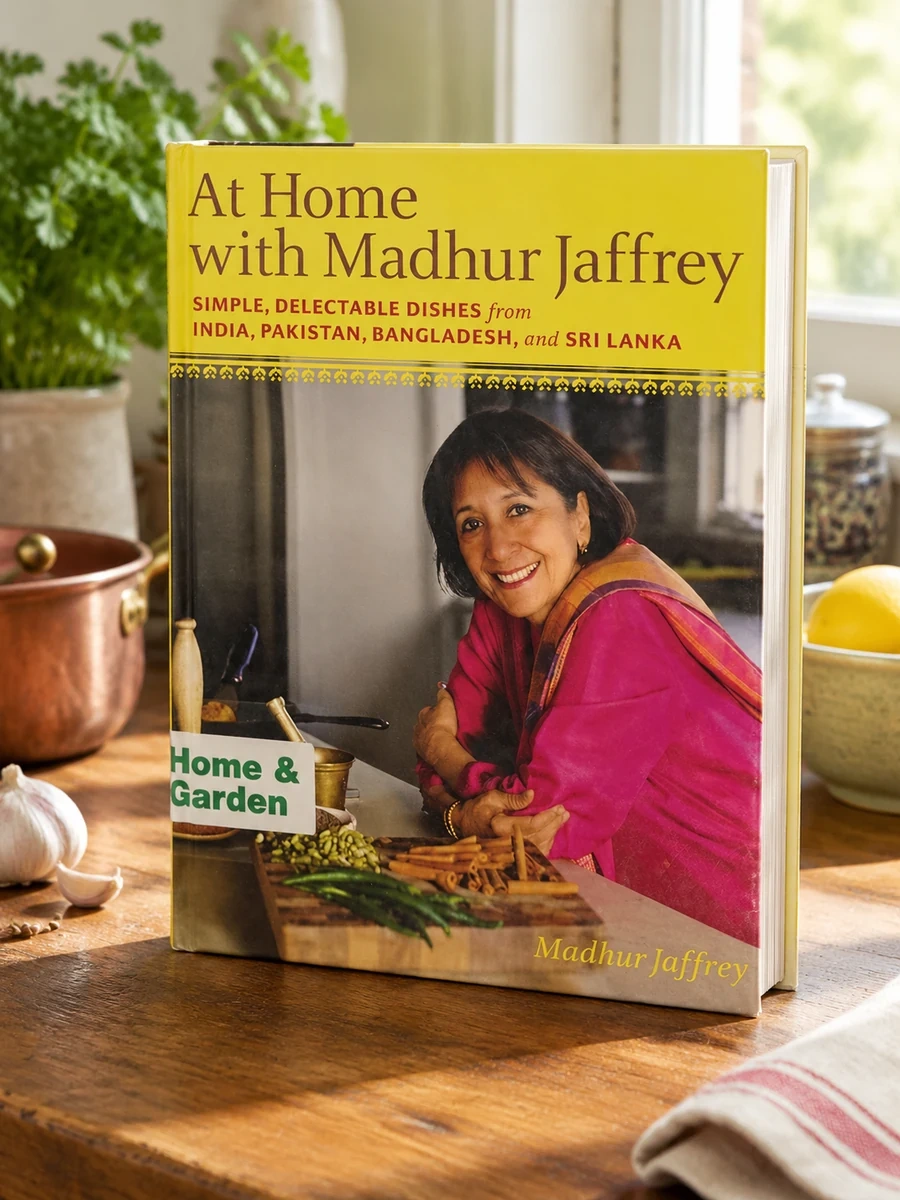
1. At Home with Madhur Jaffrey — Madhur Jaffrey
At Home with Madhur Jaffrey: Simple, Delectable Dishes from India, Pakistan, Bangladesh, and Sri Lanka is the book we would put in front of most newcomers. Its central idea is practical: traditional South Asian cooking can become part of an ordinary home kitchen without requiring every recipe to involve a long sequence of preparations. Jaffrey breaks down established techniques, reduces unnecessary steps, and explains the role of spices and seasonings.
The geographical scope is also a strength. Rather than treating Indian cooking as one uniform tradition, the book draws on dishes from India and neighboring countries. Its subjects include snacks, soups, fish and seafood, eggs, poultry, meat, vegetables, dals, rice, grains, chutneys, pickles, and desserts. That makes it useful for cooks who want to build complete meals rather than collect recipes for a single category.
For a first purchase, this is the most balanced recommendation in the catalog. It offers a relatively approachable introduction without limiting the reader to vegetarian food or a particular cooking appliance. If you want one Jaffrey book to become part of your regular kitchen routine, start here.
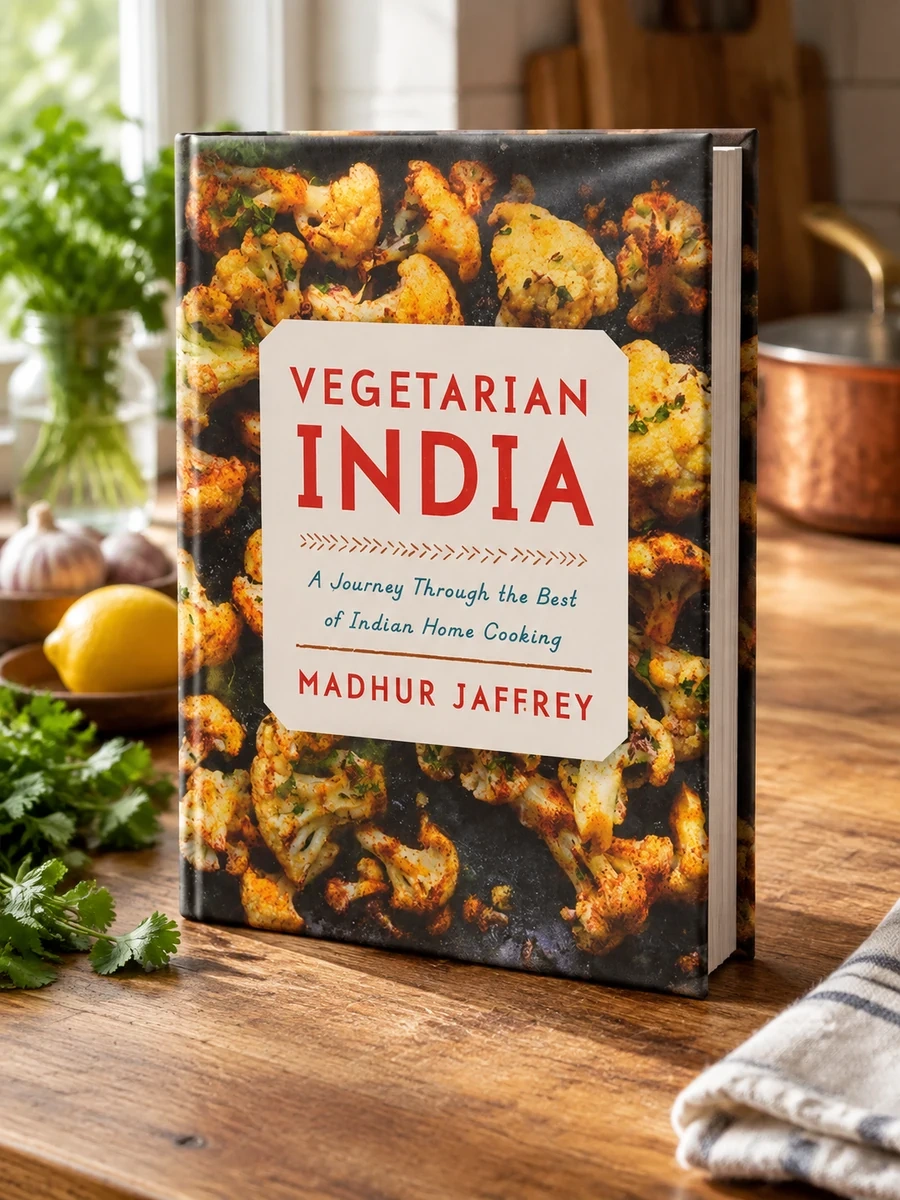
2. Vegetarian India — Madhur Jaffrey
Vegetarian India: A Journey Through the Best of Indian Home Cooking is the natural next choice for anyone whose interest centers on vegetables, legumes, and the everyday food traditions of India. Jaffrey draws on her travels and encounters with vegetarian home cooks, presenting recipes inspired by the variety of Indian regional cooking. The emphasis is on dishes that are straightforward to prepare but layered in flavor.
This distinction matters. Indian vegetarian cooking is not simply a collection of meat dishes with the protein removed. Vegetables, lentils, beans, dairy, spices, and different cooking methods have their own established roles across the country's culinary traditions. A dedicated book gives those ingredients the attention they deserve.
Choose this before a broader vegetarian reference if your primary interest is specifically Indian food. It is also a particularly sensible second Jaffrey cookbook for someone who already owns At Home with Madhur Jaffrey and wants to explore another side of her approach to home cooking. For readers building confidence with Indian vegetarian meals, this is one of the most rewarding directions to take.
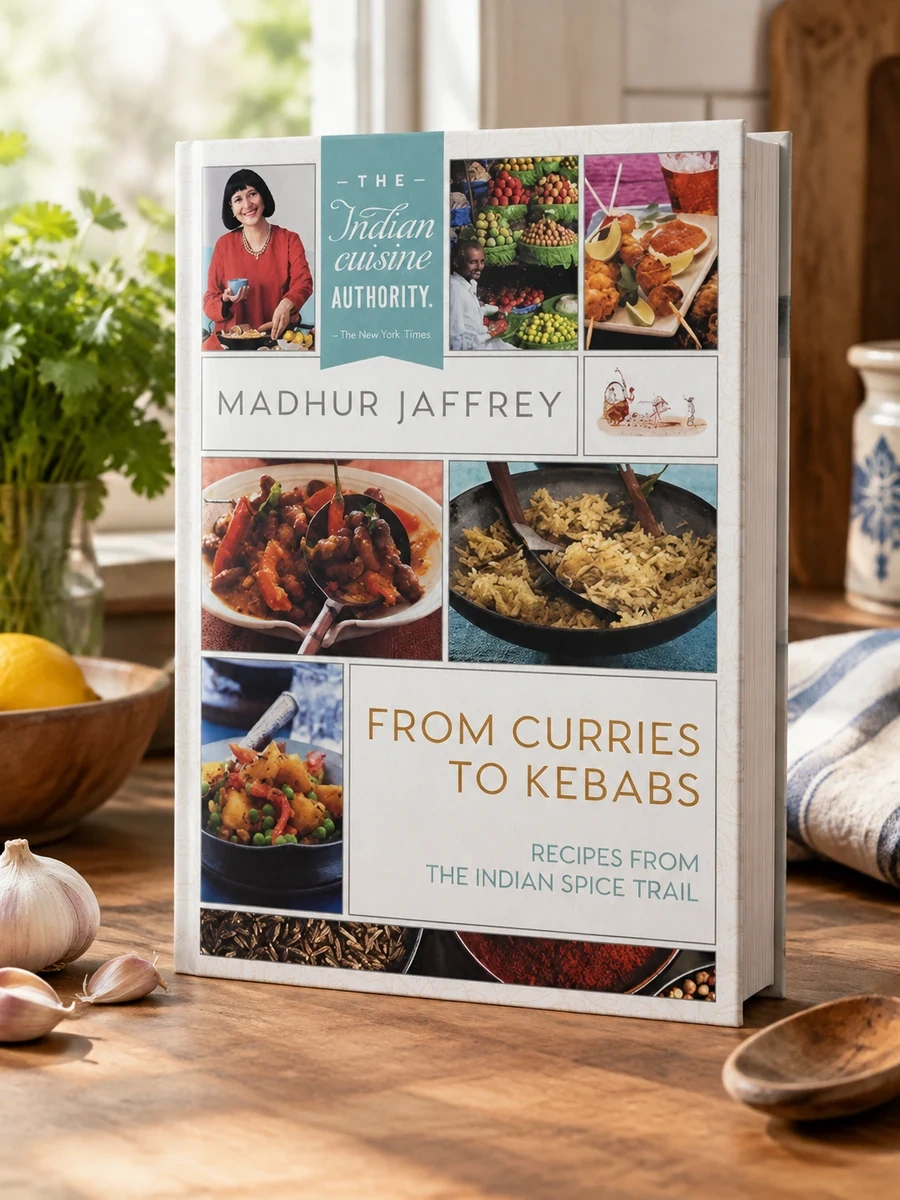
3. From Curries to Kebabs — Madhur Jaffrey
From Curries to Kebabs: Recipes from the Indian Spice Trail is the stronger choice for readers who want to move beyond an introductory understanding of Indian cooking. Its subject is the development and spread of curry traditions, including the ways migration and the exchange of ingredients and techniques have influenced dishes across Asia and eastern Africa.
The collection covers a wider range of cooking than its title might initially suggest. Alongside curries and kebabs, its contents include meat, poultry, fish, seafood, vegetables, beans, split peas, soups, rice, noodles, breads, relishes, and accompaniments. That breadth makes it useful for planning an entire meal around a main dish rather than treating curry as an isolated preparation. The published contents also show dedicated sections for ingredients and techniques.
We would recommend this book to cooks who already have some familiarity with Indian spices and want to explore more regional and historical connections. It is not necessarily the simplest first introduction, but it is an excellent way to broaden an existing collection. If your favorite part of Indian cooking is investigating the differences between curries, kebabs, and their regional variations, move this higher on your list.
For vegetarian cooks and readers who want a wider perspective
4. Madhur Jaffrey's World-of-the-East Vegetarian Cooking — Madhur Jaffrey
Madhur Jaffrey's World-of-the-East Vegetarian Cooking takes a broader geographical approach to meatless cooking. Its more than 400 recipes draw from India and other parts of Asia and the Middle East, reflecting Jaffrey's interest in the ways different food cultures use vegetables, grains, beans, dairy, and other natural ingredients.
This is an especially interesting book for readers who want to understand vegetarian cooking as a collection of distinct culinary traditions rather than a single dietary category. Its recipes extend beyond familiar Indian preparations to include influences from Japan, Korea, Thailand, Indonesia, and elsewhere. The book also addresses foundational preparations such as vegetable stock, rice, grains, pickles, bean curd, soy milk, yogurt, and fresh cheeses. The publisher's description gives a useful sense of its extensive coverage.
There is a historical dimension here, too. Originally published in 1981, it reflects a period when comprehensive English-language vegetarian cookbooks introducing American home cooks to these ingredients and techniques were particularly valuable. It is a strong choice for adventurous vegetarians and cooks interested in South Asian and Far Eastern food traditions. Choose it when breadth and culinary context matter more than having a narrowly focused Indian cookbook.
5. Madhur Jaffrey's World Vegetarian — Madhur Jaffrey
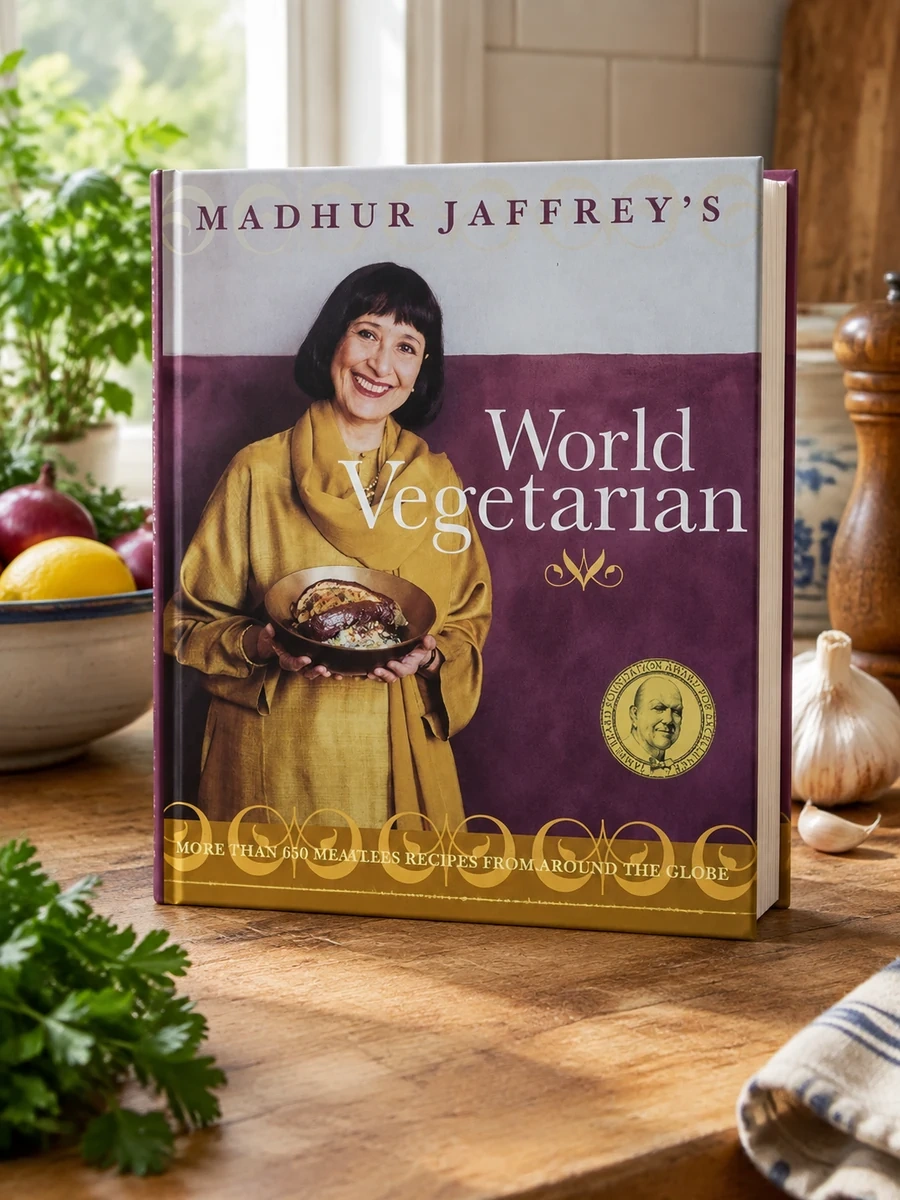
Madhur Jaffrey's World Vegetarian: More Than 650 Meatless Recipes from Around the World is the substantial reference choice. With more than 650 recipes spanning five continents, it takes the principles of vegetable-forward home cooking well beyond one region. Its extensive sections cover beans, vegetables, grains, and dairy, with additional material on soups, salads, drinks, sauces, and flavorings.
The difference between this book and World-of-the-East Vegetarian Cooking is important when deciding which one belongs on your shelf. The earlier collection concentrates on Asian and Middle Eastern traditions, while World Vegetarian has a much broader international reach. It brings together familiar everyday preparations and less common ingredients such as pigeon peas, green mangoes, and spelt, with explanations intended to make unfamiliar ingredients more accessible.
This is the better choice for someone who cooks vegetarian food regularly and wants a large working reference. It is less of a focused introduction to Indian cooking and more of a resource for discovering meatless dishes from many culinary traditions. If you already own a dedicated Indian cookbook, this can expand your repertoire considerably without simply repeating the same subject matter.
For modern cooking and the story behind the recipes
6. Madhur Jaffrey's Instantly Indian Cookbook — Madhur Jaffrey
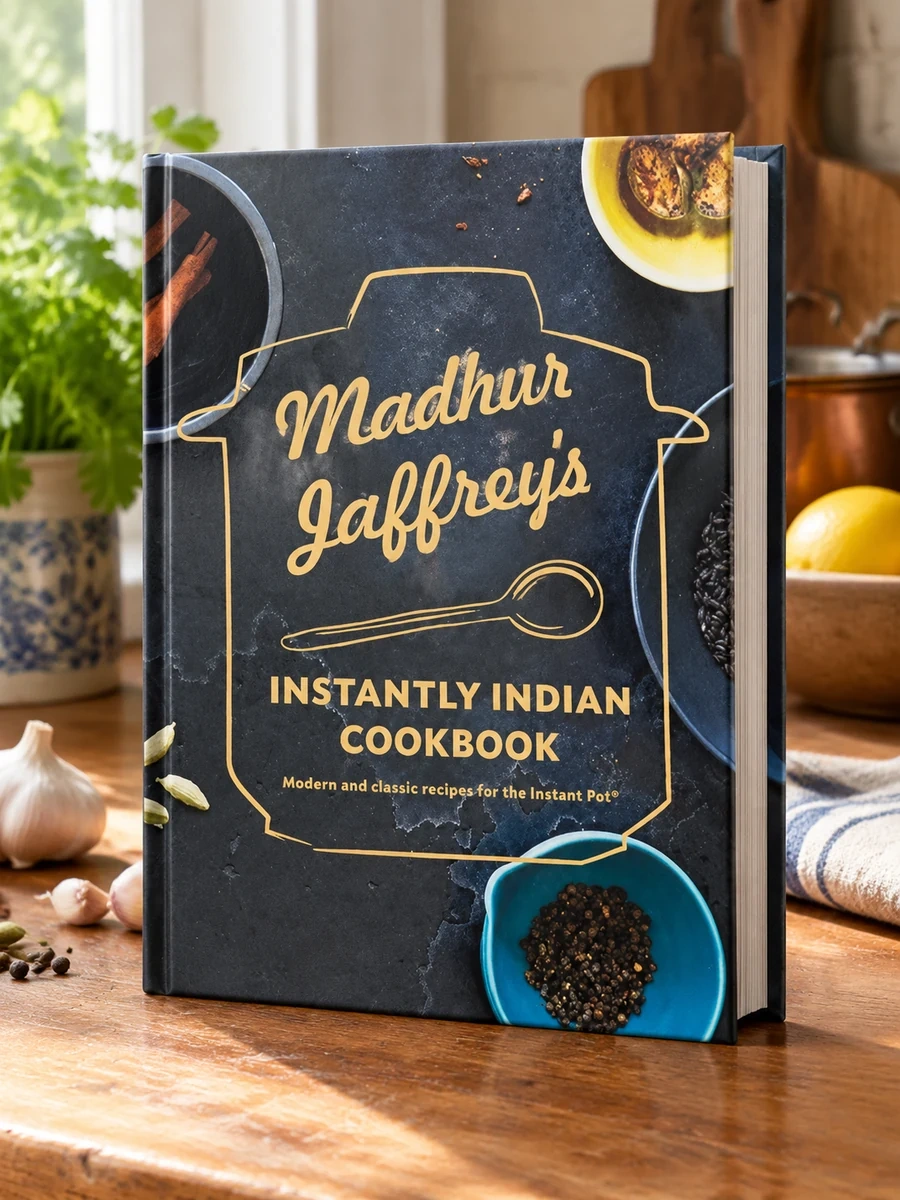
Madhur Jaffrey's Instantly Indian Cookbook: Modern and Classic Recipes for the Instant Pot has a more specific audience than the other cookbooks on this list: people who own an Instant Pot and want to use it for Indian food. Published in 2019, it contains more than seventy recipes, combining new dishes with reworked classics selected or developed for pressure-cooker preparation.
Examples include butter chicken, buttery dal, kale cooked in a Kashmiri style, and Goan-style clams. The appeal is not simply that familiar recipes have been converted into one-pot versions. Jaffrey selects dishes that suit the appliance and makes use of its particular cooking strengths. That gives the book a clear purpose instead of making it a general Indian cookbook with an appliance-related subtitle.
For someone without an Instant Pot, this should not be the first purchase. But if you already own one and want to explore Indian cooking through a convenient modern method, it is an appealing specialist addition. Existing Jaffrey fans may also appreciate seeing how her established approach translates to a different cooking format.
7. Climbing the Mango Trees — Madhur Jaffrey
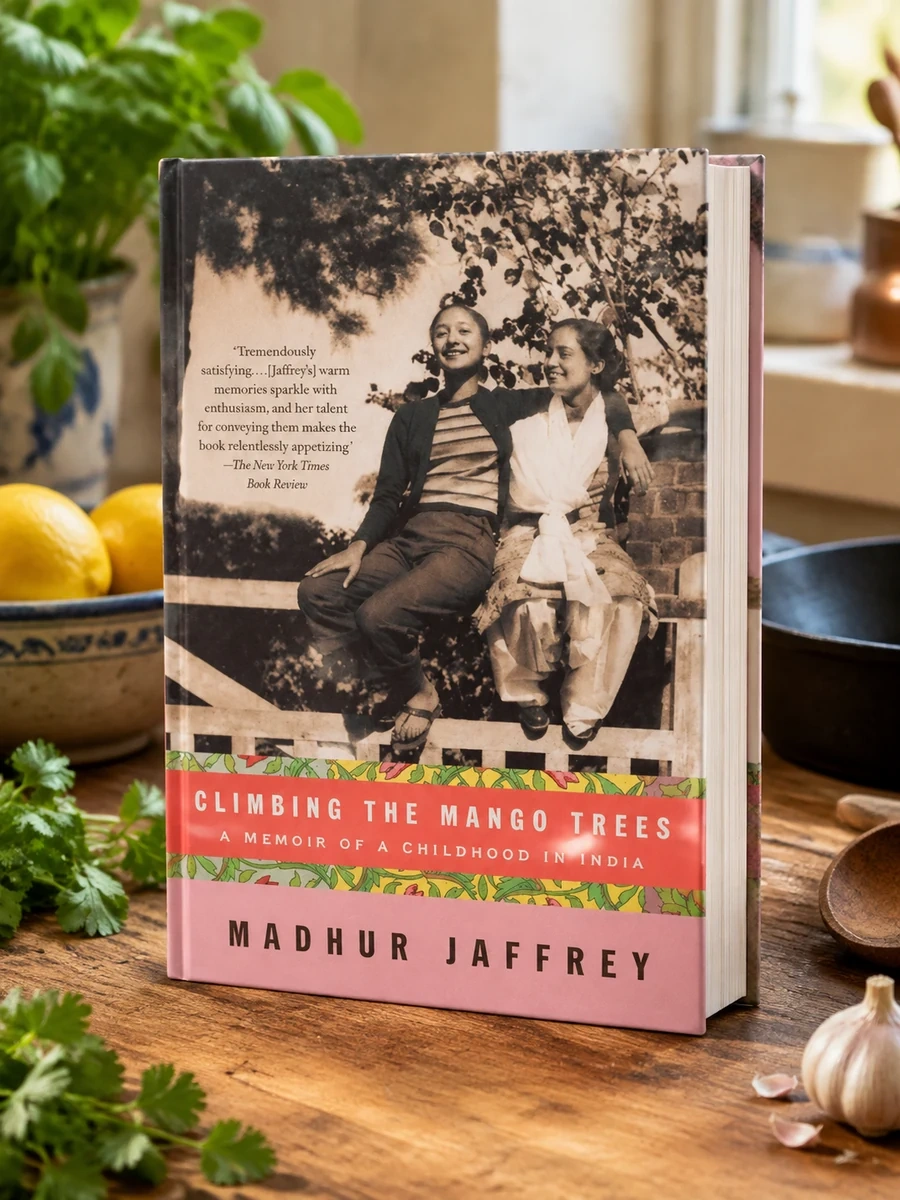
Climbing the Mango Trees: A Memoir of a Childhood in India (with Recipes) is the nontraditional choice, and arguably the most personal book in this selection. Rather than functioning primarily as a technique manual, it tells the story of Jaffrey's childhood in India, her extended family, and the food experiences that shaped her understanding of cooking.
Food is central to the narrative. Memories of family meals, childhood adventures, picnics, and seasonal ingredients provide the context for understanding why particular dishes matter. The book also includes more than thirty recipes connected with her childhood, making it a particularly appealing combination of memoir and culinary reading. The publisher describes it as an account that follows Jaffrey from India to Britain, with food memories connecting the different stages of her life. The publisher's overview offers further background.
This is not where we would send someone looking for a step-by-step introduction to Indian cooking. It is where we would send someone who wants to understand the experiences, family traditions, and memories behind Jaffrey's recipes. It also makes a thoughtful companion to her more practical cookbooks, particularly for readers who enjoy food writing as much as cooking.
How to choose your first Madhur Jaffrey cookbook
There is no requirement to read these books in publication order, and there is little reason to collect all seven unless their different approaches genuinely interest you. The best choice is the one that matches the food you want to prepare and the way you like to learn.
- For the first-time Indian home cook: Start with At Home with Madhur Jaffrey. Its practical approach and broad selection of South Asian dishes make it the most balanced starting point.
- For Indian vegetarian cooking: Choose Vegetarian India. It focuses on the diversity of Indian home cooking without making meatless food feel like an afterthought.
- For curries and regional exploration: Pick From Curries to Kebabs. It offers a broader perspective on the movement and development of curry traditions and related dishes.
- For Asian vegetarian traditions: Choose World-of-the-East Vegetarian Cooking. Its regional scope makes it particularly useful for exploring ingredients and preparations beyond India.
- For a comprehensive international vegetarian reference: Pick World Vegetarian. Its large collection and ingredient-based coverage make it the most expansive meatless resource here.
- For Instant Pot cooking: Choose Instantly Indian, provided you own the appliance and want recipes developed specifically for it.
- For food history and personal storytelling: Read Climbing the Mango Trees. It offers a different understanding of the food memories behind Jaffrey's cooking.
One useful way to build a small collection is to begin with a general-purpose book and then add a specialist title. At Home with Madhur Jaffrey followed by Vegetarian India gives a strong foundation in South Asian home cooking and its meatless traditions. Alternatively, pair At Home with From Curries to Kebabs if your interests lean toward regional variety, spices, and the history of curry.
Vegetarian cooks have another sensible route: start with Vegetarian India if India is the priority, or choose World Vegetarian if you want international variety. The two books have different purposes, so owning both makes more sense for someone who regularly cooks meatless meals than for someone simply looking for a first Indian cookbook.
Finally, remember that a cookbook's usefulness is not measured only by how many recipes it contains. A book you return to for dal, vegetables, rice, and familiar family meals may prove more valuable than a much larger collection you rarely open. Jaffrey's work offers several ways into the subject, from practical everyday cooking to regional exploration and personal food history. Start with the book that matches your kitchen today; the others can give you a reason to keep exploring.