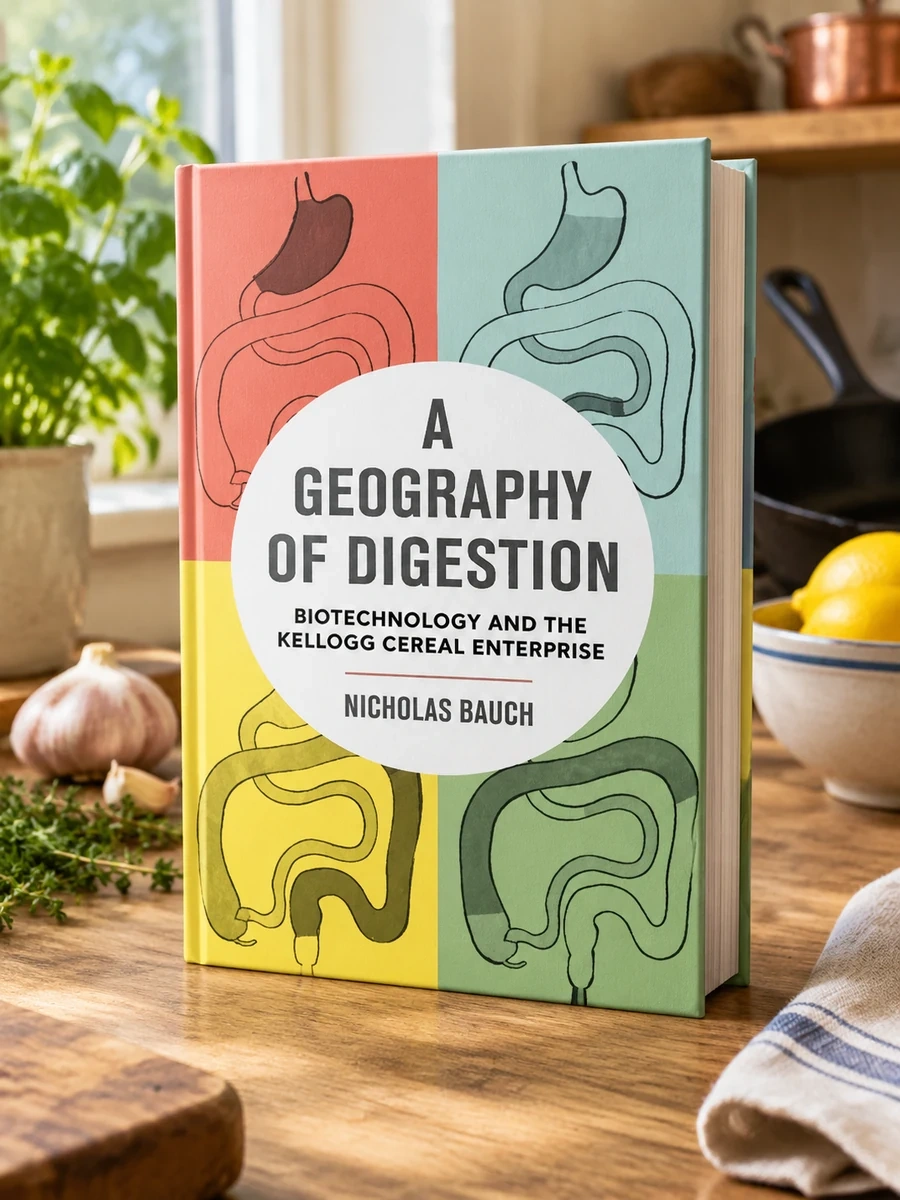
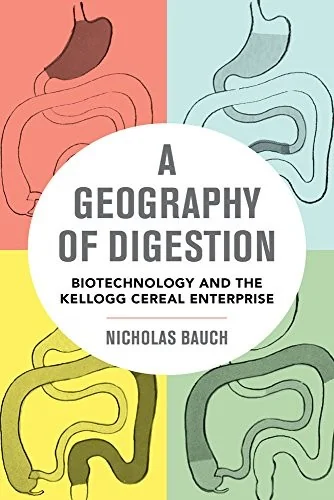
A Geography of Digestion: Biotechnology and the Kellogg Cereal Enterprise Volume 62
✍️ Bauch, NicholasA study of how Kellogg linked bodily digestion to industrial infrastructure.
The author challenges traditional views of nutrition by showing how physical health was constructed through external systems. He demonstrates that the act of digesting food relied on a network of technologies including manufacturing equipment and waste management. This perspective shifts the focus from individual biology to the broader ecological and urban contexts that made modern eating possible. The book provides a grounded look at how survival processes were integrated into the built environment.
This work sits within the late nineteenth century context of American health food sensibilities. It explores the emergence of these ideas through the lens of one major enterprise and its impact on national consumption habits.


📝 Description: A Geography of Digestion: Biotechnology and the Kellogg Cereal Enterprise Volume 62
💎 Expert review
📖 Why choose it
Why this book is worth reading
Readers interested in the intersection of environmental studies, food science history, and American health movements will find this text invaluable. It offers a grounded perspective on how survival processes were integrated into the built environment, shifting focus from individual biology to broader ecological contexts. By mapping connections between machinery, sewer networks, and agriculture, it reveals how Kellogg’s enterprise influenced consumption patterns. The book provides essential insight for scholars examining the material culture of wellness practices and the historical development of dietary habits in early twentieth-century America.
⭐ Reader reviews
Reader rating
Nicholas Bauch presents a rigorous historical analysis that may disappoint those seeking practical recipes or contemporary dietary advice. This is not a cookbook but a scholarly examination of how digestion was constructed through industrial infrastructure at the Battle Creek Sanitarium. The narrative focuses on the geography of health, tracing technological innovations beyond the kitchen to urban and agricultural landscapes. While intellectually stimulating for fans of food writing and biotechnology history, it lacks the utility of standard culinary guides. Readers looking for immediate cooking inspiration will find the content too abstract and academic for their needs.
❓ Frequently asked questions
📖 Who should read this
Readers interested in the intersection of industrial history and food systems will find this compelling. It suits those who prefer academic analysis over practical cooking advice. Ideal for scholars examining how urban infrastructure shaped dietary habits and public health perceptions in early twentieth century America.