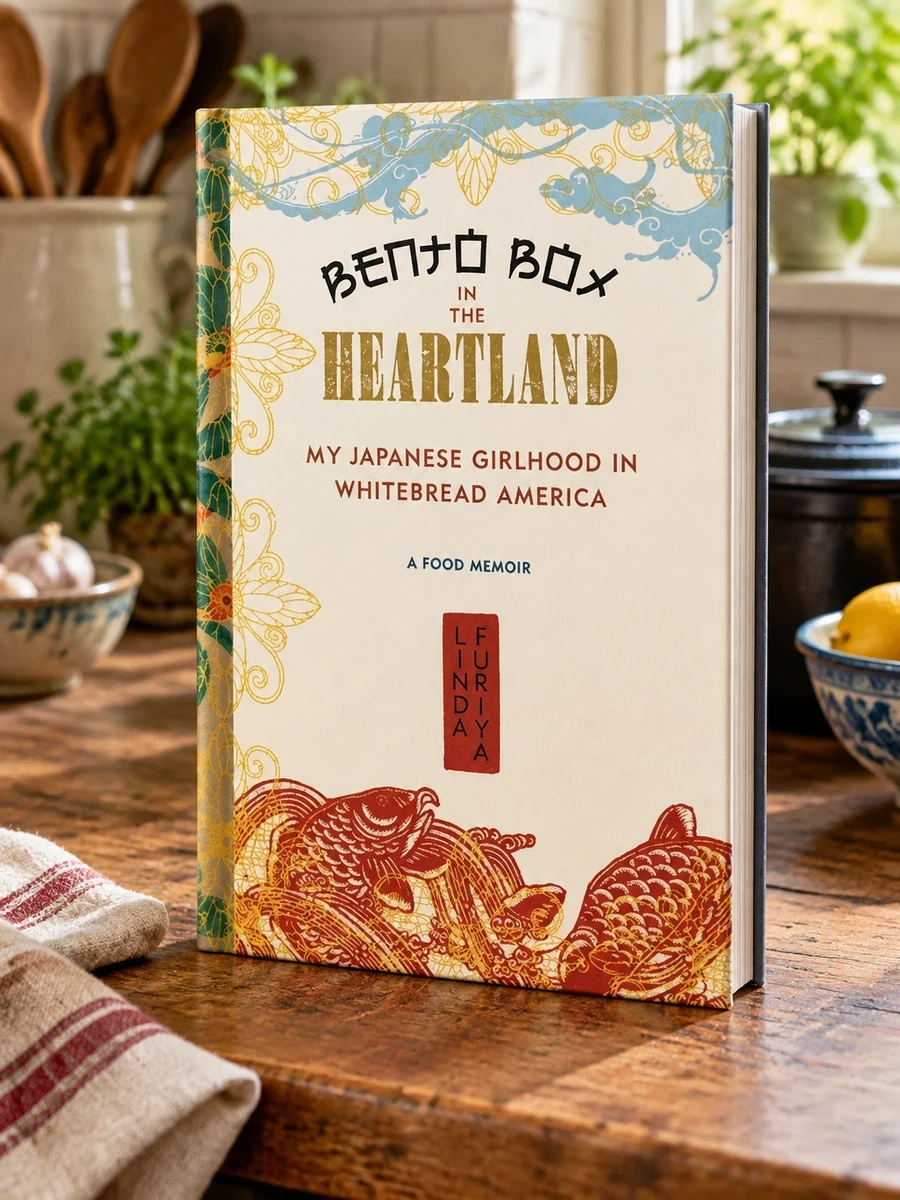
Bento Box in the Heartland Subtitle: My Japanese Girlhood in Whitebread America
✍️ Furiya, LindaA memoir about a Japanese-American girl growing up in rural Indiana.
Furiya, a syndicated food columnist, uses childhood memories to explore the tension between assimilation and heritage. The narrative focuses on the logistical challenges her parents faced in Versailles, Indiana, while raising a family during the 1960s. By integrating personal anecdotes with practical recipes, the work illustrates how food served as both a connection to their past and a marker of difference in a homogeneous environment. The structure allows readers to understand the emotional weight of daily meals for an immigrant family navigating a new country.
This memoir situates itself in 1960s Versailles, Indiana, a farming community where the author was the only Asian American resident. The work draws on the experiences of an immigrant family maintaining Japanese dietary traditions within a predominantly whitebread American setting.


📝 Description: Bento Box in the Heartland Subtitle: My Japanese Girlhood in Whitebread America
💎 Expert review
📖 Why choose it
Why this book is worth reading
Readers interested in the nuanced intersection of food, identity, and immigration will find significant value in this narrative. It offers a rare glimpse into the logistical and emotional realities of raising a Japanese family in homogeneous rural America during the 1960s. The book appeals to those seeking understanding of cross-cultural experiences, particularly the isolation felt by children navigating differing culinary traditions. Those who enjoy memoirs that blend personal history with practical recipes will appreciate how Furiya illustrates the effort required to preserve heritage far from urban centers. It serves as both a historical document and a testament to family resilience.
⭐ Reader reviews
Reader rating
Furiya’s memoir provides a poignant look at cultural isolation through the lens of lunchbox contents in 1960s Indiana. While the narrative effectively highlights the tension between assimilation and heritage, it is fundamentally a personal story rather than a technical guide. It will not suit readers seeking contemporary culinary techniques or standard regional American cooking instructions. The focus remains strictly on the emotional weight of daily meals and the logistical challenges of sourcing ingredients in a remote township. However, for those invested in immigrant history and food writing, it offers a compelling, albeit specific, perspective on maintaining identity through cuisine.
❓ Frequently asked questions
📖 Who should read this
Readers who enjoy memoirs blending cultural identity with culinary history will find this compelling. It suits those interested in Japanese-American experiences and rural midwestern life. The book appeals to home cooks seeking narrative-driven recipes rather than technical manuals or complex gastronomic challenges.