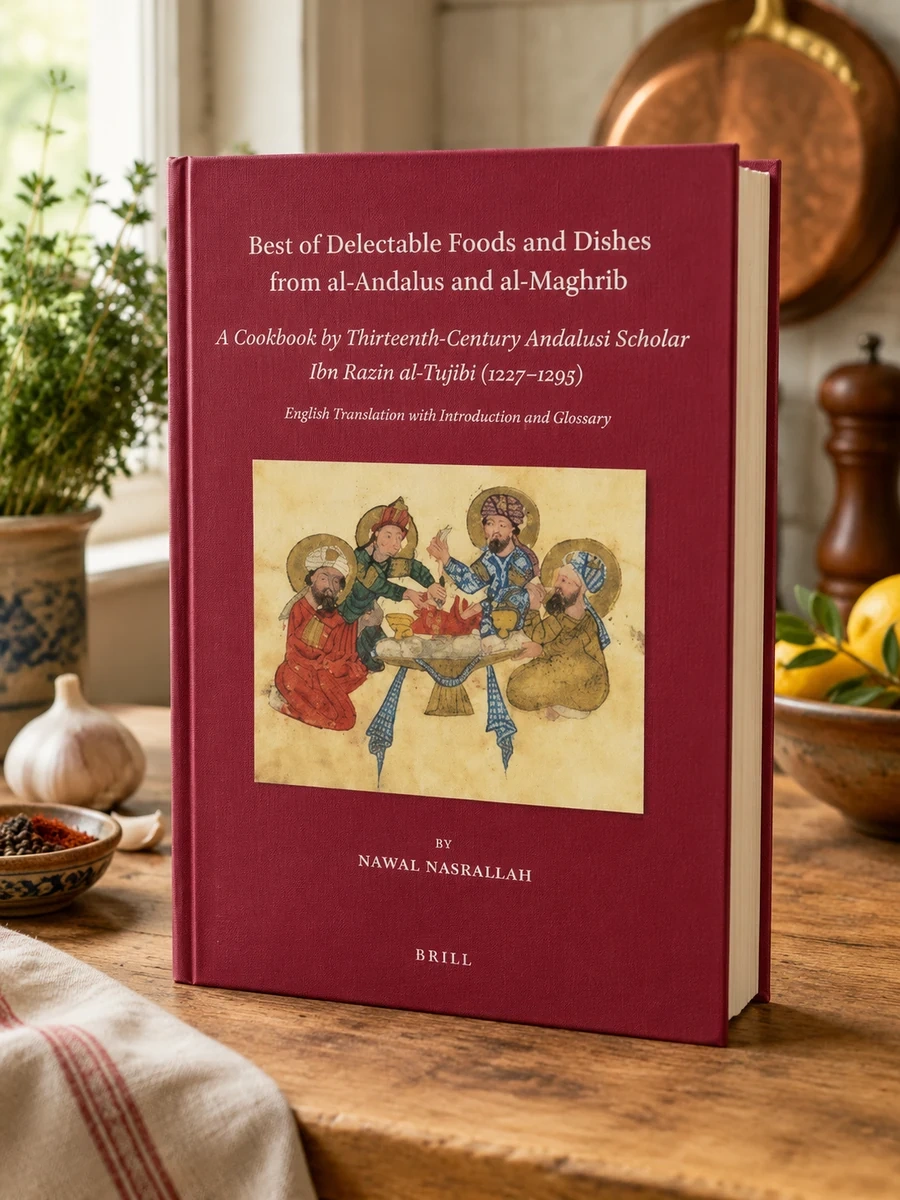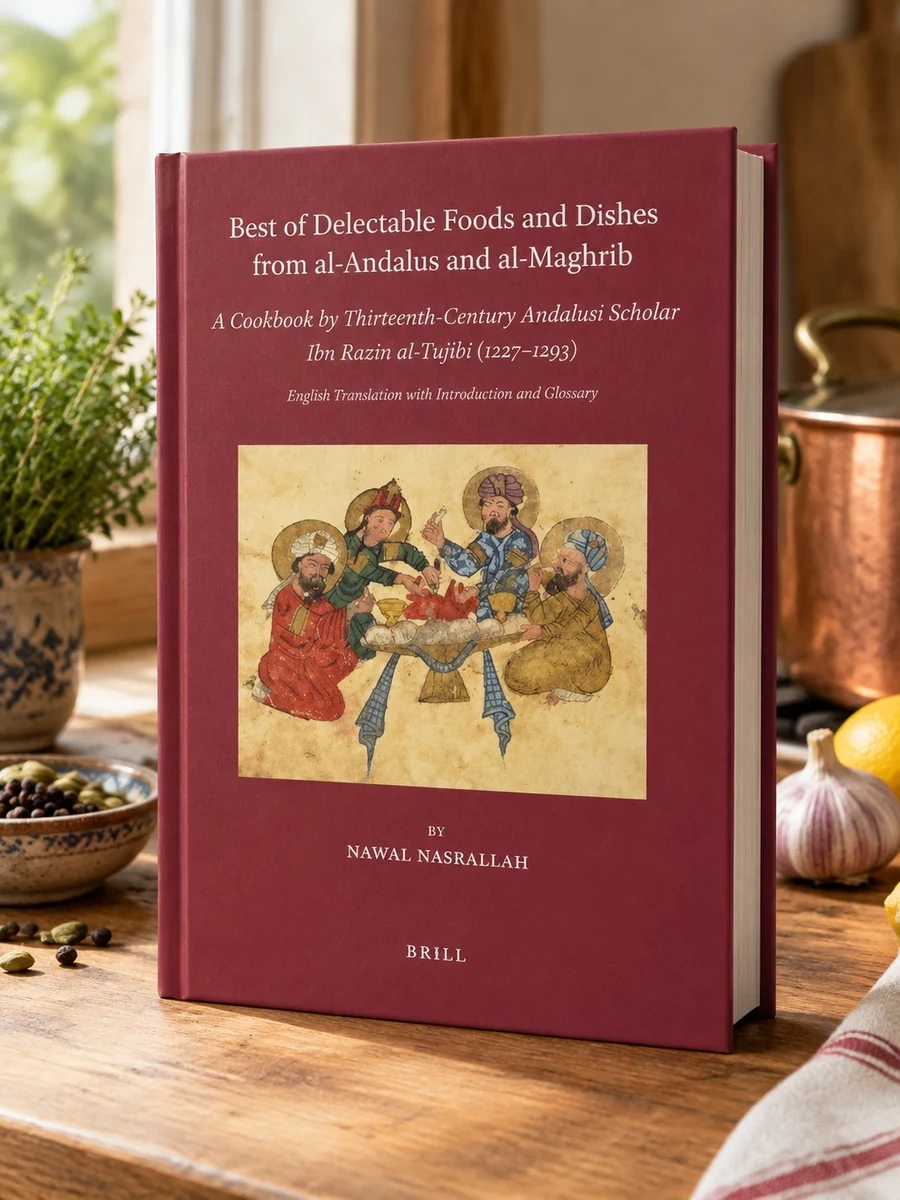
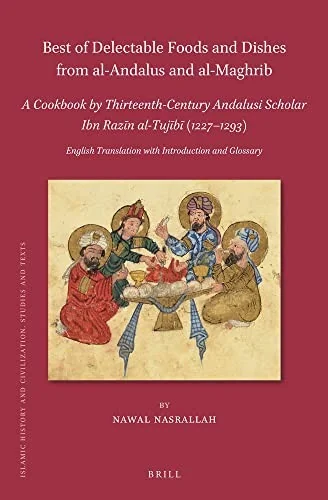
Best of Delectable Foods and Dishes from Al-Andalus and Al-Maghrib: A Cookbook by Thirteenth-Century Andalusi Scholar Ibn Razin Al-Tujib
✍️ Nasrallah, NawalA translated thirteenth-century cookbook documenting Muslim Iberian cuisine with modern recipes.
This edition offers a fresh perspective on medieval gastronomy by combining historical scholarship with practical application. Nasrallah’s translation relies on a previously unknown manuscript, ensuring the text is both complete and accurate for the first time in any language. The work does not merely list ingredients; it contextualizes them within the social customs and agricultural practices of al-Andalus and the Maghreb. The twenty-four adapted recipes provide a tangible connection to the past, allowing readers to engage with the foodways of the thirteenth century through direct experience rather than abstract description alone.
The text originates from the thirteenth century in al-Andalus and the Maghreb, reflecting the sophisticated culinary traditions developed under Muslim rule in the Iberian Peninsula. It documents the material culture and customs of this specific historical period and region.


📝 Description: Best of Delectable Foods and Dishes from Al-Andalus and Al-Maghrib: A Cookbook by Thirteenth-Century Andalusi Scholar Ibn Razin Al-Tujib
💎 Expert review
📖 Why choose it
Why this book is worth reading
Scholars of medieval material culture, Islamic history, and foodways gain an exhaustive primary resource featuring four hundred seventy-five historical recipes and two hundred eighteen color miniatures illustrating era artifacts. Culinary historians and serious researchers benefit from Nasrallah’s reliance on a previously unknown, complete manuscript that maps ingredient categorizations and social contexts accurately for the first time in any language. Contemporary cooks inclined toward historical reconstruction gain twenty-four adapted modern recipes providing tangible bridges to thirteenth-century practice. Academic supplements—including extensive introductions and glossaries—furnish deep framing for specialists examining Arab culinary heritage in medieval Iberia, turning an archival recovery project into a multidimensional artifact of Mediterranean food history.
⭐ Reader reviews
Reader rating
Brill’s scholarly weight defines this volume, which functions far more as a primary historical archive and material-culture study than a conventional kitchen companion. While twenty-four modernized recipes offer practical touchpoints, the core value resides in the comprehensive translation of four hundred seventy-five historical formulas, extensive introductory apparatus, glossary work, and rich visual artifacts. This title does not suit cooks seeking quick weeknight inspiration, streamlined modern measurements, or accessible casual regional browsing. The dense academic structure, fidelity to original manuscript organization, and specialized focus make it demanding. Yet for specialized culinary archives and medieval historians, it stands as an indispensable reference. Readers uninterested in scholarly apparatus or historical contextualization should bypass it, whereas serious researchers of Andalusi foodways will find the editorial rigor monumental.
❓ Frequently asked questions
📖 Who should read this
Home cooks interested in historical cuisine who enjoy researching medieval ingredients and adapting ancient techniques for modern kitchens. Ideal for readers seeking a tangible connection to al-Andalus foodways through practical application rather than abstract historical description alone.