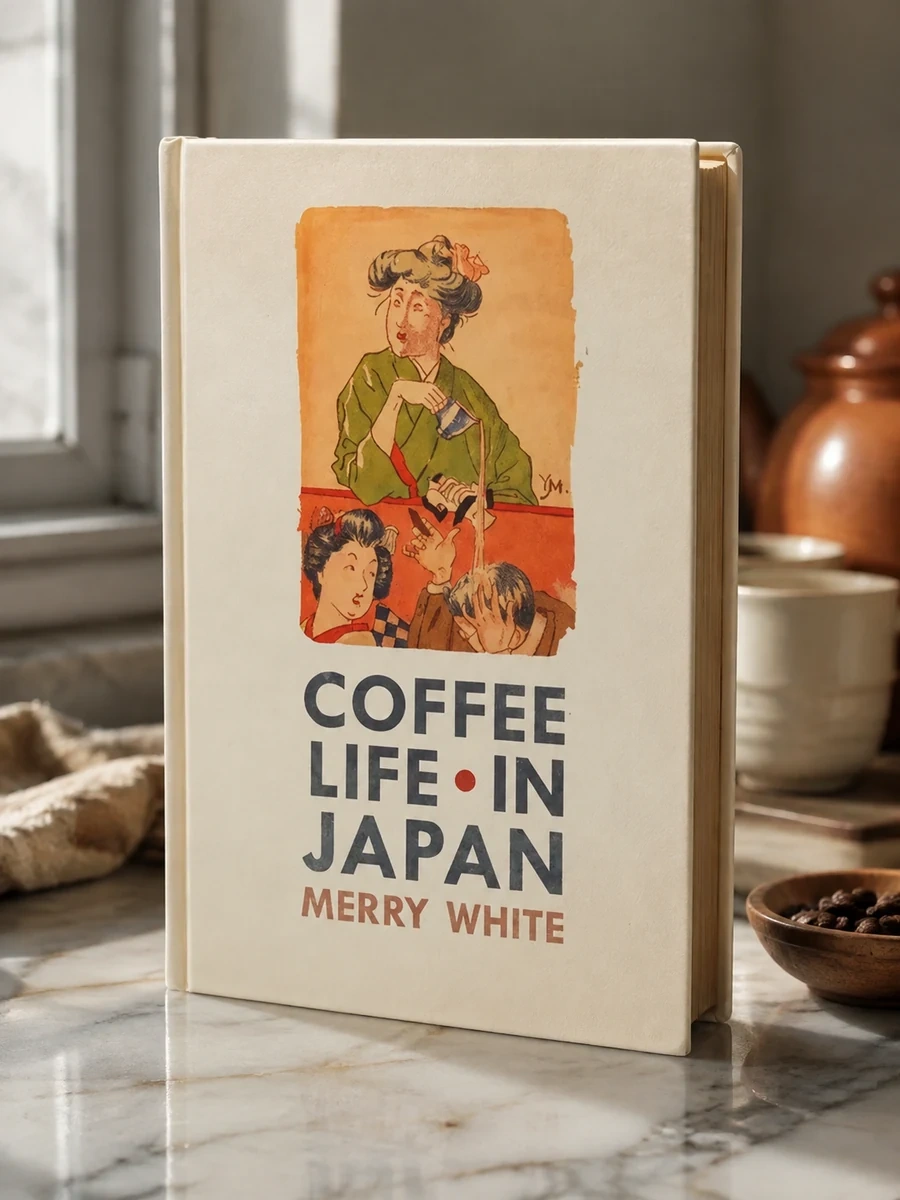
Coffee Life in Japan: Volume 36
✍️ White, MerryA cultural history of Japanese cafes from 1888 to the present day.
White investigates the intersection of coffee consumption and social identity in Japan. She traces how cafes evolved from novel institutions into vital urban oases. The book details how these spaces facilitated encounters with new behaviors and political views. White links historical trade patterns, such as Japan's role in Brazil's coffee industry, to modern aesthetic preferences. Her analysis covers themes of perfectionism and the use of public space for private reflection.
The book covers Japanese cafe society from 1888 to the early twenty-first century. It examines how these spaces influenced modernity, gender, and privacy in urban Japan. White connects historical trade with Brazil to contemporary coffee trends in Europe and America.


📝 Description: Coffee Life in Japan: Volume 36
💎 Expert review
📖 Why choose it
Why this book is worth reading
Readers fascinated by beverage history and social anthropology will gain deep insights into how coffee consumption helped shape modern Japanese society. Merry White blends ethnographic observation with personal memoir to trace cafe culture from 1888 to the present day. She reveals how these urban oases provided crucial third spaces where individuals could explore privacy, gender roles, and political expression in public settings. The text effectively links historical international trade, including Japan's involvement in Brazil's coffee industry, to modern aesthetic preferences and the performance of preparation perfection. It is an essential read for anyone seeking to understand the intersection of public space, taste, and social identity.
⭐ Reader reviews
Reader rating
White offers a detailed cultural analysis that brilliantly unpacks how cafes became central to notions of pleasure and urbanism in Japan. Her exploration of master coffee preparers and public privacy provides a compelling look at beverage culture. However, this text is strictly an ethnographic and historical assessment rather than a practical kitchen resource. Those seeking simple recipes or technical brewing guides will find little utility here, as the content completely avoids culinary instructions.
❓ Frequently asked questions
📖 Who should read this
Readers interested in Japanese social history and coffee culture will appreciate this exploration of urban life. It suits those who view beverages as cultural artifacts rather than mere drinks. Ideal for scholars studying customs or enthusiasts tracing the evolution of public spaces in modern Japan.