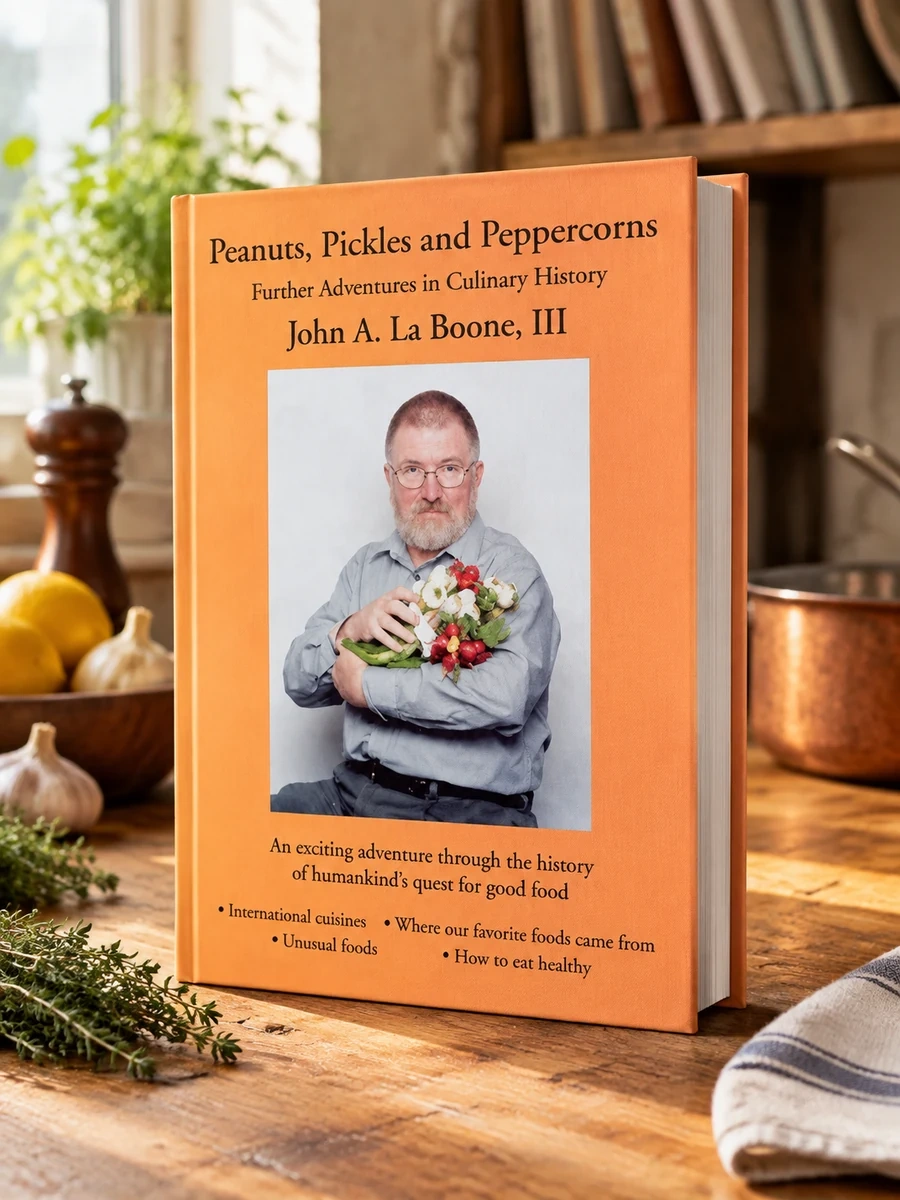
Peanuts, Pickles and Peppercorns: Further Adventures in Culinary History
✍️ La Boone, John A, IIIA humorous guide to food origins with easy recipes from John A. La Boone III.
La Boone combines historical anecdotes with practical cooking instructions in this accessible volume. He examines the journey of human food quests and the cultural links that formed around ingredients like peanuts and pickles. The text avoids dense academic language, opting instead for a style that entertains while it informs. Readers find recipes for items like kimchi alongside explanations of their history. The approach makes the material suitable for casual cooks and history buffs alike. Reviews from educators and editors confirm the blend of tasty dishes and interesting facts works well for a broad audience.
Published in 2007 by iUniverse, this book sits within the genre of general cooking and regional cultural studies. It reflects a mid-2000s interest in accessible food history that connects everyday ingredients to broader human narratives. The work appeals to American readers looking for light, informative reading about the foods they eat daily.


📝 Description: Peanuts, Pickles and Peppercorns: Further Adventures in Culinary History
💎 Expert review
⭐ Reader reviews
Reader rating
This book succeeds by balancing historical context with approachable recipes, making it a pleasant read for those who enjoy food lore. The author avoids heavy academic jargon, ensuring the content remains light and engaging for a broad audience. However, readers seeking complex gourmet techniques or rigorous scholarly analysis will likely find this work too simplistic. It is best appreciated as a leisurely companion for casual cooking rather than a serious culinary textbook.
❓ Frequently asked questions
📖 Who should read this
This volume suits casual home cooks and history enthusiasts who enjoy learning while preparing meals. It is ideal for readers seeking accessible culinary guides that blend practical recipes with engaging cultural anecdotes without requiring advanced technical skills or extensive prior knowledge of food science.