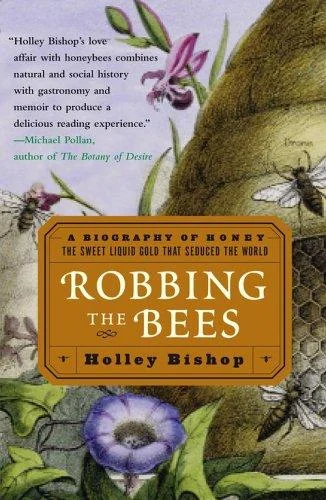
Robbing the Bees: A Biography of Honey--The Sweet Liquid Gold That Seduced the World
✍️ Bishop, HolleyA biographical account of honey blending apiculture history with personal beekeeping experiences.
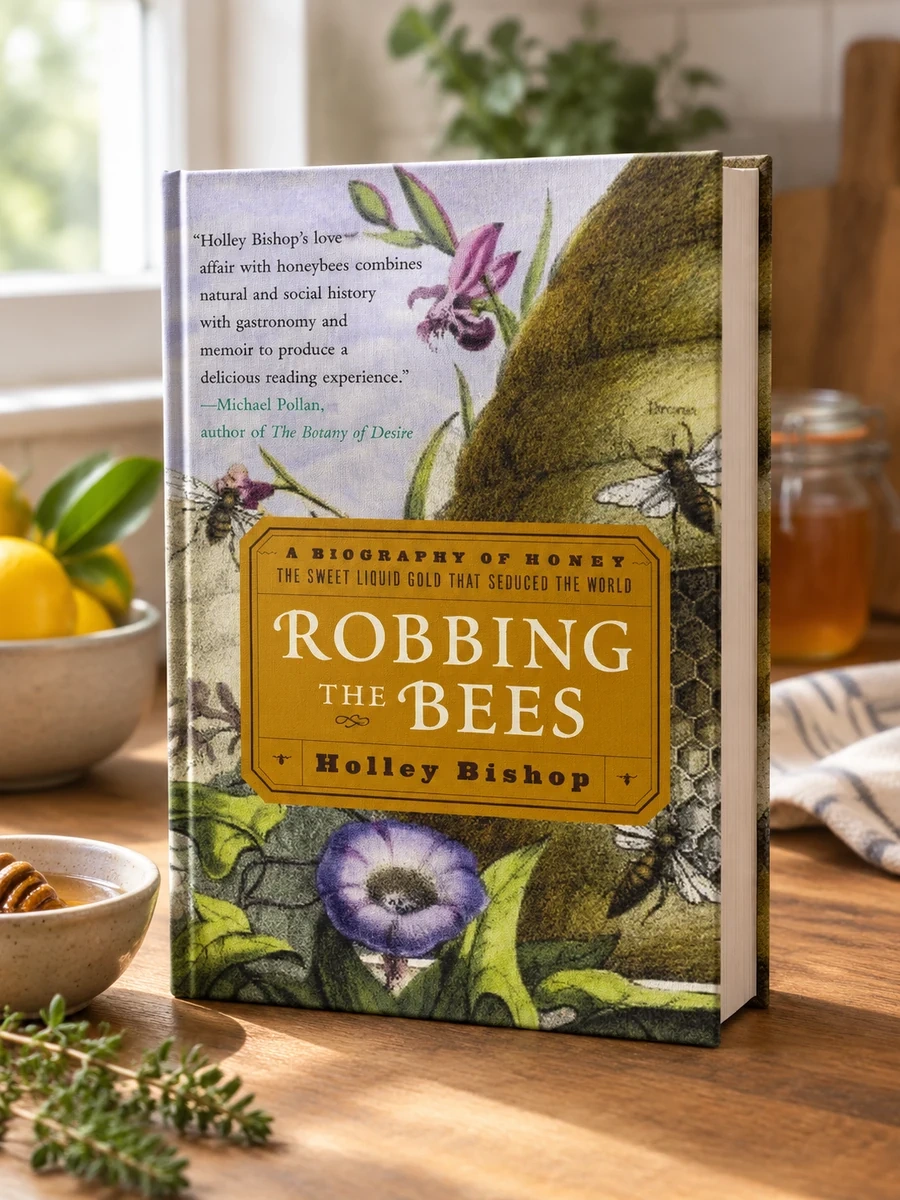
Bishop uses her apprenticeship under professional beekeeper Donald Smiley to structure an exploration of honey’s place in human culture. The text alternates between scientific facts, historical anecdotes, and lyrical descriptions of the harvesting process. This approach highlights the connection between modern beekeeping practices and ancient traditions. The inclusion of illustrations supports the written content, creating a multi-sensory understanding of the subject. The narrative emphasizes the long timeline of honey production, noting its status as the world’s only sweetener for centuries before humans began recording their fascination with it.
The book covers honey’s role in nature and world civilization from ancient times through the modern era. It focuses on the Florida panhandle as a specific location for contemporary tupelo honey production, linking local beekeeping practices to global historical contexts of agriculture and gastronomy.


📝 Description: Robbing the Bees: A Biography of Honey--The Sweet Liquid Gold That Seduced the World
💎 Expert review
📖 Why choose it
Why this book is worth reading
Readers interested in the intersection of ecology, history, and gastronomy will find this book a compelling exploration of honey’s enduring significance. Bishop offers more than just recipes; she provides a deep dive into apiculture through her apprenticeship with Donald Smiley. The narrative grounds abstract historical concepts in tangible labor, appealing to those who appreciate lyrical reflections paired with factual reporting. It is ideal for individuals seeking to understand the cultural and scientific context of beekeeping rather than those looking for quick culinary instructions. The work celebrates bees and their produce, offering a sumptuous look at one of the world’s oldest sweeteners.
⭐ Reader reviews
Reader rating
This book suits readers interested in agriculture, ecology, and food history who appreciate a blend of science and personal narrative. However, individuals seeking quick recipes or purely technical manuals may find the structure less direct. While it offers rich detail on beekeeping labor and historical lore, it avoids the immediacy of instruction. It stands as a celebration of bees, providing visual context through illustrations that complement the text. Readers expecting immediate utility in the kitchen might find the focus on lore and science less engaging.
❓ Frequently asked questions
📖 Who should read this
Readers fascinated by the intersection of culinary history and natural science will find this book essential. It suits those interested in apiculture, historical food sources, and the cultural significance of honey as a primary sweetener throughout human civilization.