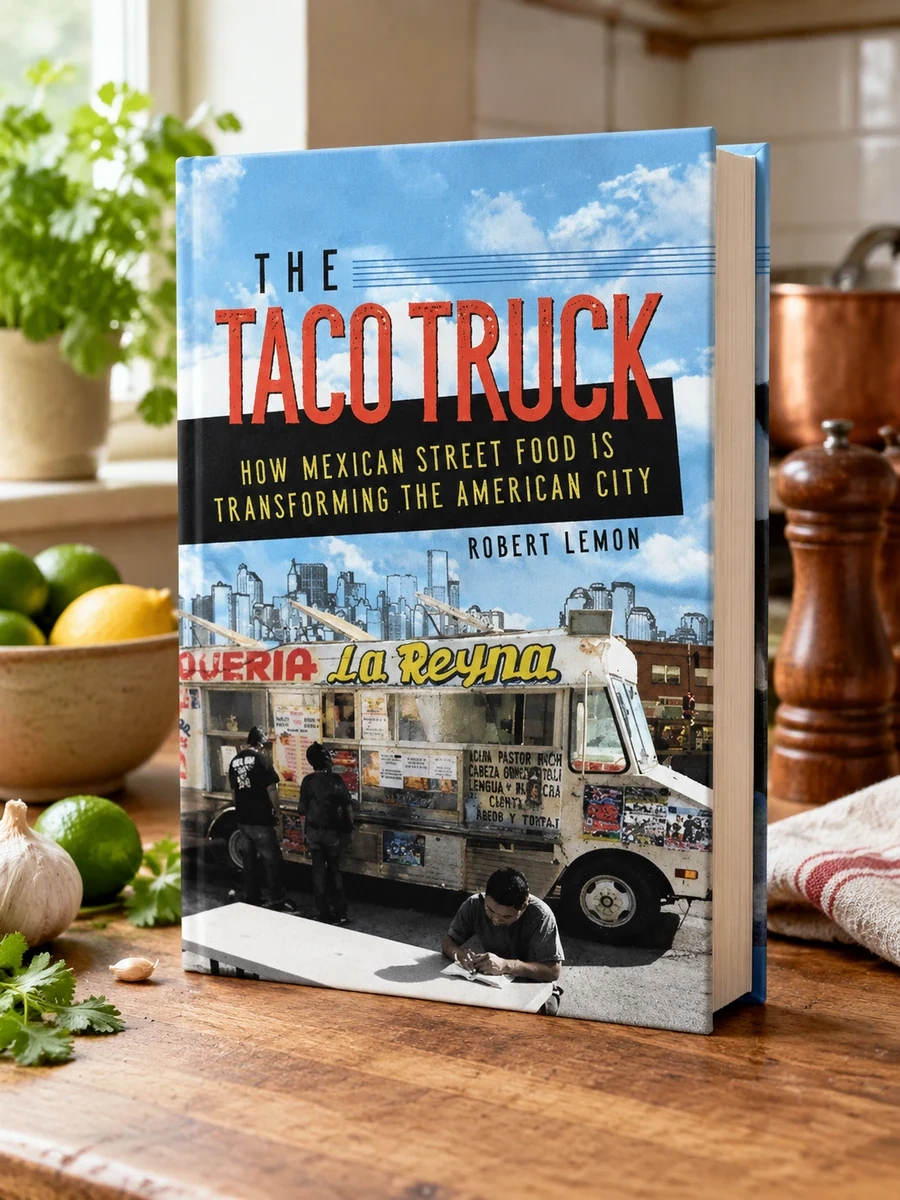
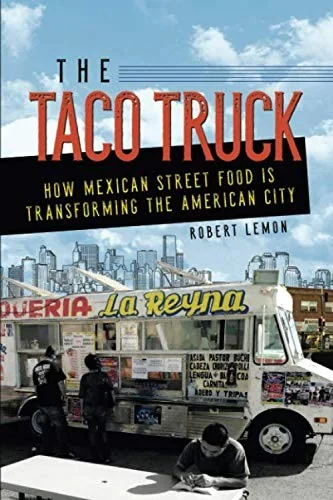
The Taco Truck: How Mexican Street Food Is Transforming the American City
✍️ Lemon, RobertA geographic study of taco trucks reshaping American cities.
Lemon uses his background in geography to analyze the impact of Mexican street food vendors on urban development. He selects three distinct regions to illustrate how taco trucks challenge preconceived ideas about city planning. The narrative highlights the tension between desired community assets and resented public spaces. By charting the relationship between food practices and physical space, the book reveals how residents and officials contest and celebrate these businesses. This approach uncovers new truths about community building and the unexpected places where cultural identity intersects with municipal policy.
Published in 2019 by the University of Illinois Press, this paperback explores Mexican cultural identity within the context of American urban spaces. It addresses themes of immigration and Hispanic studies while focusing on specific geographic locations across the United States.


📝 Description: The Taco Truck: How Mexican Street Food Is Transforming the American City
💎 Expert review
📖 Why choose it
Why this book is worth reading
Readers interested in the sociological impact of food on urban environments will find this book essential. Lemon provides a unique geographic lens, analyzing how Mexican street vendors challenge zoning laws and redefine neglected neighborhoods in cities like Columbus and Sacramento. It offers valuable insights for those studying immigration, community building, and municipal policy. However, it is not suitable for home cooks seeking recipes or technical instruction. Instead, it serves as a critical examination of how ethnicity and class manifest in public spaces, making it ideal for academics and city planners rather than culinary enthusiasts.
⭐ Reader reviews
Reader rating
This title is a stark departure from standard cookbooks, functioning more as an academic study of urban geography. Robert Lemon’s background in geography allows him to dissect the tension between taco trucks as community assets and contested public spaces. While intellectually rigorous, it lacks the practical utility expected in this shop section. It suits readers of urban sociology or cultural studies but will disappoint those looking for culinary inspiration. The sparse focus on social implications over gastronomic details limits its appeal to generalists. Librarians should shelve it carefully, ensuring patrons understand it is a scholarly analysis of space and identity, not a guide to making tacos.
❓ Frequently asked questions
📖 Who should read this
Readers interested in urban studies, cultural geography, and the sociology of food. Ideal for students, policymakers, and curious diners who want to understand how street vendors reshape city landscapes and influence community identity through culinary practices.