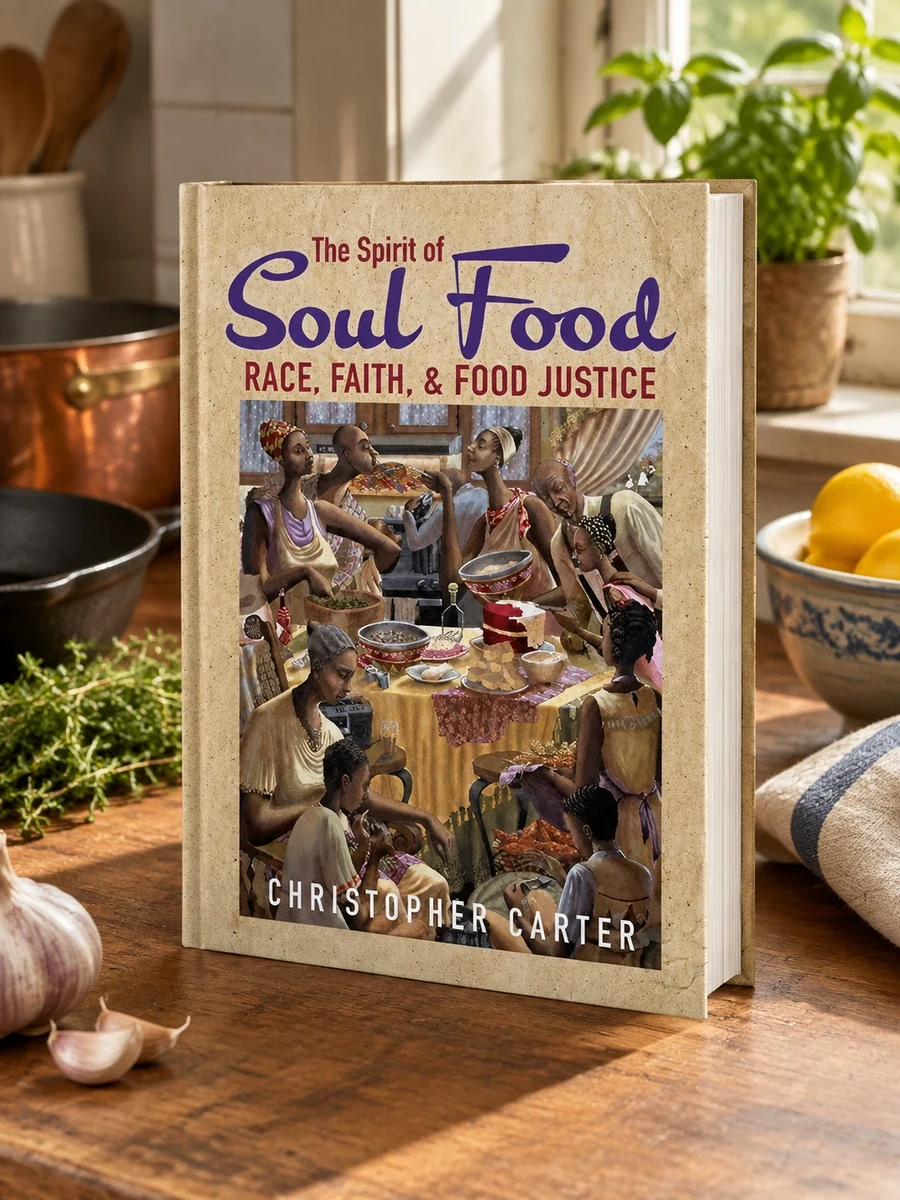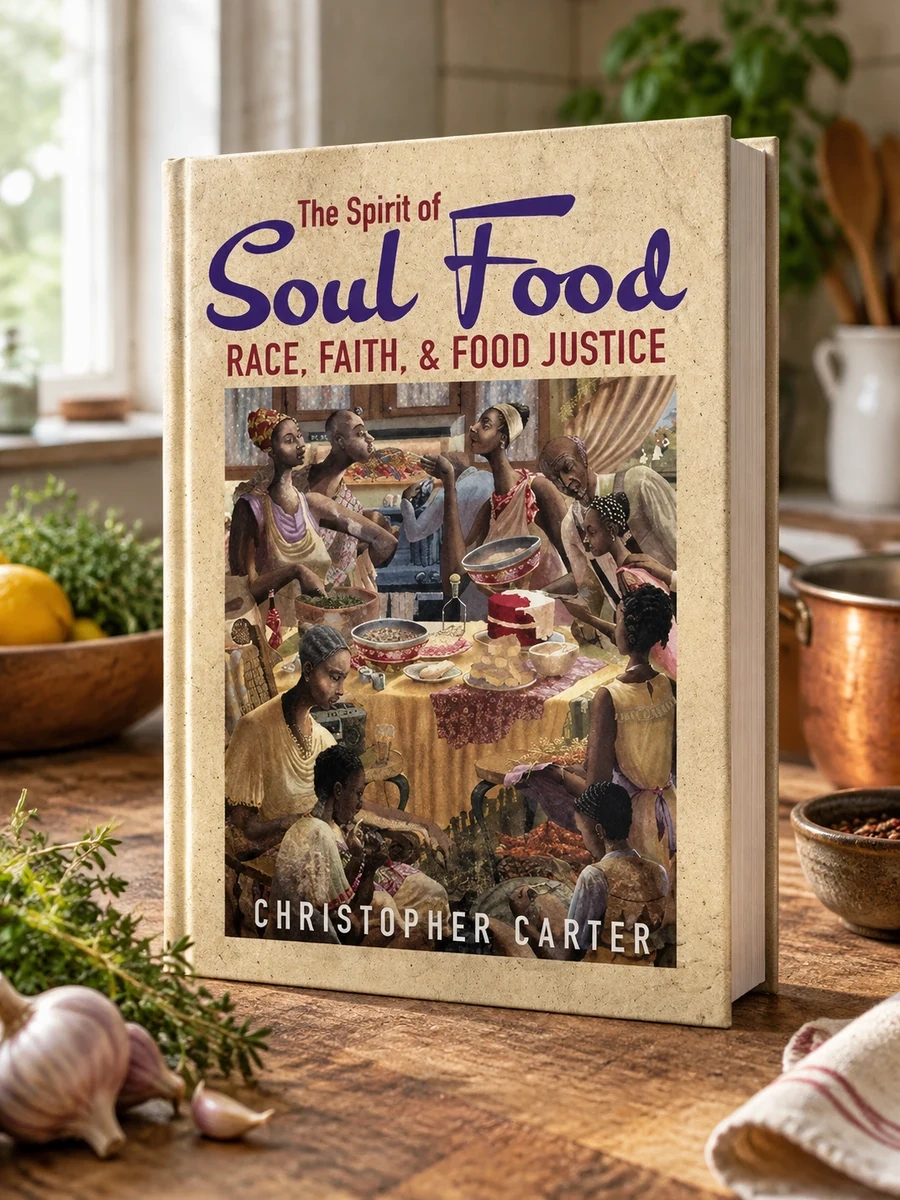
The Spirit of Soul Food: Race, Faith, and Food Justice
✍️ Carter, ChristopherA theological study linking African American faith to food justice and culinary history.
Carter positions soul food as a critical response to centuries of injustice rather than merely a cultural tradition. He investigates how structural oppression influences what black people grow, distribute, and consume today. The author merges historical accounts of Black American foodways with Christian ethical frameworks to propose a path forward. This perspective challenges readers to view dietary choices as acts of resistance against systemic inequity. The text emphasizes that thinking theologically about food is necessary for true liberation from ideological oppression.
Published by the University of Illinois Press in late 2021, this hardcover volume sits within the fields of Christian theology and African American studies. It addresses contemporary debates on food systems while grounding its arguments in the historical experiences of Black Americans.


📝 Description: The Spirit of Soul Food: Race, Faith, and Food Justice
💎 Expert review
📖 Why choose it
Why this book is worth reading
Readers interested in the intersection of theology, social justice, and culinary history will gain a profound framework for understanding soul food as both a marker of resilience and a site of political engagement. Carter’s analysis reveals how racism and colonialism have shaped production systems, offering marginalized groups a way to honor cultural identity while adhering to compassion. This text is essential for those seeking to view dietary choices as acts of resistance against systemic inequity. It challenges the reader to consider eating habits as deeply connected to faith practice, providing a liberatory perspective on reforming oppressive traditions. Those who wish to understand the ideological underpinnings of food justice will find this scholarly meditation invaluable.
⭐ Reader reviews
Reader rating
This title is an academic exploration rather than a practical kitchen guide, making it unsuitable for those seeking simple recipes or general cooking tips. Carter merges historical accounts with Christian ethical frameworks to propose a path forward against structural oppression. The tone is serious and scholarly, reflecting its place in regional-cooking as a theoretical text rather than a manual. While it offers deep insights into how Black Americans can address food injustice through faith, it demands patience from readers expecting culinary instruction. It serves best as a meditation on ethics for those willing to engage with complex ideas about liberation and ideological oppression.