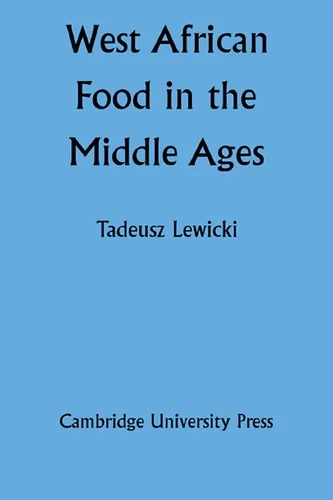
West African Food in the Middle Ages: According to Arabic Sources
✍️ Lewicki, TadeuszA scholarly analysis of pre-Columbian West African diets using Arabic historical records.
The book addresses a gap in historical knowledge regarding West African food systems before the Columbian Exchange. Lewicki utilizes medieval Arabic writings to identify staple foods and preparation methods that existed prior to American crop introductions. He cross-references these ancient accounts with modern ethnographic studies and traveler descriptions to build a coherent picture of daily life. This method allows for a reconstruction of social and economic conditions through the lens of diet. The work is not a collection of recipes but an academic study of food supply chains and cultural practices in medieval Africa.
The book focuses on West Africa before the sixteenth century. It examines social and economic life during the medieval period. The study relies on Arabic historians and geographers who recorded information about the region. This context precedes the arrival of American crops like maize and tomatoes.


📝 Description: West African Food in the Middle Ages: According to Arabic Sources
💎 Expert review
📖 Why choose it
Why this book is worth reading
This volume is essential for social and economic historians seeking primary source data on pre-colonial West African food supply chains. Researchers will gain a coherent picture of daily life and staple foods by cross-referencing medieval Arabic records with modern ethnographic studies. It allows scholars to reconstruct social conditions through the lens of diet, filling a significant gap in knowledge regarding systems before the Columbian Exchange. It is not for those seeking practical culinary guidance but for those analyzing how agricultural changes shaped civilization.
⭐ Reader reviews
Reader rating
Tadeusz Lewicki’s work is a rigorous academic study, not a cookbook. Readers expecting recipes or contemporary cooking techniques will find little practical value here, as the text focuses entirely on historical analysis of food supply and cultural practices. It suits researchers interested in medieval documentation and its connection to modern understanding of African dietary foundations. The sparse nature of the description highlights its specialized scholarly tone. While it offers a clear view of civilization’s roots, general cooking enthusiasts should look elsewhere for this shelf.
❓ Frequently asked questions
📖 Who should read this
Academic historians and culinary anthropologists interested in pre-colonial African societies will find this essential. It suits researchers analyzing medieval trade networks rather than home cooks seeking immediate meal inspiration or casual readers looking for simple dietary guides.