If you've searched for Todd Wilbur's copycat recipes, you've probably discovered that choosing a starting book isn't quite as straightforward as finding the first title in a series. Wilbur has published several collections under the Top Secret Recipes name, but they don't all approach imitation cooking in the same way. Some concentrate on familiar packaged foods, others turn their attention to restaurant-chain dishes, and one takes the idea into drinks.
That distinction matters. Someone hoping to recreate the flavor of a familiar grocery-store product needs a different book from someone trying to reproduce a restaurant-style meal at home. And if you want to explore Wilbur's work systematically, the publication-style sequence of his collections offers a useful route through his changing subject matter.
Our catalog includes nine Todd Wilbur titles. The order below groups them by their main subject while keeping the original series progression understandable. Start with the first book if you want the broadest introduction, or jump directly to the section that matches the foods you actually want to make.
Start with the original Top Secret Recipes collections
The first three books in this section establish the central idea behind Wilbur's work: identifying familiar commercial foods and developing home-kitchen versions. These are the natural starting point for anyone interested in brand-name recreations rather than restaurant meals. Read them in sequence if you want to follow the development of the original concept.
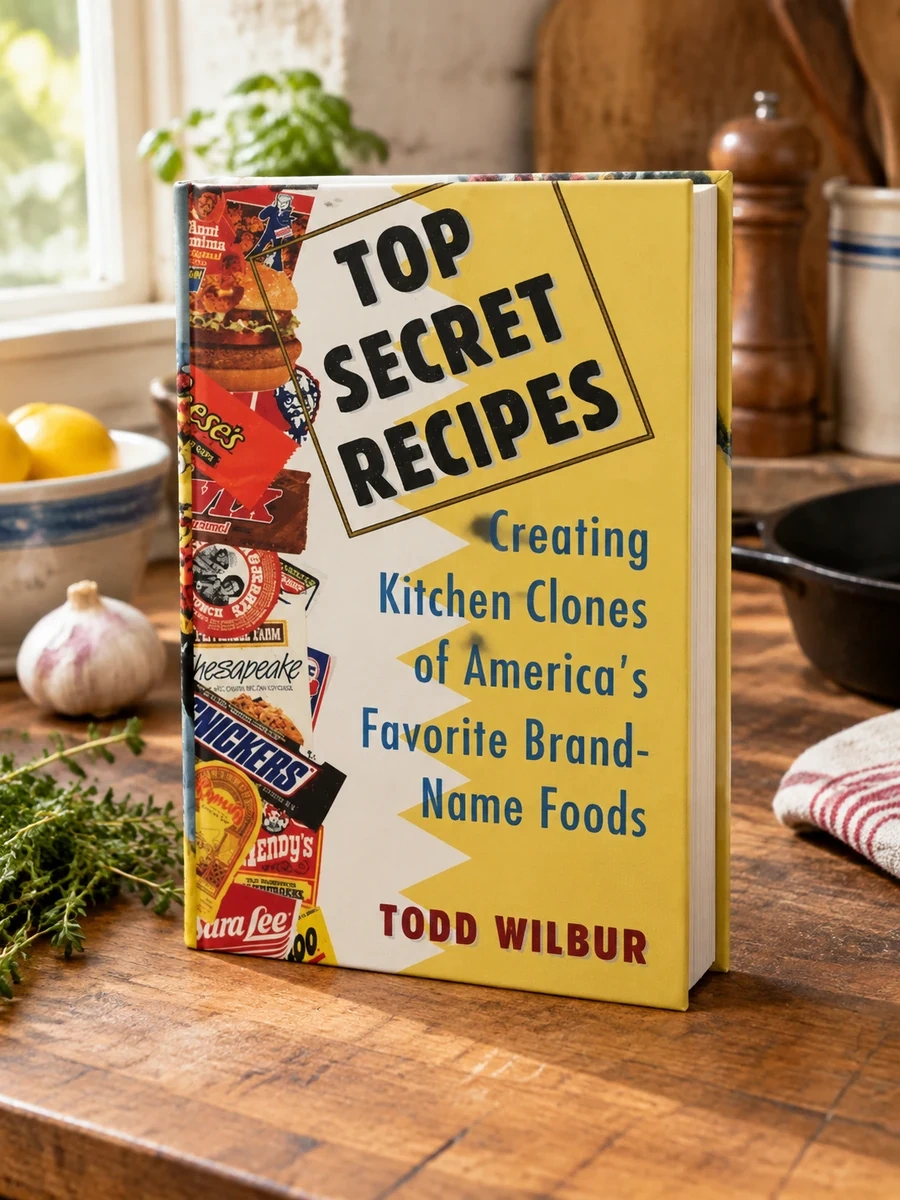
1. Top Secret Recipes: Creating Kitchen Clones of America's Favorite Brand-Name Foods — Todd Wilbur
This is the clearest first stop for understanding Wilbur's signature approach. Its subject is America's favorite brand-name foods, making it a broad introduction to the idea of reproducing recognizable commercial products in a home kitchen. The emphasis is on the familiar-food side of copycat cooking rather than on recreating a complete restaurant experience.
For a first-time reader, that broad scope is an advantage. You can get acquainted with the basic premise before deciding whether your interests lean toward packaged snacks, restaurant meals, drinks, or a particular dietary approach. If you only want one starting title from this author, this is the sensible choice.
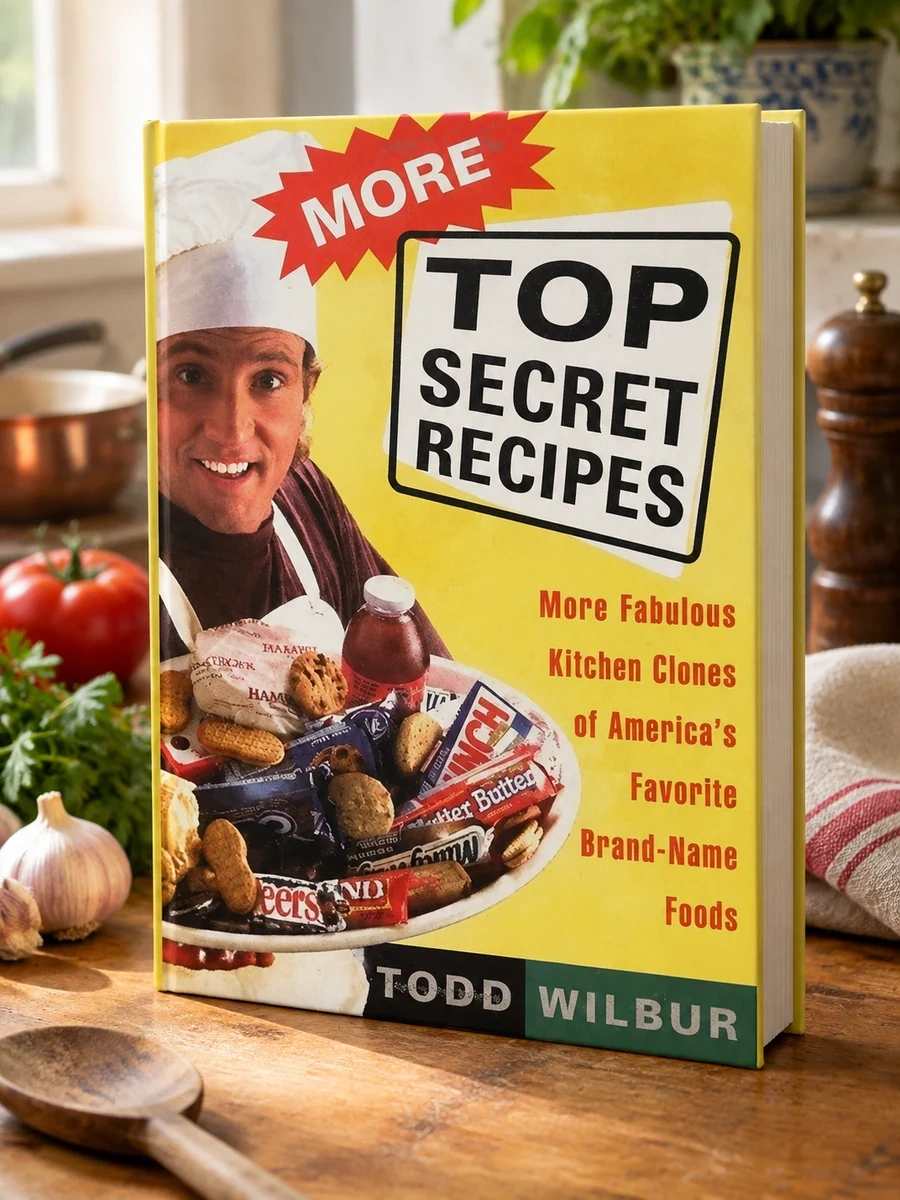
2. More Top Secret Recipes: More Fabulous Kitchen Clones of America's Favorite Brand-Name Foods — Todd Wilbur
After the original collection, this is the straightforward next step for readers who want to stay with brand-name food recreations. The title makes its relationship to the first book clear: it continues the same kitchen-clone concept with another collection of familiar commercial foods. It is a companion volume, not a restaurant-focused change of direction.
This book makes the most sense if you enjoyed the premise of the original and want another collection to explore. It also suits cooks who already know they are interested in recreating recognizable packaged foods and would rather expand that particular collection than switch to restaurant dishes.
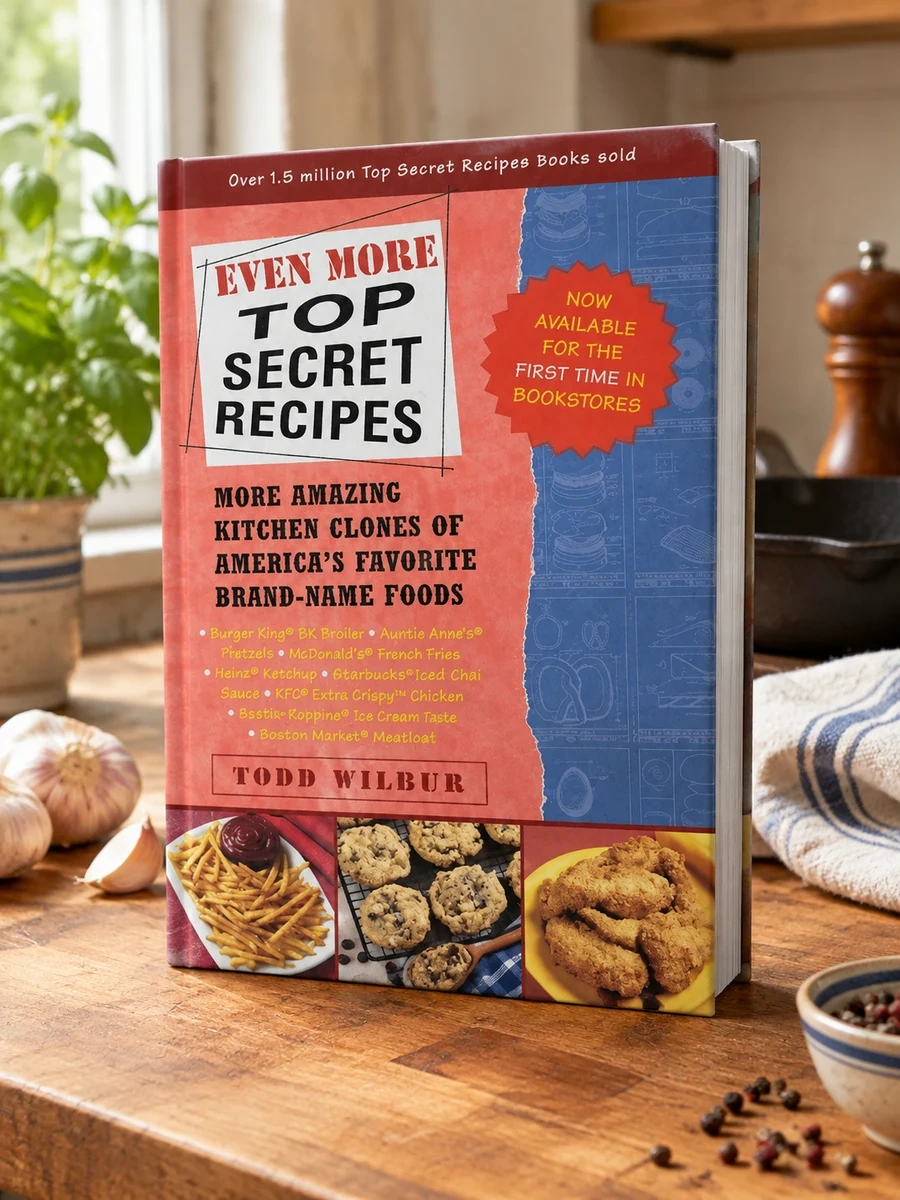
3. Even More Top Secret Recipes: More Amazing Kitchen Clones of America's Favorite Brand-Name Foods — Todd Wilbur
The third brand-name collection continues the same idea, with another round of kitchen clones inspired by America's favorite commercial foods. Its position after the original and More Top Secret Recipes makes it a logical continuation for readers building a small Wilbur library. The three titles belong together because they share a subject and a recognizable copycat-cooking premise.
There is no need to read all three before trying another branch of Wilbur's work. Think of this as the next volume for someone who wants more of the same rather than a necessary textbook in a strict culinary curriculum. If your main interest is packaged-food recreation, however, this is the natural third addition.
Move to restaurant-chain recreations
Restaurant-inspired copycat cooking is a separate branch of the Top Secret Recipes collection. The attraction here is not simply reproducing a branded grocery product; it is bringing the character of a familiar restaurant dish into a home kitchen. Wilbur's restaurant titles make a useful sequence of their own, particularly for readers who want to build a collection around eating-out favorites.
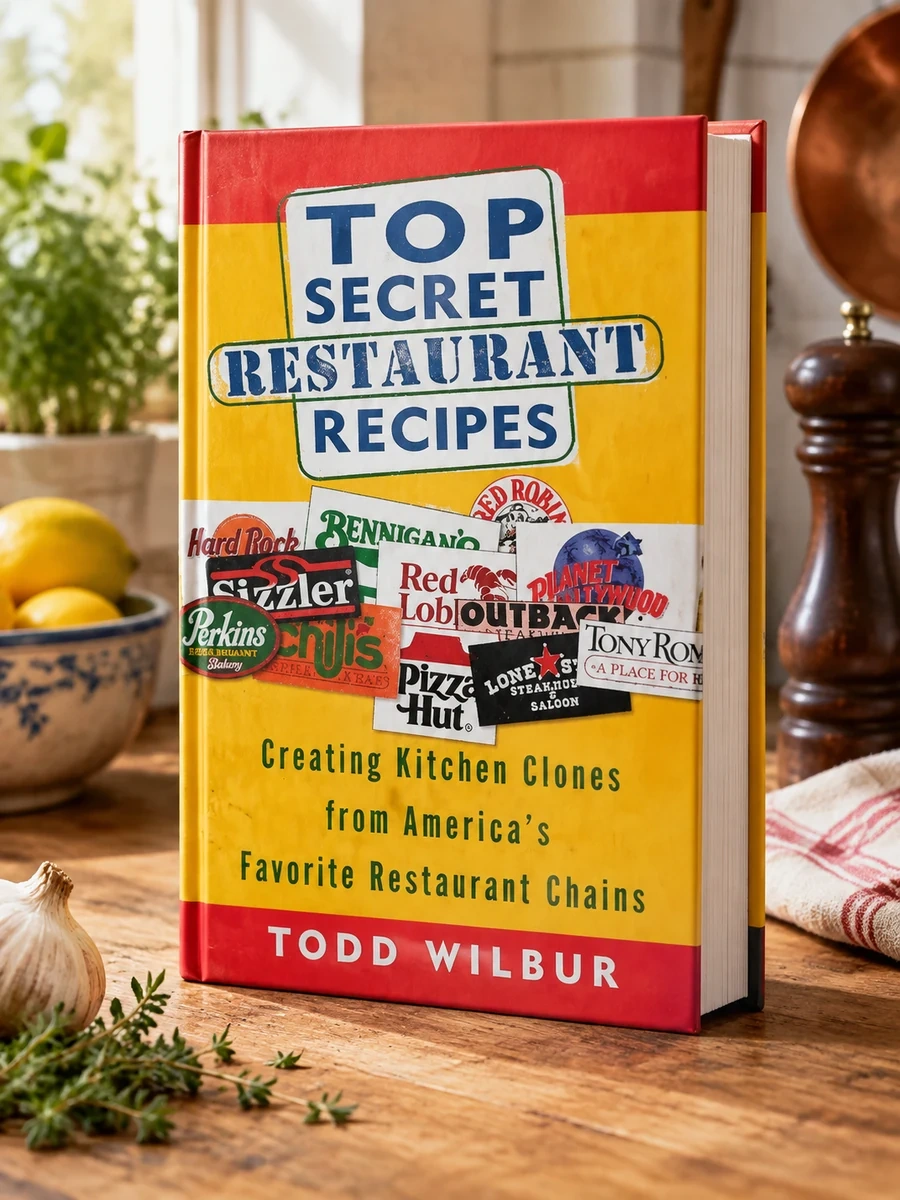
4. Top Secret Restaurant Recipes: Creating Kitchen Clones from America's Favorite Restaurant Chains — Todd Wilbur
This is the logical entry point for the restaurant side of Wilbur's catalog. Its focus is explicitly on kitchen clones from America's favorite restaurant chains, so it addresses a different cooking interest from the original brand-name Top Secret Recipes collection. If your motivation is to reproduce restaurant-style dishes at home, start here rather than working through the packaged-food books first.
The title also makes it a useful choice for cooks who want a collection organized around familiar restaurant experiences. You don't need to have read the earlier brand-name volumes to understand its premise. Consider it the beginning of a parallel series rather than a compulsory fourth step for every Wilbur reader.
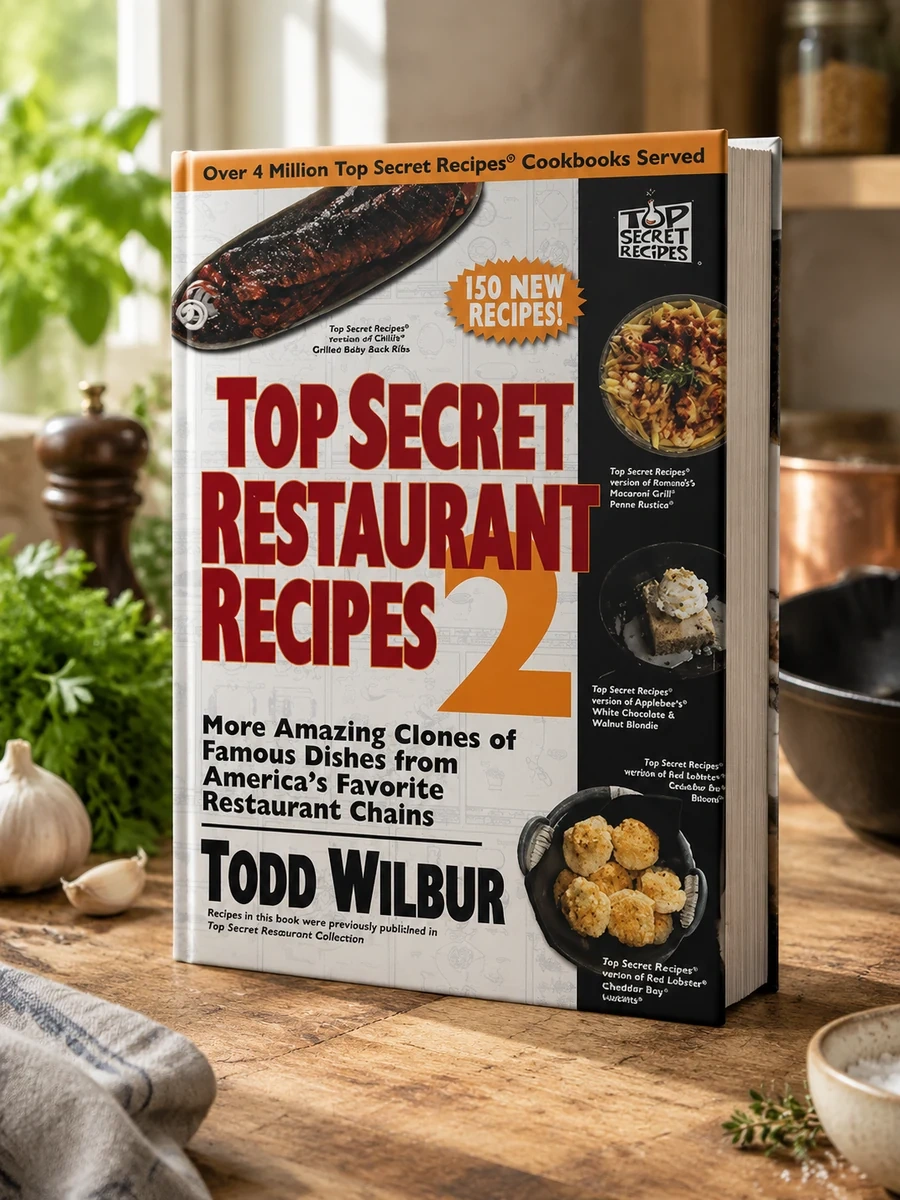
5. Top Secret Restaurant Recipes 2: More Amazing Clones of Famous Dishes from America's Favorite Restaurant Chains: A Cookbook — Todd Wilbur
The second restaurant collection extends the original restaurant-copycat concept. Its subtitle emphasizes famous dishes from America's favorite restaurant chains, keeping the focus on recognizable restaurant food rather than branded products sold in stores. For anyone who has already enjoyed the first restaurant collection, this is the natural follow-up.
It is also a good choice for readers whose interests are firmly centered on restaurant-inspired cooking. The distinction between this book and the first Top Secret Restaurant Recipes is one of collection depth: this is additional material in the same general category, not a completely different cooking philosophy. Read the original first if you want a clear introduction, then move here for another collection.
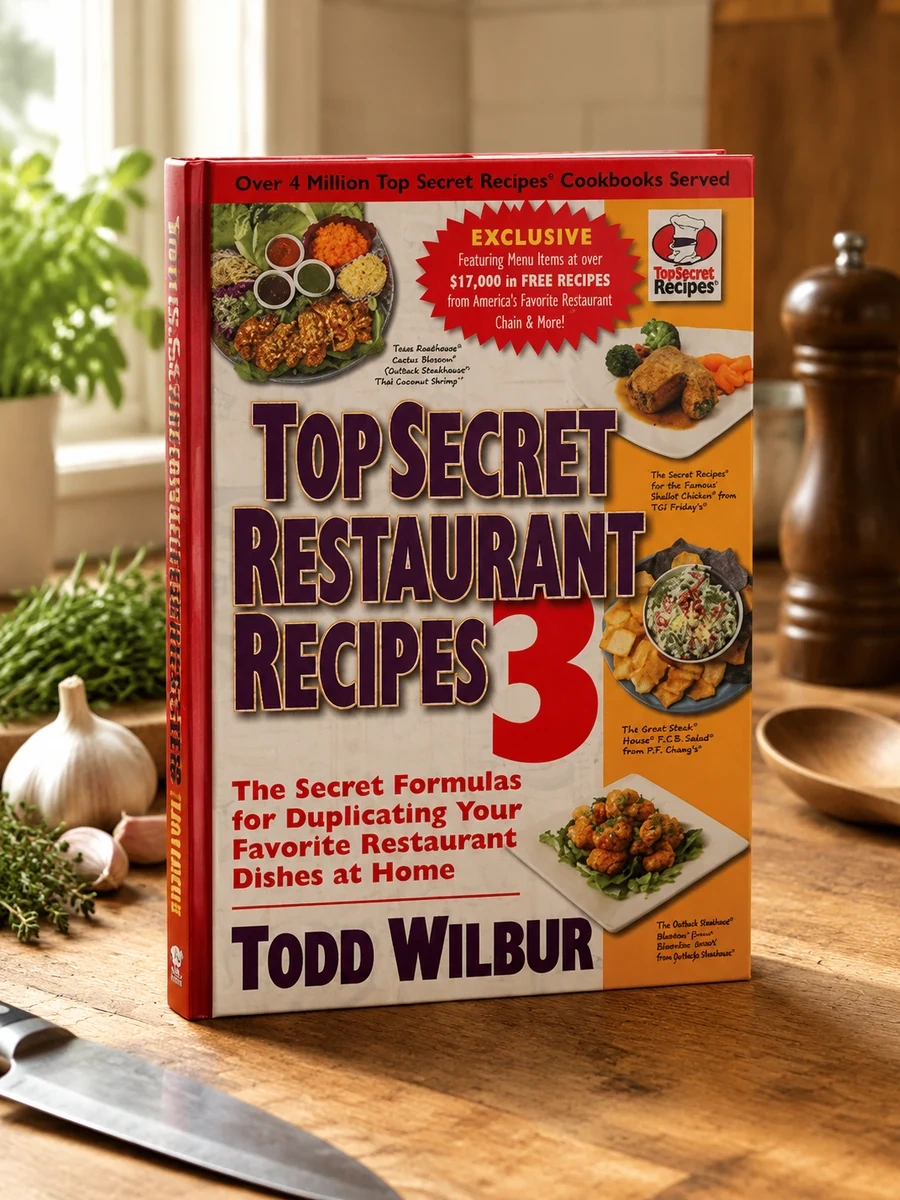
6. Top Secret Restaurant Recipes 3: The Secret Formulas for Duplicating Your Favorite Restaurant Dishes at Home: A Cookbook — Todd Wilbur
The third restaurant volume continues the series with a clear home-cooking proposition: duplicating favorite restaurant dishes. Its subtitle puts the emphasis on recreating restaurant food at home, which makes it a natural continuation of the previous two collections. It is the third book to consider if restaurant-chain cooking is the main reason you are exploring Wilbur's catalog.
For a reader who wants a substantial restaurant-focused collection, the three restaurant titles are the most coherent group in this selection. You can begin with the original and work forward, or choose this volume as an additional collection if you already own the earlier books. Its value within the reading order is continuity rather than a radical departure from the series.
Explore drinks and lighter copycat cooking
Once you've explored the main brand-name and restaurant collections, two more specialized directions are available. One concentrates on beverages, while the other approaches familiar brand-name foods through reduced-fat cooking. These are best treated as focused additions, not substitutes for the broader introductory books.
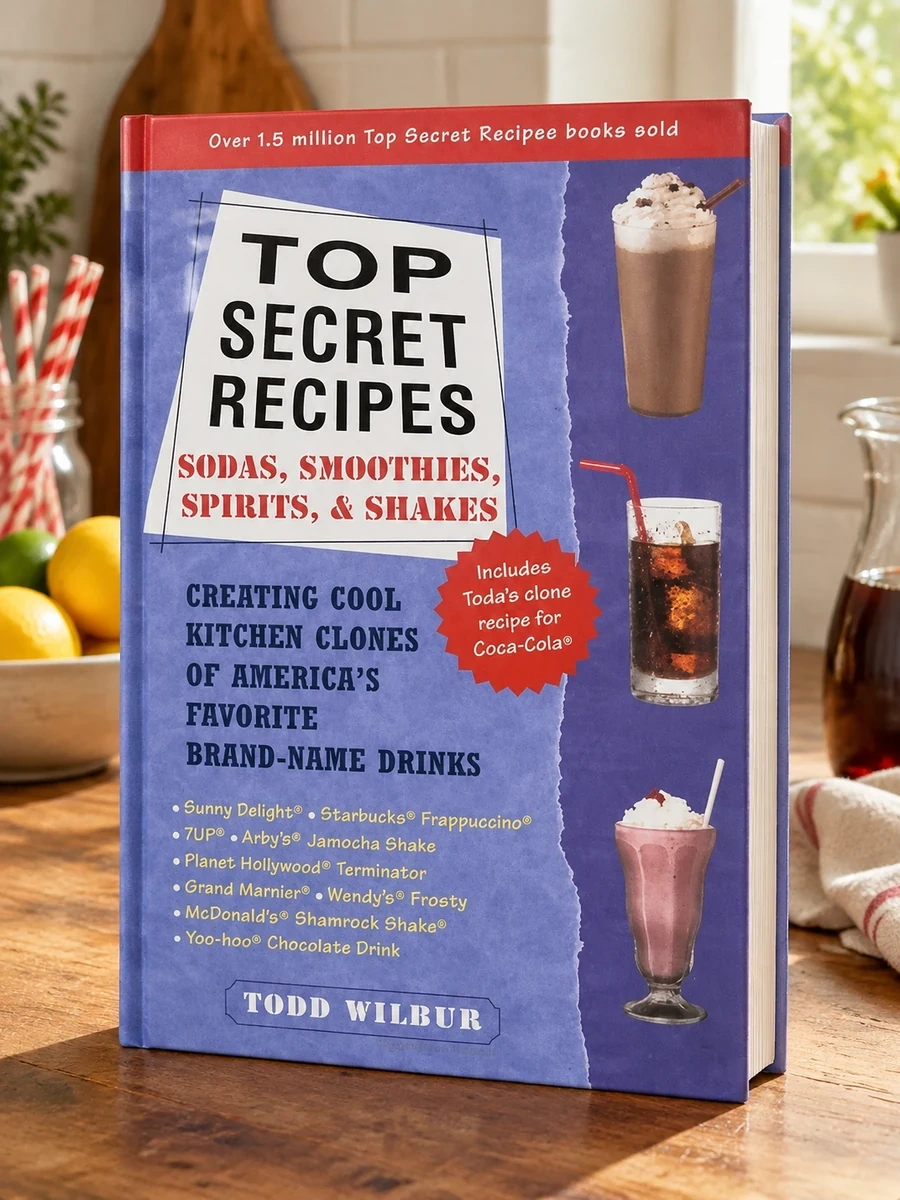
7. Top Secret Recipes: Sodas, Smoothies, Spirits, & Shakes: Creating Cool Kitchen Clones of America's Favorite Brand-Name Drinks — Todd Wilbur
This is the specialist choice for readers whose copycat interests extend to beverages. The title identifies four drink categories: sodas, smoothies, spirits, and shakes. Rather than offering another general collection of restaurant meals or packaged foods, it concentrates on recreating familiar brand-name drinks.
That narrower scope makes it easy to place in a reading order. You don't need to work through all the earlier volumes before choosing it. If drinks are the main attraction, it may actually be the most relevant first purchase from Wilbur's catalog. For everyone else, it makes a sensible companion to the broader Top Secret Recipes collections.
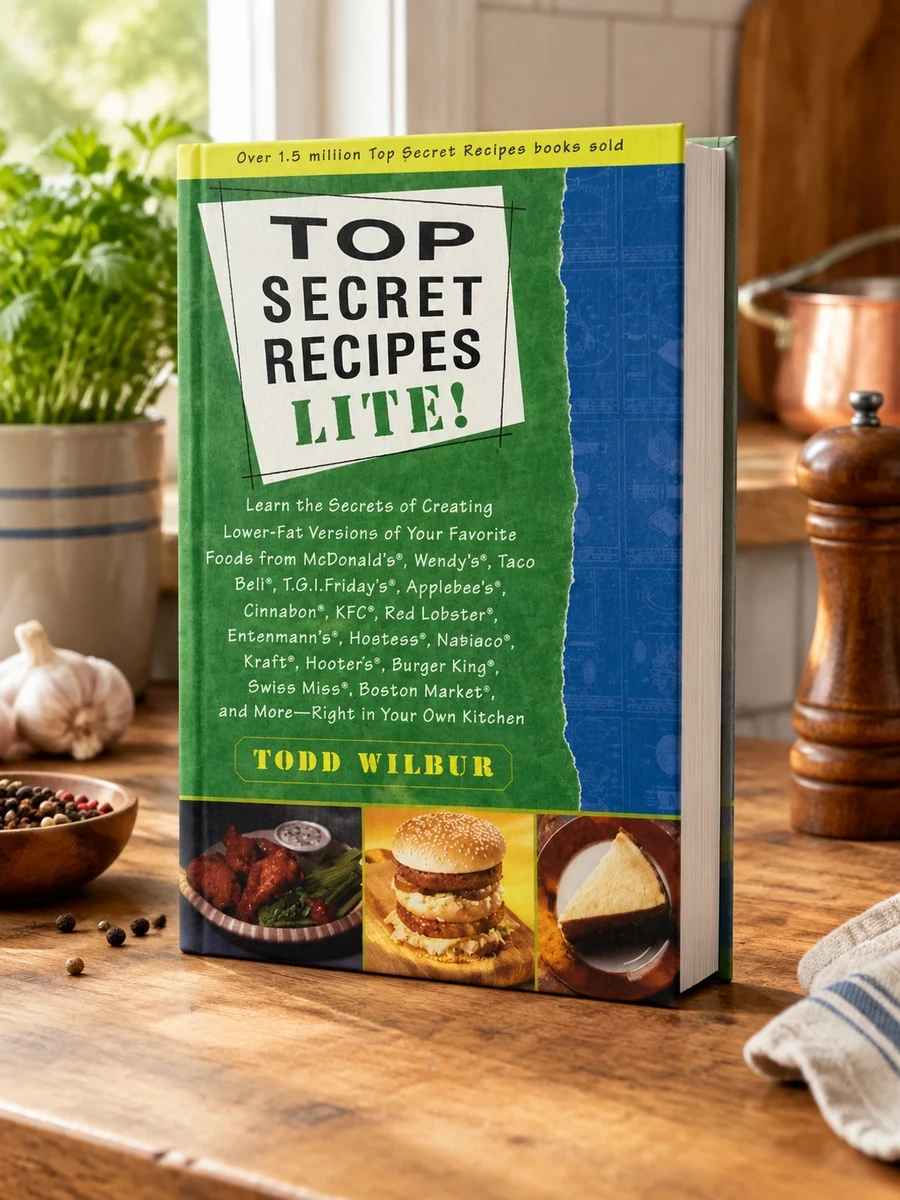
8. Top Secrets Recipes-Lite!: Creating Reduced-Fat Kitchen Clones of America's Favorite Brand-Name Foods — Todd Wilbur
This collection takes the familiar brand-name copycat concept in a lighter direction. Its stated focus is reduced-fat kitchen clones, making it the most clearly defined choice here for someone who wants to reconsider the nutritional profile of familiar commercial foods. The title promises an approach based on recreating recognizable foods with a reduced-fat emphasis, rather than simply adding another general collection to the shelf.
Our catalog description also highlights standard grocery items and simple diagrams, which makes this a particularly practical option for cooks who prefer accessible ingredients and straightforward visual guidance. Choose it if adapting familiar indulgences is more important to you than collecting every general Top Secret Recipes volume. It is a specialized companion, not the best introduction to Wilbur's overall range.
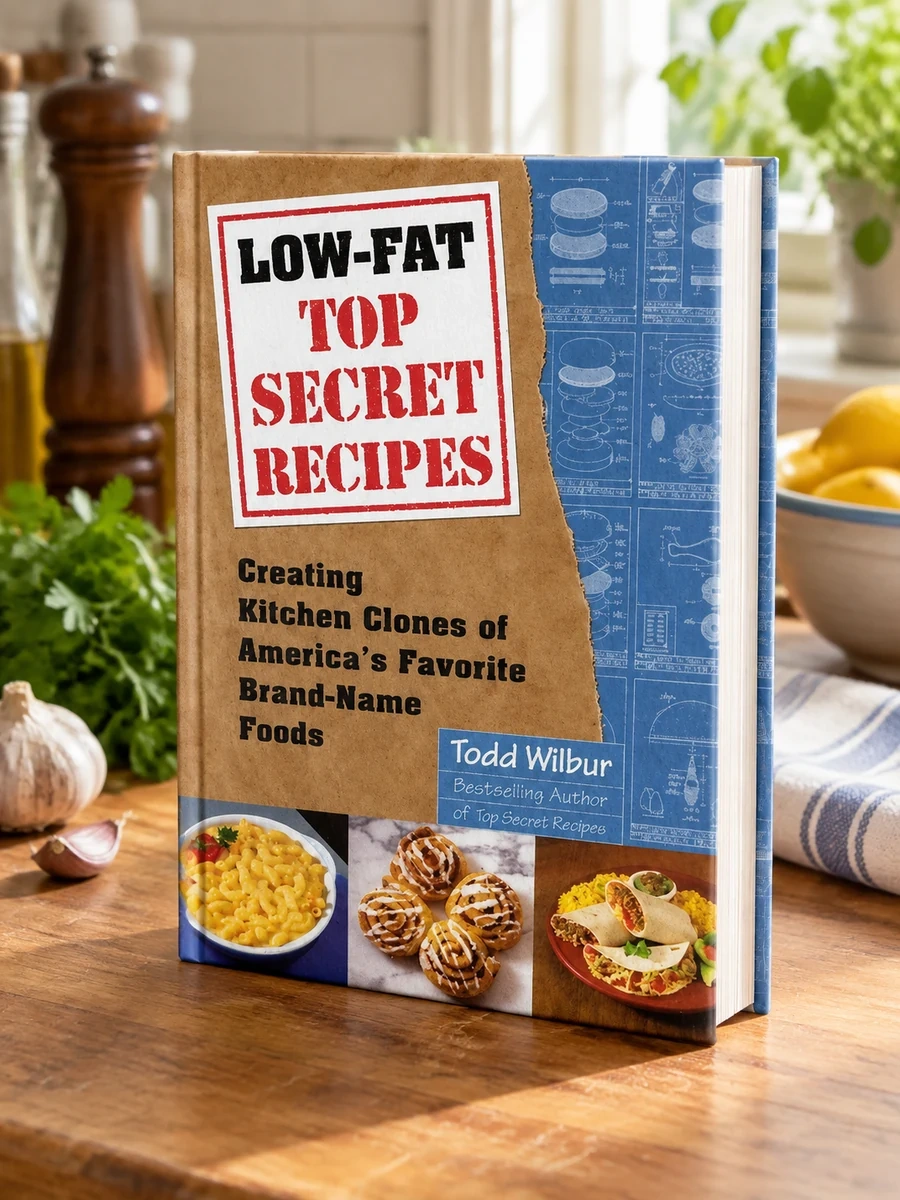
9. Low-Fat Top Secret Recipes: Creating Kitchen Clones of America's Favorite Brand-Name Foods — Todd Wilbur
This is another reduced-fat entry in the Top Secret Recipes family. Its title places it firmly in the brand-name recreation tradition, with a specific emphasis on low-fat versions of familiar foods. It belongs alongside Top Secrets Recipes-Lite! for readers who want to explore that particular direction rather than expand their restaurant or beverage collections.
The two lighter collections overlap in their broad purpose, so you don't necessarily need both to begin exploring reduced-fat copycat cooking. If you're choosing between them, the more explicitly described Lite! edition has the advantage of a clearer indication of its practical approach in our catalog. Consider Low-Fat Top Secret Recipes as an additional title for a reader who wants to investigate more of Wilbur's lighter brand-name collections.
Which Todd Wilbur cookbook should you choose first?
The best starting point depends less on the number of books you intend to collect and more on what you want to recreate. Nine titles may look like a long reading list, but the choices become much simpler when you separate the subject areas.
- For a complete introduction: Start with Top Secret Recipes: Creating Kitchen Clones of America's Favorite Brand-Name Foods. It provides the broadest entry into the central brand-name copycat concept.
- For more packaged-food recreations: Continue with More Top Secret Recipes and Even More Top Secret Recipes. These are the natural companion volumes to the original.
- For restaurant-chain dishes: Begin with Top Secret Restaurant Recipes, then follow with volumes 2 and 3. This is the strongest three-book sequence for restaurant-inspired cooking.
- For drinks: Choose Sodas, Smoothies, Spirits, & Shakes. Its beverage-specific scope makes it the obvious specialist selection.
- For reduced-fat versions: Choose Top Secrets Recipes-Lite! first, particularly if you value accessible ingredients and simple diagrams. Low-Fat Top Secret Recipes is an additional option.
There is also a sensible budget consideration. The catalog's Wilbur titles range from under $20 to the upper-$20 range, so you can start with one focused collection instead of committing to an entire series. If you are uncertain about your long-term interest, choose the book whose subject most closely matches the recipes you actually expect to cook.
One final point: don't mistake the reading order above for a requirement to own all nine books. These are related collections, but they serve different purposes. A cook who mainly wants restaurant-style dishes can reasonably skip the packaged-food sequence, while someone interested in familiar drinks has no particular reason to start with three restaurant books. The most useful Wilbur library is the one organized around your own kitchen interests.
For most first-time readers, the original Top Secret Recipes remains the strongest recommendation. It introduces the central idea without requiring knowledge of the other collections. From there, follow the brand-name sequence if you want more commercial-food recreations, switch to the restaurant series if famous chain dishes are your priority, or pick up one of the specialized volumes when a particular category catches your attention. That's the practical way to approach Todd Wilbur: start with the food you miss, then build your collection from there.