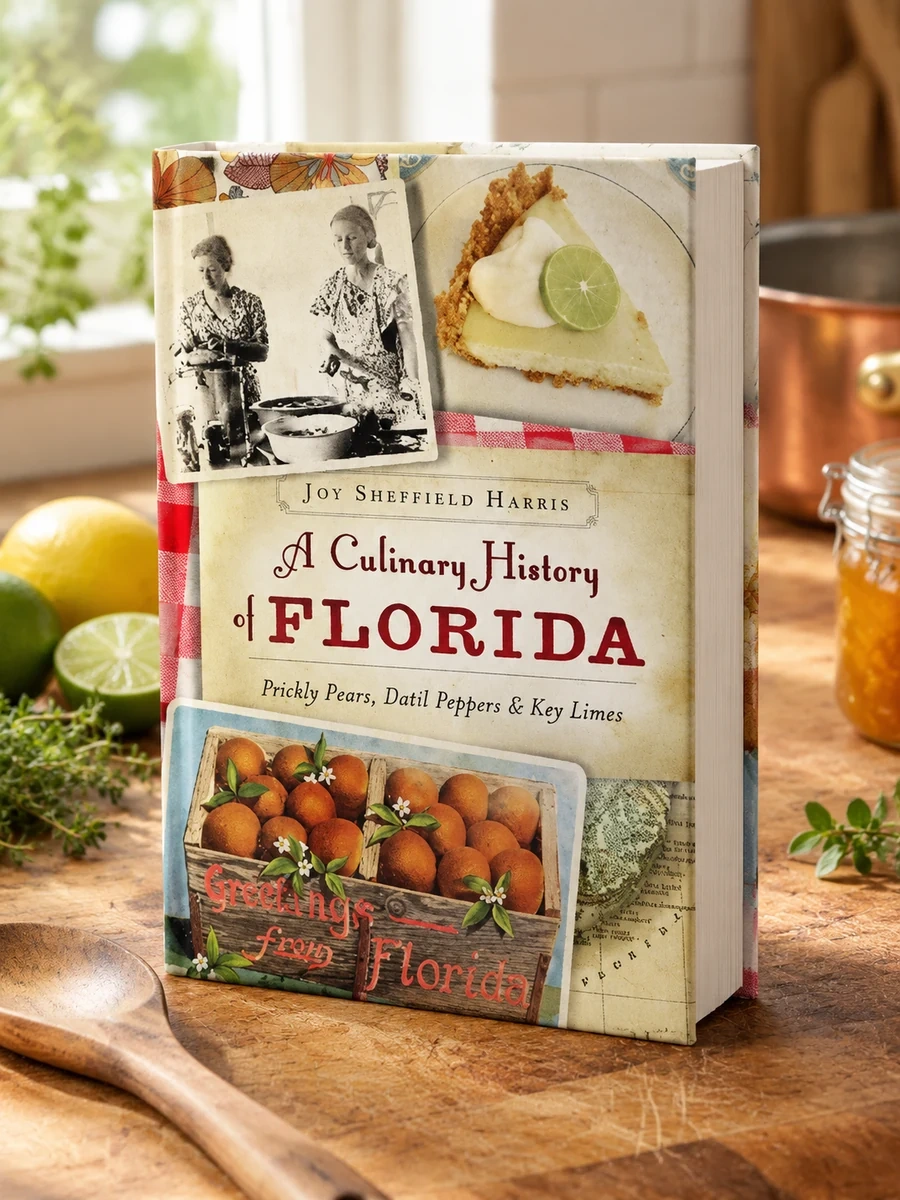
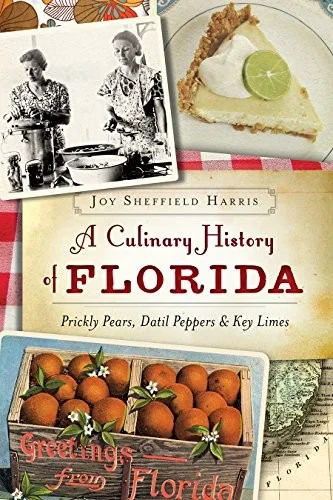
A Culinary History of Florida: Prickly Pears, Datil Peppers & Key Limes
✍️ Sheffield Harris, JoyA historical account of Florida's food from Paleo-Indians to modern times.
This work examines how geography and immigration shaped Florida’s cuisine over five centuries. It connects early indigenous harvesting practices with later European and Caribbean influences. The text highlights specific foods like sofkee, Tupelo honey, and orange juice. It explains how these elements created a distinctive regional identity. The author focuses on the long-term development of these foodways rather than short trends.
Published in 2014 by History Press, this paperback examines Florida's culinary past. It covers subjects including social history and regional cooking. The work sits within the broader context of American Southern states' agricultural development.


📝 Description: A Culinary History of Florida: Prickly Pears, Datil Peppers & Key Limes
💎 Expert review
📖 Why choose it
Why this book is worth reading
Readers fascinated by the intersection of geography, immigration, and cuisine will find this account valuable for understanding how Florida’s unique environment contributed to its distinctive foodways. The book traces the evolution of local flavors from Paleo-Indian harvesting practices through European and Caribbean influences, highlighting staples like sofkee, Tupelo honey, and orange juice. It offers a detailed look at agricultural and social history rather than providing quick recipes or contemporary dining guides. For those interested in how past practices shape present dishes, this work provides a clear, scholarly view of the state's eclectic culinary heritage without focusing on short-term trends.
⭐ Reader reviews
Reader rating
This historical account is essential for scholars and enthusiasts of regional American cuisine who appreciate deep contextual analysis over immediate utility. It successfully connects early indigenous harvesting with later cultural shifts, explaining the origins of staples like Key lime pie and swamp cabbage. However, the edition's description explicitly notes that readers seeking quick recipes or contemporary dining guides may find the focus on historical context less relevant. Consequently, it is not suited for cooks looking for actionable instructions but serves as an excellent resource for understanding the long-term development of Florida's foodways through a lens of agricultural and social history.
❓ Frequently asked questions
📖 Who should read this
Readers interested in the historical roots of Florida cuisine will appreciate this exploration of regional foodways. It suits those who value cultural context over immediate recipes, offering a scholarly yet accessible look at how geography and immigration shaped local ingredients like datil peppers and key limes.