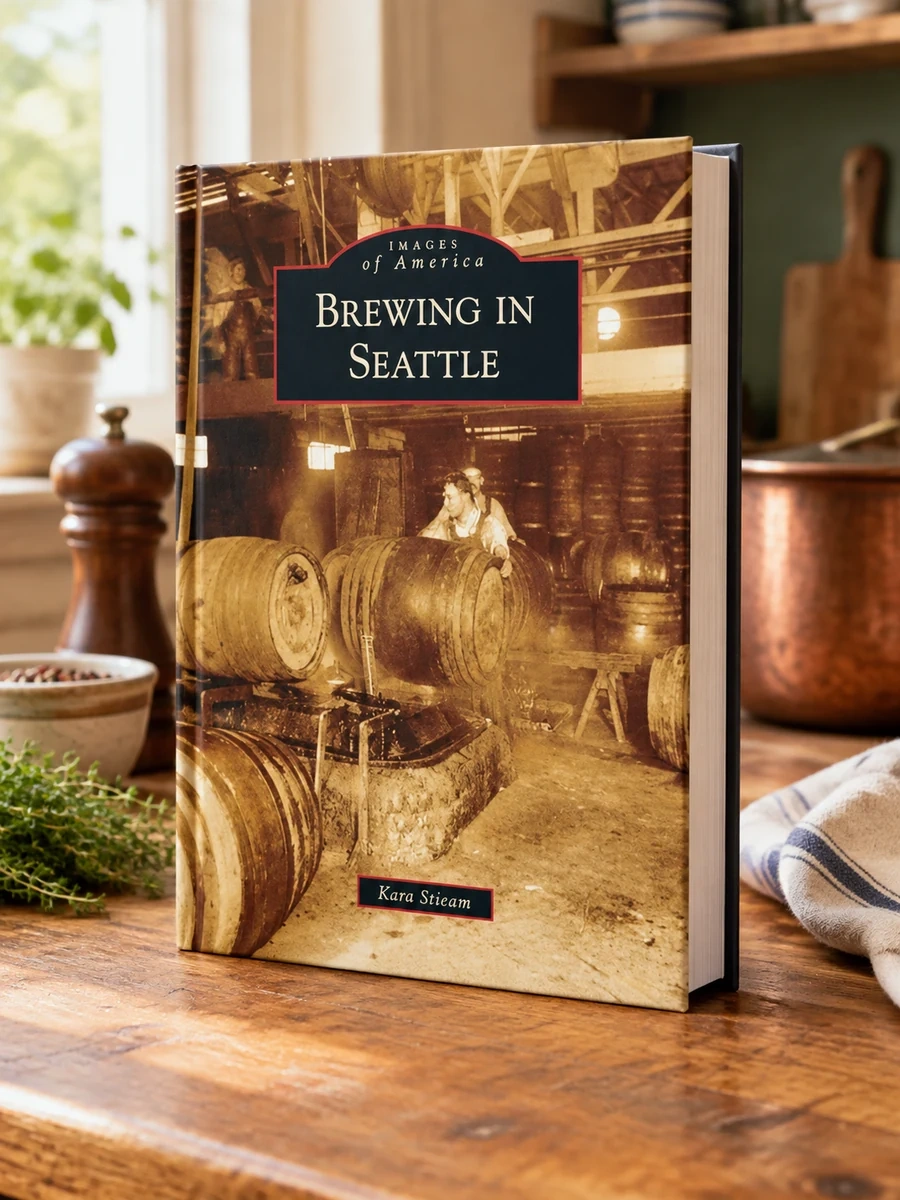
Brewing in Seattle
✍️ Stream, KurtA historical account of Seattle's beer industry from 1864 to the craft boom.
This volume examines the rise and fall of Seattle’s brewing sector through archival visuals and interviews. Stream highlights the pivotal role of Rainier Beer in establishing the city as a global industrial leader before Prohibition halted production. The narrative then shifts to the post-1933 recovery, emphasizing how new entrepreneurs restored the industry's prominence. By documenting nearly every brewery in the region, the book provides a comprehensive visual archive of Seattle’s brewing landscape across different economic periods.
The text situates Seattle’s beer culture within the broader context of Pacific Northwest state and local history. It connects the industry’s development to general corporate business history and manufacturing trends in the United States, specifically focusing on Washington state's economic evolution from the mid-nineteenth century through the early twentieth century.


📝 Description: Brewing in Seattle
💎 Expert review
📖 Why choose it
Why this book is worth reading
Readers seeking a visual journey through Seattle’s brewing heritage will find this book invaluable for its comprehensive archival collection. It appeals specifically to those interested in the transition from early industrial giants like Rainier Beer to the modern craft boom. The text provides essential context on how Prohibition and subsequent recoveries shaped local entrepreneurship. Those fascinated by corporate business history or Pacific Northwest regional development will appreciate the detailed documentation of nearly every brewery in the region. It serves as a primary resource for understanding the city's identity as a beer destination, offering a nostalgic yet factual look at the innovators who defined the industry across different economic periods.
⭐ Reader reviews
Reader rating
This title is strictly a historical archive, not a practical guide for home brewers. It lacks current recipes or technical instructions, making it unsuitable for those seeking immediate culinary application. The focus remains entirely on visual documentation and industrial history from 1864 onward. While the photographic collection is extensive, the narrative depth is limited to broad strokes of corporate rise and fall. Readers expecting a deep dive into brewing chemistry or contemporary craft techniques will likely find the content sparse. It is best suited for local historians or collectors of regional memorabilia who value visual records over analytical critique or instructional content.
❓ Frequently asked questions
📖 Who should read this
Readers interested in Pacific Northwest history and craft beer enthusiasts seeking visual archives of Seattle's brewing evolution. Ideal for those who appreciate local industry narratives over step-by-step cooking instructions or modern recipe collections.