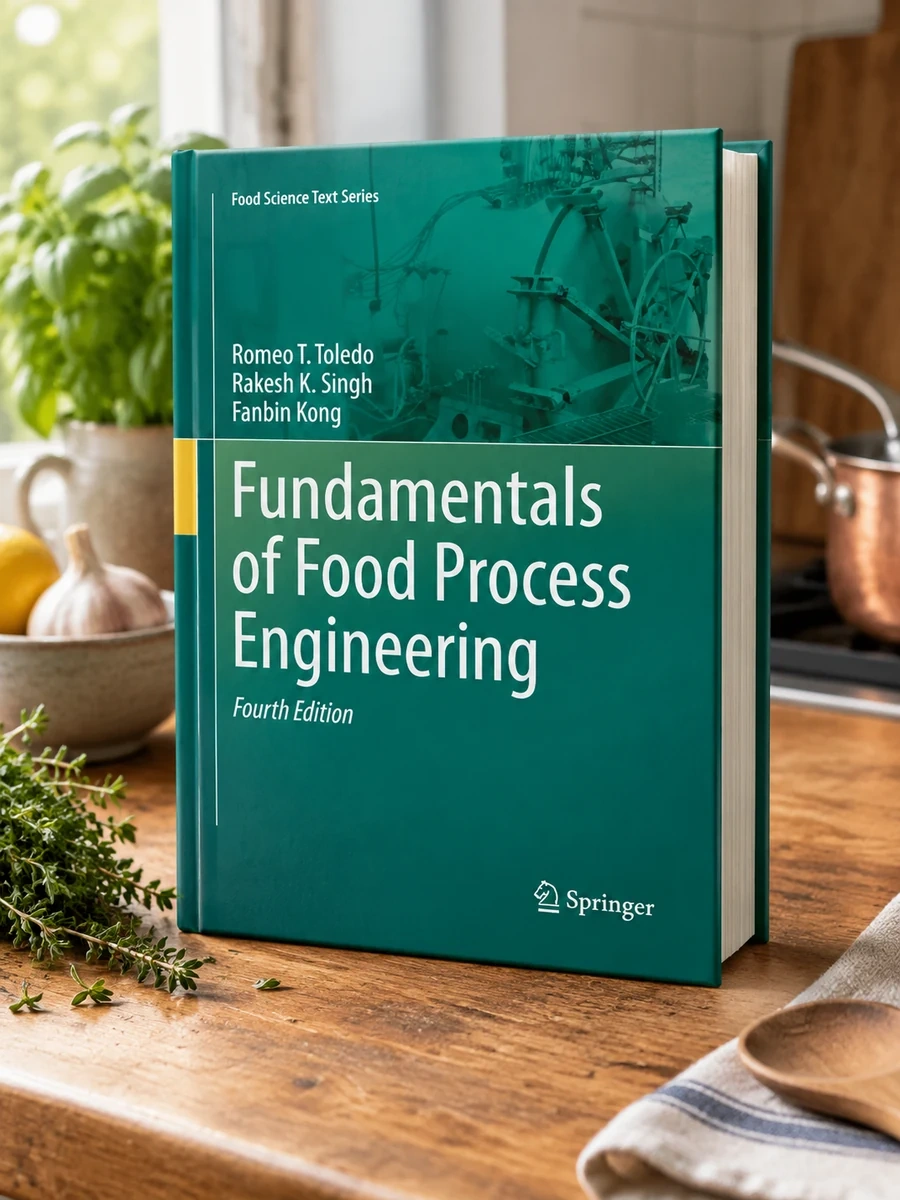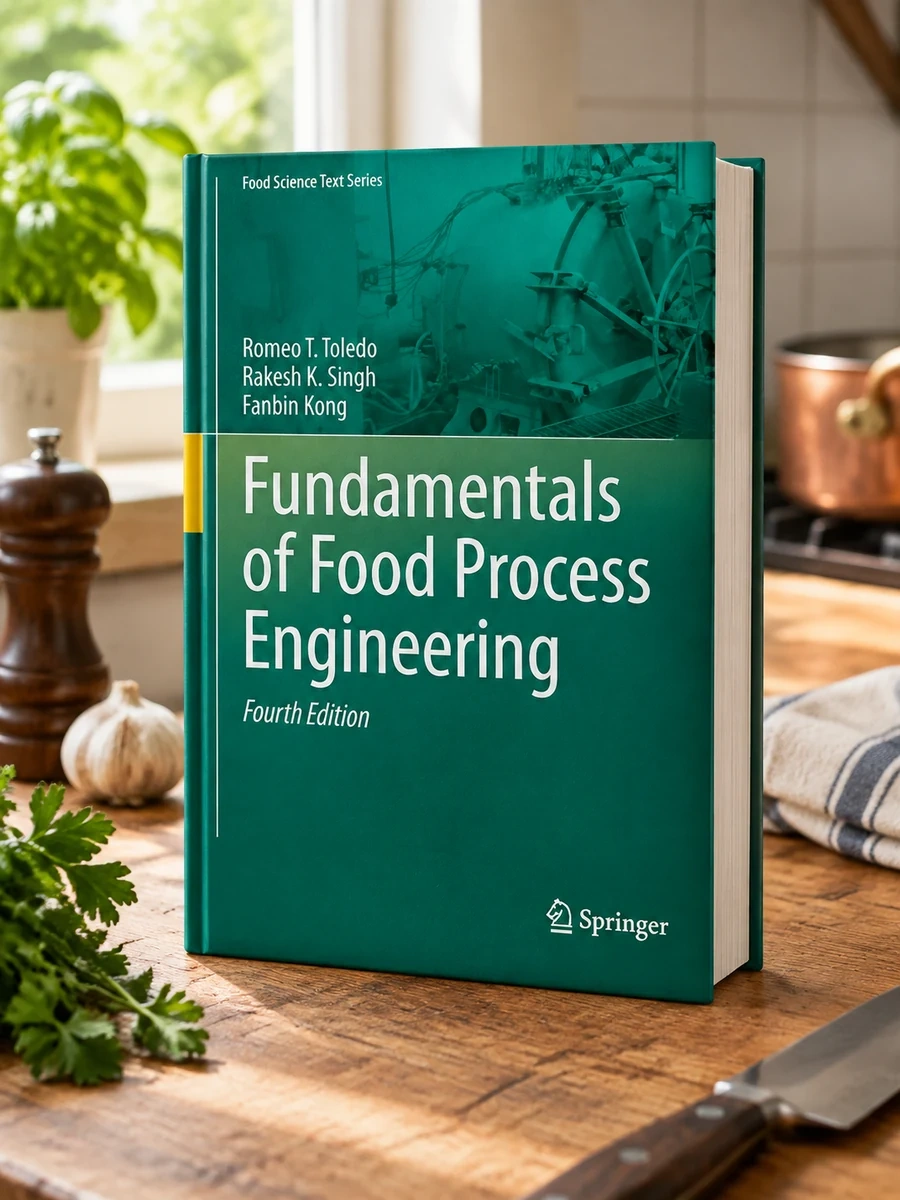
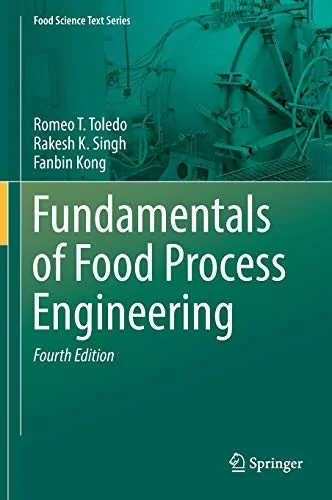
Fundamentals of Food Process Engineering (2018)
✍️ Toledo, Romeo TA technical textbook on food process engineering for students and professionals.
This volume provides a comprehensive overview of food process engineering principles tailored for academic and professional use. Toledo structures the content to support upper level undergraduate learning while maintaining relevance for graduate studies. The text integrates theoretical knowledge with practical applications, covering topics such as freezing, pump mechanics, and vacuum belt drying. It emphasizes the use of chemical reaction kinetic data for optimizing thermal processes and includes new sections on temperature measurement accuracy. The book also addresses microbiological inactivation curves and enzyme inactivation, offering insights into pasteurization and entrainment. By incorporating non-linear curve fitting and fluid film thickness analysis, it equips readers with tools for modern food engineering challenges. The material is designed for those seeking technical depth rather than general culinary knowledge.
Published by Springer in 2018, this work sits within the academic and professional literature of food science and technology. It targets upper level undergraduate students and graduate engineers, reflecting contemporary educational standards in food engineering. The text aligns with industry needs for updated technical knowledge in food processing.


📝 Description: Fundamentals of Food Process Engineering (2018)
💎 Expert review
⭐ Reader reviews
Reader rating
Toledo delivers a rigorous examination of food process engineering, effectively integrating chemical reaction kinetics with practical applications like pump mechanics and vacuum belt drying. The inclusion of non-linear curve fitting and fluid film thickness analysis provides essential tools for modern engineering challenges. However, this book will not suit home cooks or culinary enthusiasts seeking general recipes. It is strictly for those requiring technical depth in microbiological inactivation and temperature measurement accuracy.
❓ Frequently asked questions
📖 Who should read this
This text targets upper-level undergraduate students and food engineering professionals seeking technical depth. It is ideal for those studying chemical reaction kinetics or thermal process optimization rather than home cooks looking for general culinary inspiration or basic kitchen techniques.