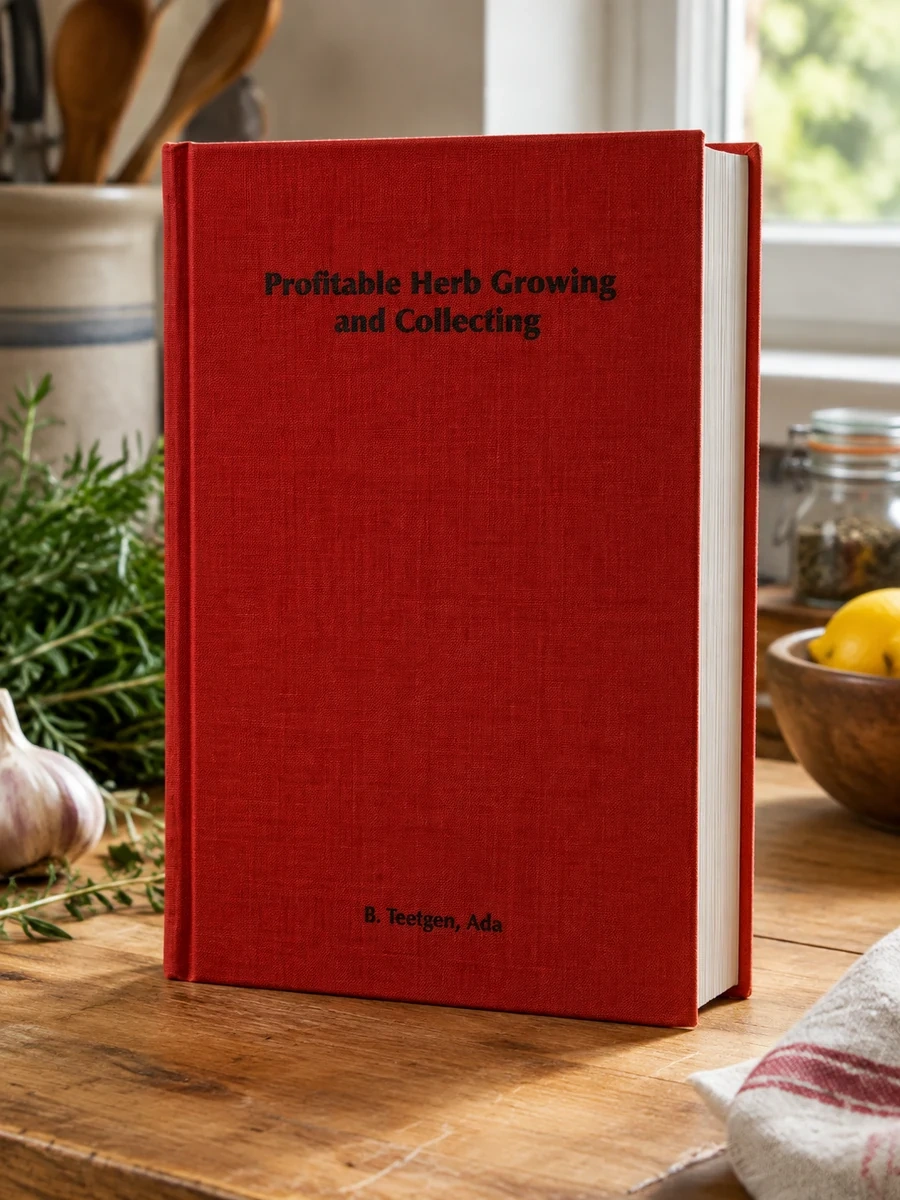
Profitable Herb Growing and Collecting
✍️ Teetgen, ADA BA 1916 guide to cultivating herbs for commercial sale and medicinal use.
Teetgen structures this manual around the economic potential of herb cultivation. The author moves beyond simple gardening tips to discuss the business side of growing herbs, including how to harvest them efficiently. The text bridges historical knowledge with practical application by detailing the drying process and the setup of a domestic still room. It also categorizes medical plants by their natural orders, offering a systematic approach to identifying useful flora. This organization helps growers understand not just how to grow plants, but how to classify and utilize them effectively in traditional medicine.
Published in 1916, this work reflects early twentieth-century agricultural interests. It bridges the gap between historical herbalist traditions and modern practical gardening. The text preserves knowledge from ancient and modern medical systems, showing how past practices inform current cultivation methods for herbs and medicinal plants.


📝 Description: Profitable Herb Growing and Collecting
💎 Expert review
📖 Why choose it
Why this book is worth reading
Gardeners and historians interested in the economic potential of herb cultivation will find this manual uniquely valuable. It moves beyond simple gardening to address the business side of growing herbs, including efficient harvesting and drying processes. The text is particularly useful for those wishing to revive domestic still rooms or understand the natural classification of medical plants. By organizing flora under their natural orders, it helps growers classify and utilize plants effectively in traditional medicine. This resource suits readers who appreciate historical agricultural methods and want to grasp the intersection of horticulture and commerce, offering a systematic approach to identifying useful flora for resale or medicinal use.
⭐ Reader reviews
Reader rating
Teetgen’s work is a specialized resource for commercial growers and herbalists rather than casual gardeners. It excels in detailing technical processes like weed collecting and intensive culture techniques while providing clarity through medical terminology explanations. However, readers seeking modern scientific data or contemporary culinary recipes will find the content less applicable. It is best suited for those interested in historical agricultural methods rather than current nutritional trends.
❓ Frequently asked questions
📖 Who should read this
Home growers interested in the commercial side of herb cultivation. This manual suits readers seeking to understand the economic potential of growing medicinal plants. It is ideal for those who want to bridge historical knowledge with practical application, specifically focusing on efficient harvesting and domestic distillation setups.