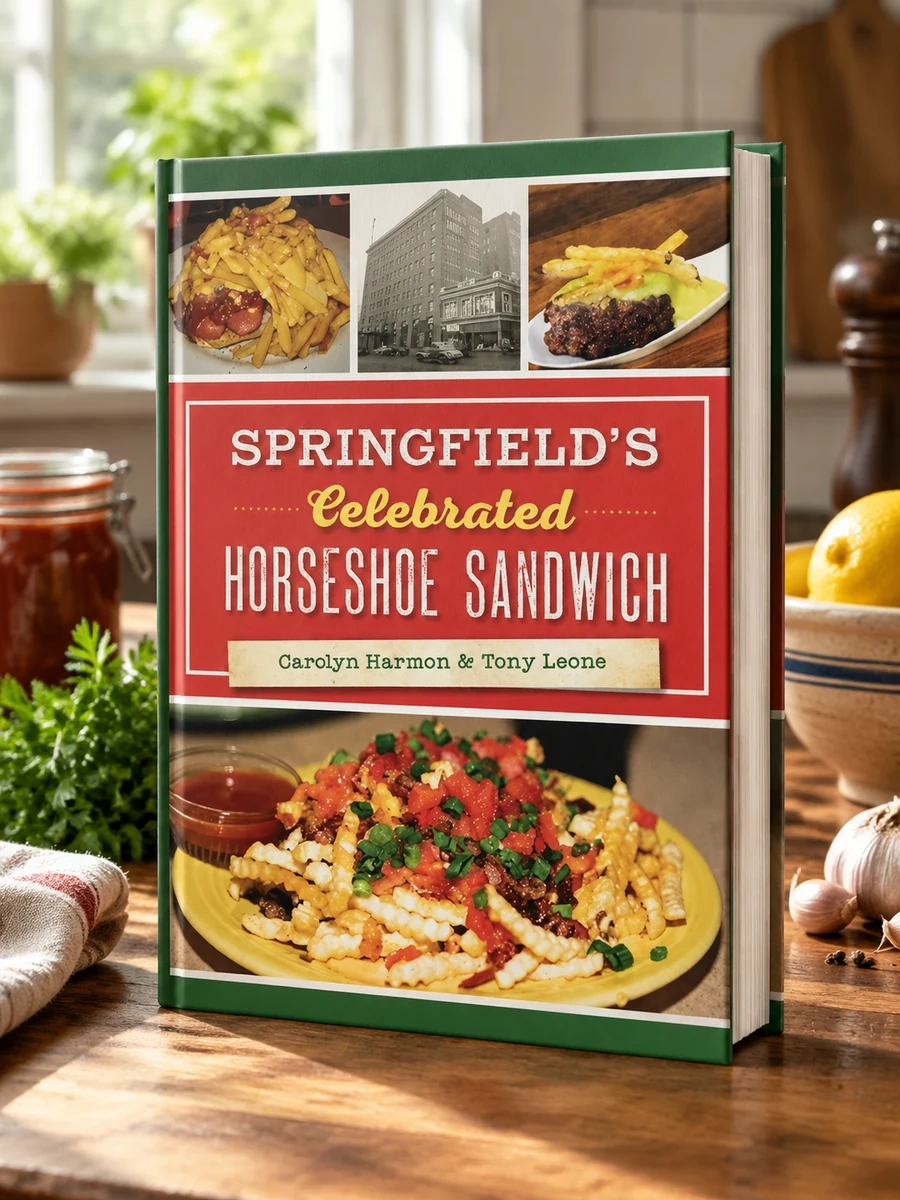
Springfield's Celebrated Horseshoe Sandwich
✍️ Harmon, CarolynA historical account of Springfield's iconic open-faced fried potato and cheese sandwich
Harmon examines how a single menu item became a unifying symbol in Springfield politics. The book documents the sandwich's journey from the Leland Hotel to modern eateries. It highlights the role of local restaurants in preserving this nearly century-old custom. The text also investigates extreme versions of the dish, providing context for its cultural significance beyond simple consumption.
The Horseshoe Sandwich emerged in Springfield, Illinois, in 1928. It represents a specific era of Midwest American cuisine where local hotels pioneered distinctive regional dishes that later became community traditions across the United States.


📝 Description: Springfield's Celebrated Horseshoe Sandwich
💎 Expert review
📖 Why choose it
Why this book is worth reading
Readers interested in the intersection of culinary tradition and regional identity will find this volume particularly engaging. It offers a detailed look at how a specific local dish transcends political divides, serving as a unifying symbol for Springfield, Illinois. The book is ideal for those who appreciate the social history embedded in everyday foods, tracing the horseshoe sandwich from its debut at the Leland Hotel to modern eateries. Enthusiasts of Midwest culture will enjoy the exploration of local establishments and unique variations like the Clydesdale Challenge. It provides context for why certain foods become cultural touchstones, making it a valuable addition for anyone studying regional cuisine or seeking to understand the deeper significance of familiar comfort foods in their community.
⭐ Reader reviews
Reader rating
This title is a niche study, not a general cookbook. It suits food historians and regional enthusiasts who value cultural context over instruction. However, those seeking contemporary gourmet techniques or national chain histories will likely find it less relevant. The narrative focuses strictly on the cultural footprint of this sandwich in its place of origin, offering a structured look at how local dishes gain recognition. While it lacks broad appeal for general cooks, it succeeds as a focused examination of Midwest traditions. Readers should manage expectations regarding breadth; this is a deep dive into one specific item’s journey through nearly a century of local history and political significance.
❓ Frequently asked questions
📖 Who should read this
Readers interested in Midwest culinary history and local political culture will appreciate this niche study. It suits those who enjoy food anthropology over practical cooking instructions. Ideal for collectors of regional American gastronomy or anyone curious about how a simple sandwich influences civic identity in Illinois.