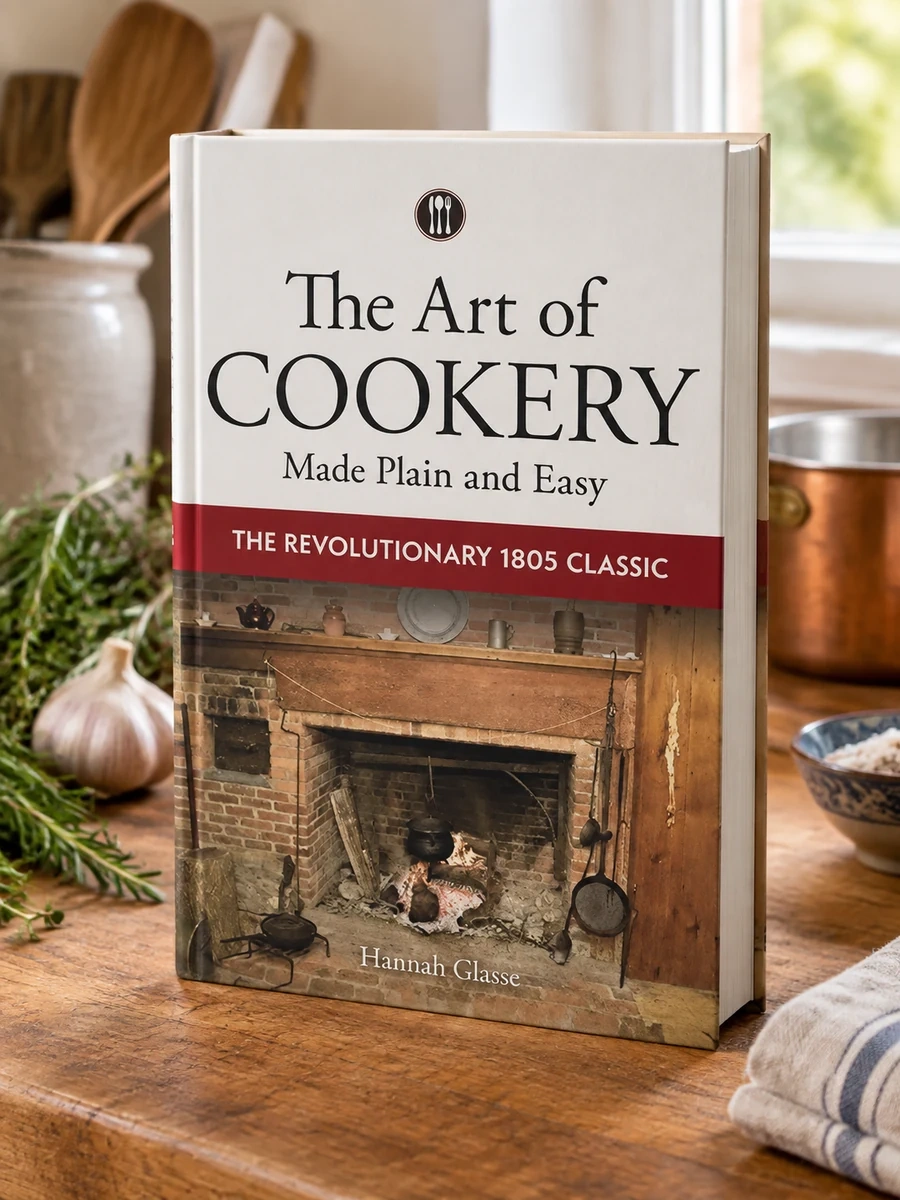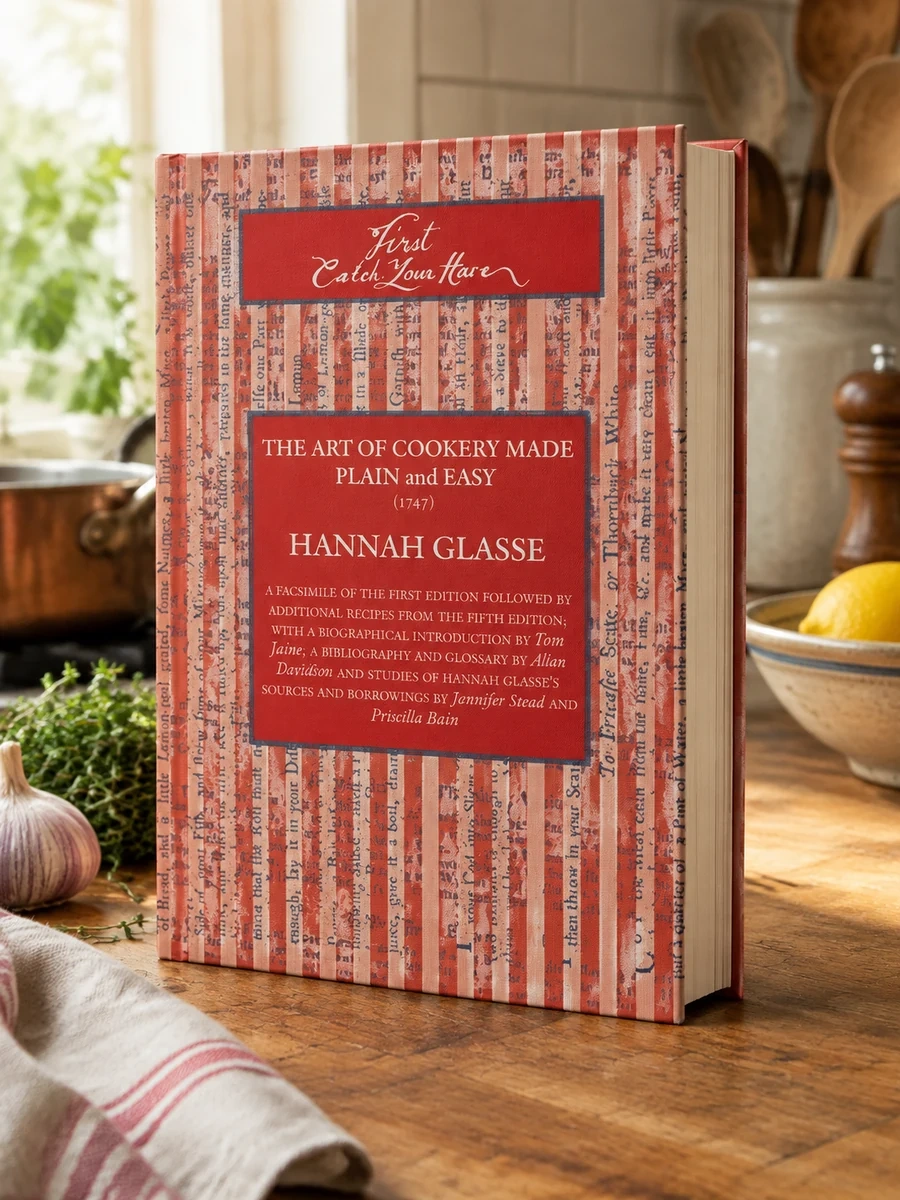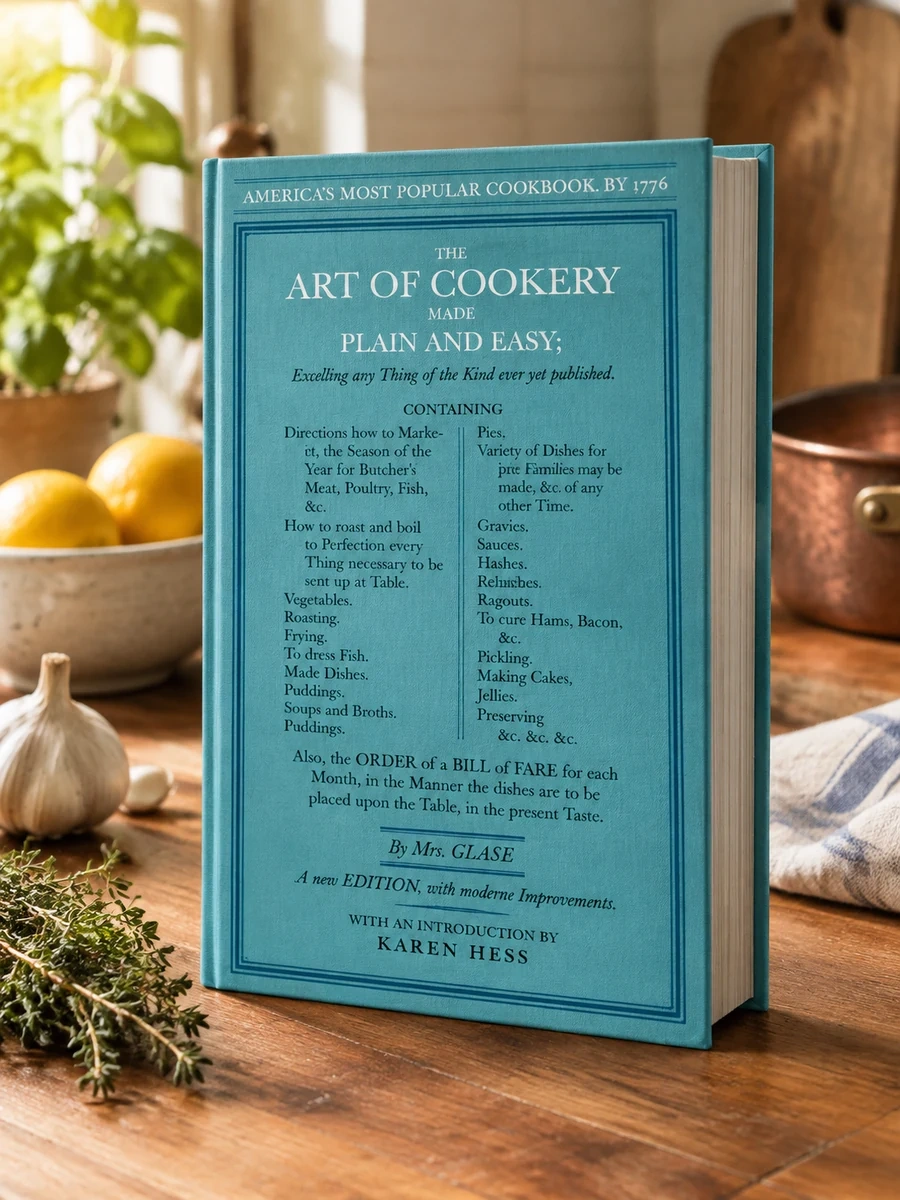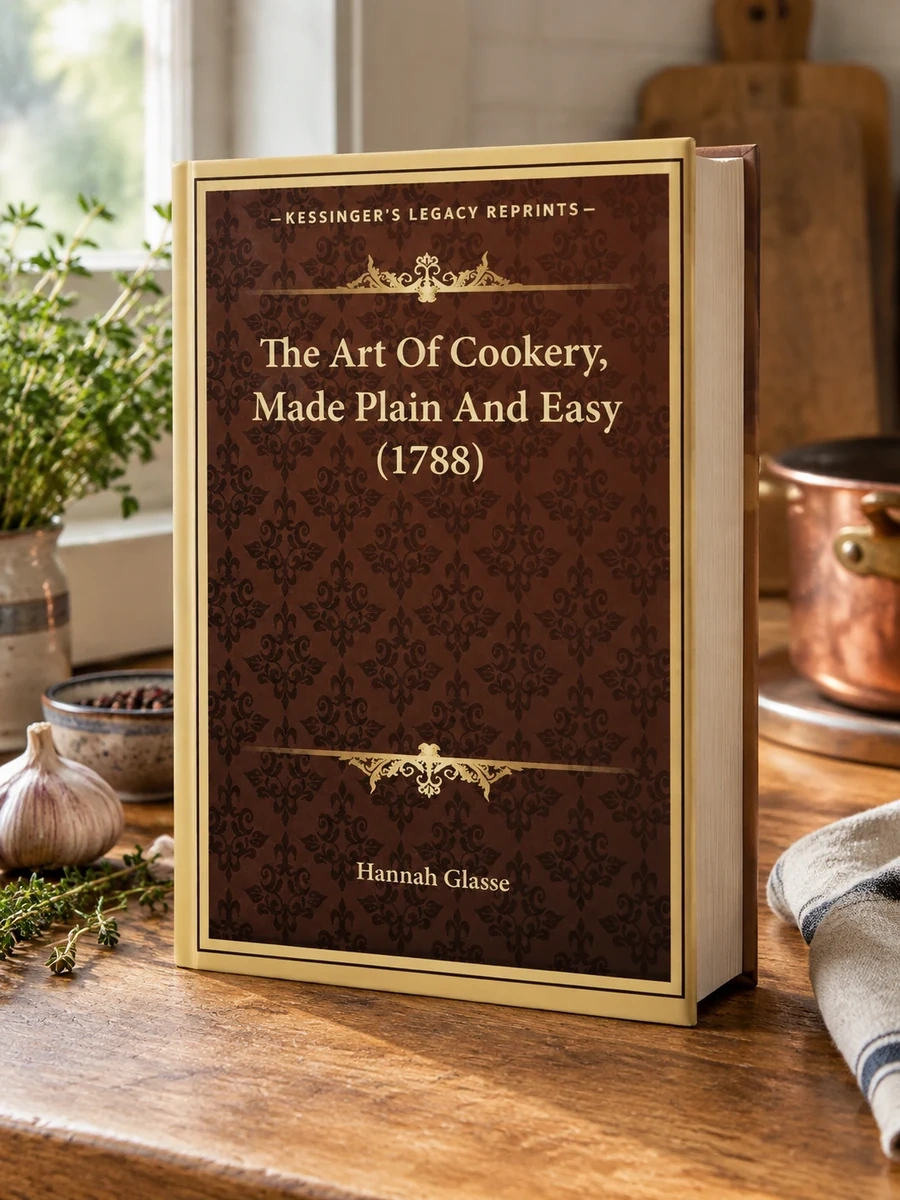
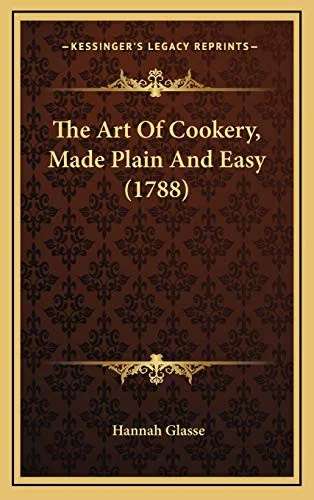
The Art Of Cookery, Made Plain And Easy (1788)
✍️ Glasse, HannahA facsimile reprint of Hannah Glasse's 1788 guide to eighteenth-century British cooking.
This edition preserves the original content of Glasse's work, which bridges culinary arts and eighteenth-century science. The text reflects the rapid development of medical theory and practice during that century. It includes information on diseases, treatments, and agricultural methods alongside recipes. The publication aims to protect culturally important literature by providing affordable, high-quality copies. The book contains plates and detailed bibliographic data from the British Library. It serves as a primary source for understanding how cooking intersected with natural philosophy and record-keeping advances of the printing press era.
Published in London in 1751 by Hannah Glasse, this work emerged during a century of revolution and expanding record-keeping. It reflects the era's rapid technological advances and printing press developments that made such widespread literature possible.


📝 Description: The Art Of Cookery, Made Plain And Easy (1788)
💎 Expert review
📖 Why choose it
Why this book is worth reading
This volume is essential for historians, scholars of medical history, and enthusiasts of European culinary evolution who seek primary sources rather than modern instruction. It offers an authentic glimpse into how cooking intersected with natural philosophy and record-keeping advances during the printing press era. The facsimile format preserves original marks and marginalia, providing unparalleled insight into eighteenth-century agricultural methods and household management. While it lacks contemporary dietary advice, its value lies in documenting the rapid development of medical theory and practice through the lens of food preparation. It is a crucial artifact for understanding the cultural context of British cooking traditions.
⭐ Reader reviews
Reader rating
This facsimile edition serves as a dense historical document rather than a practical guide for modern kitchens. Readers seeking contemporary cooking styles or current nutritional guidelines will likely find it irrelevant and outdated. The text’s heavy focus on medical theory, agricultural methods, and military technology alongside recipes may alienate those looking for straightforward culinary instruction. However, for academics and antiquarian collectors, the preservation of original bibliographic data and plates makes it invaluable. It is a niche resource that prioritizes historical accuracy over usability, reflecting its status as a scarce antiquarian work made accessible through high-quality reprinting.
❓ Frequently asked questions
📖 Who should read this
Historians of eighteenth-century British culture and medical theory will find this volume essential for its primary source material. Culinary scholars studying the intersection of cooking and natural philosophy will appreciate the detailed bibliographic data. It suits researchers seeking affordable access to culturally significant literature preserved in high-quality facsimile format.