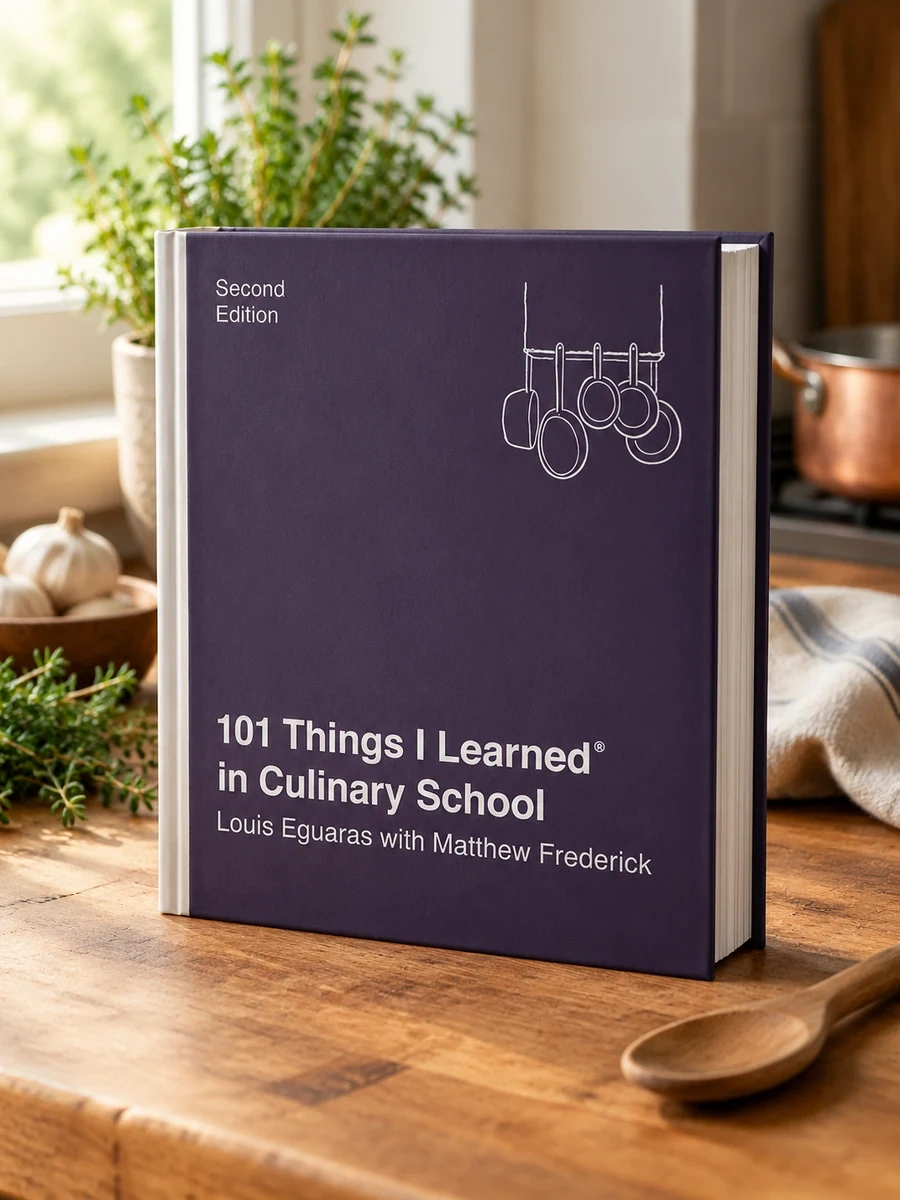
101 Things I Learned(r) in Culinary School (Second Edition)
✍️ Eguaras, LouisA concise guide to culinary fundamentals by a former White House chef.
Eguaras structures this work as a series of clear, actionable lessons for aspiring chefs and serious home cooks. The content focuses on the mental and physical discipline required in professional kitchens. It covers the management of ingredients like rice and potatoes, the selection of tools such as knives, and the appreciation of beverages including wine and beer. The text emphasizes technique over recipe, offering a framework for understanding flavor profiles and kitchen organization. This approach helps readers make informed decisions about thickeners, oils, and salad greens. It is designed for those who want to understand the why behind cooking methods rather than just following instructions.
Published in 2020 by Crown Publishing Group in New York, this second edition builds on the success of the first. It reflects the American culinary education system and professional kitchen standards. The author's background at the White House adds authority to the practical advice provided for both students and general readers.


📝 Description: 101 Things I Learned(r) in Culinary School (Second Edition)
💎 Expert review
📖 Why choose it
Why this book is worth reading
Readers gain from this book by acquiring a mental framework for cooking rather than just a list of instructions. It is ideal for aspiring chefs and serious home cooks who want to understand the logic behind their culinary decisions. The guide helps users make informed choices about ingredients like oils, flours, and potatoes, while teaching essential skills such as knife handling and thermometer calibration. By focusing on fundamentals like flavor profiling and kitchen organization, it empowers readers to navigate the culinary world with confidence. It is particularly useful for those who feel overwhelmed by complex recipes and seek a concise, practical approach to mastering the basics of professional cooking without unnecessary complexity.
⭐ Reader reviews
Reader rating
This second edition serves as a pragmatic manual for understanding culinary fundamentals, drawing on the author's White House experience to offer fifty percent new material. It excels in explaining the discipline of professional kitchens, from tool selection to beverage appreciation. However, it does NOT suit readers seeking detailed recipes or narrative food history; those looking for complex dishes will find its sparse, instructional tone insufficient. The book is best judged by its utility as a reference for technique and logic rather than inspiration. It is a functional tool for clarity, but its lack of culinary storytelling may disappoint those expecting the richness found in traditional food writing or comprehensive cookbooks.