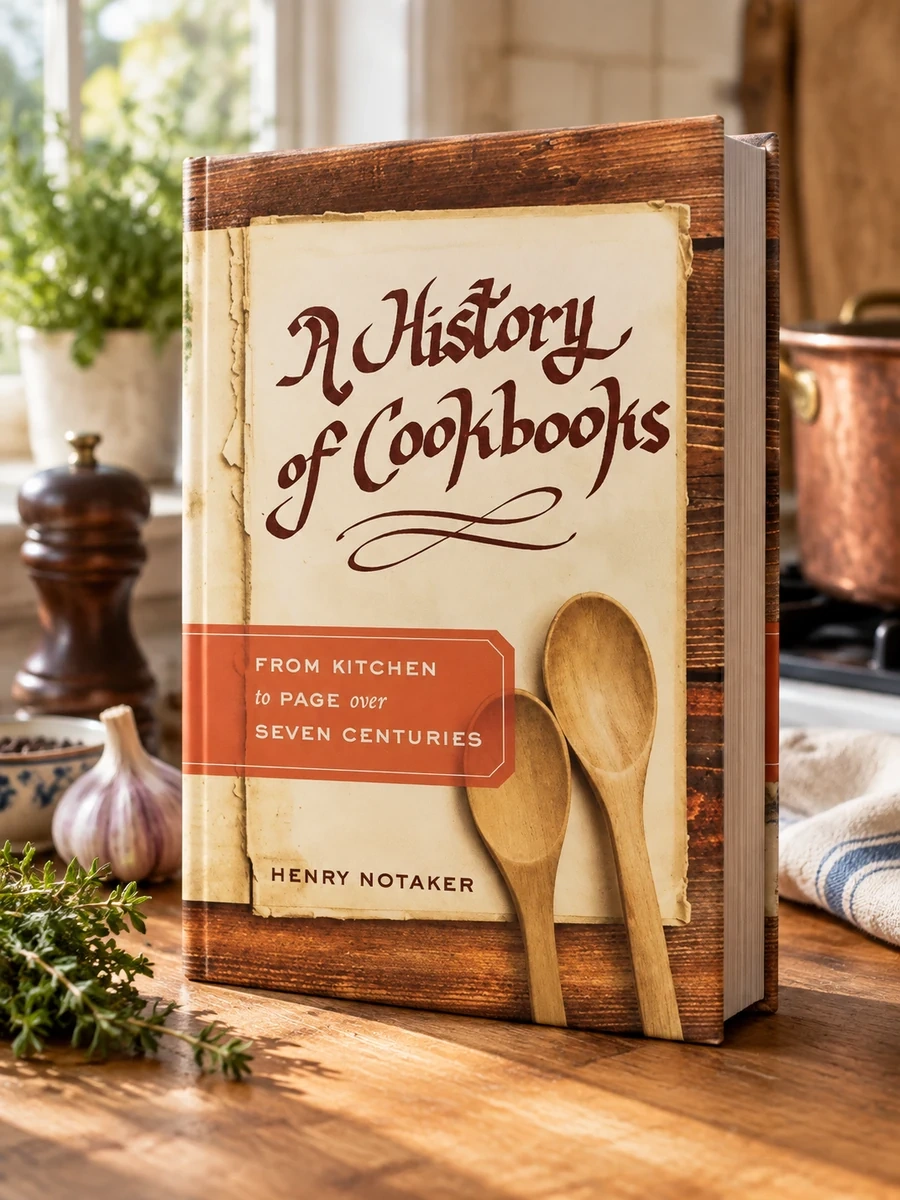
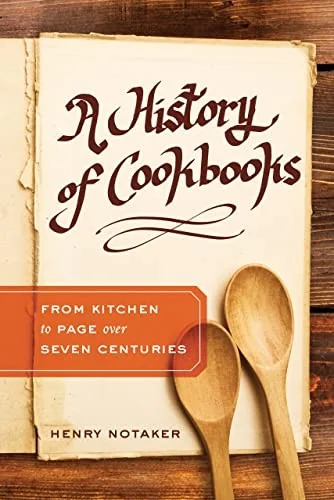
A History of Cookbooks: From Kitchen to Page Over Seven Centuries Volume 64
✍️ Notaker, HenryA scholarly examination of cookbooks as literary and historical documents from the Late Middle Ages.
Notaker treats cookbooks as serious literature rather than mere instruction manuals. He analyzes their structure, vocabulary, and paratexts to understand their cultural role. The book covers topics like nationalism, gender, and health advice found in these texts. It shows how recipes evolved into detailed narratives with specific grammatical rules. This perspective highlights the intellectual depth of culinary writing across Western traditions.
This work focuses on Western cultures and languages, beginning in the Late Middle Ages. It traces the development of the cookbook genre as part of broader food culture. The study examines printed books and their role in diffusion and translation across different societies.

📝 Description: A History of Cookbooks: From Kitchen to Page Over Seven Centuries Volume 64
💎 Expert review
📖 Why choose it
Why this book is worth reading
This book is essential for scholars and enthusiasts who view food history as a lens for understanding broader societal shifts. Henry Notaker offers a unique perspective by analyzing cookbooks as literary artifacts rather than mere instructional guides. Readers interested in the intellectual depth of culinary writing, the evolution of recipe grammar, and the intersection of nutrition with morality will find profound insights here. It is particularly valuable for those studying how printed works diffused across cultures, addressing topics like nationalism, gender, and health advice. By examining paratexts and pedagogical aspects, Notaker reveals how these texts serve as historical records of daily life. This volume suits readers seeking a scholarly overview of taste and pleasure in Western traditions, providing a rich context for the cultural significance of what we eat and how it is written down.
⭐ Reader reviews
Reader rating
Notaker’s work is a dense, scholarly examination that treats cookbooks as serious literature rather than simple instruction manuals. It is an intellectual tour de force for those interested in food history and literary analysis, tracing the evolution of recipes from brief lists to structured texts with specific grammatical rules. However, it will not appeal to home cooks seeking immediate instructions or practical kitchen advice. The text provides a theoretical framework over tangible utility, focusing on diffusion, translation, and cultural reflection. Readers looking for easy-to-follow guidance may find this edition too abstract. It is best suited for academic libraries and serious historians who value the examination of moral, gender, and health narratives embedded in culinary documents across centuries.
❓ Frequently asked questions
📖 Who should read this
Academic researchers and literary historians interested in the evolution of culinary texts. Readers who view cookbooks as cultural artifacts rather than practical guides will appreciate this scholarly approach to Western cooking traditions and their historical context.