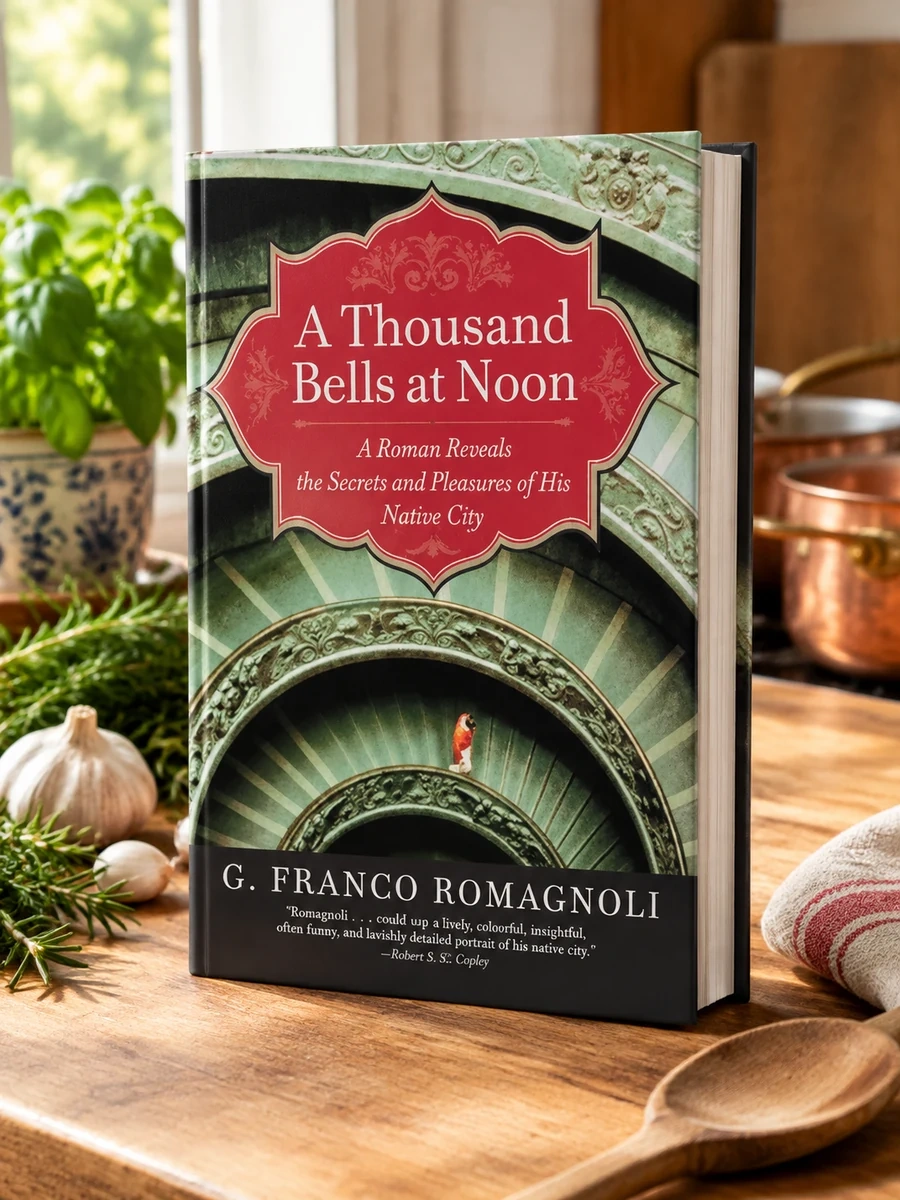
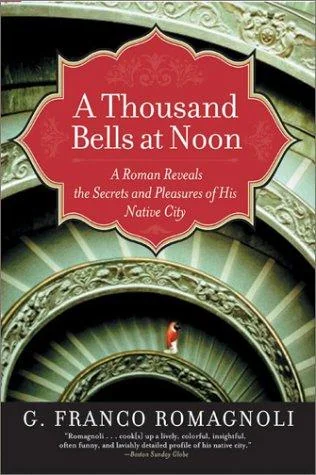
A Thousand Bells at Noon: A Roman Reveals the Secrets and Pleasures of His Native City
✍️ Romagnoli, G FrancoA memoir of Rome by a filmmaker who returned to rediscover his hometown through food and memory.
Romagnoli uses his dual identity as an American-based media figure and a Roman native to frame his observations. He does not present a dry historical account but rather a sensory exploration of urban life. The book relies on personal anecdotes and visual aids like maps and photographs. It bridges the gap between travel writing and memoir by focusing on specific locations such as palazzos and small apartments. The author’s prior experience in America contrasts with his deep-rooted connection to Italy, creating a unique perspective on local traditions and daily routines.
Published by Harper Perennial in 2003, this paperback edition reflects early twenty-first century interest in personal travel narratives. Romagnoli’s work sits within the genre of Italian food and culture writing, appealing to American readers seeking an intimate look at Rome through the eyes of a native who left and returned.


📝 Description: A Thousand Bells at Noon: A Roman Reveals the Secrets and Pleasures of His Native City
💎 Expert review
📖 Why choose it
Why this book is worth reading
Readers interested in Italian regional culture, travel, and European history will find this memoir a deeply engaging sensory exploration. G. Franco Romagnoli draws upon his unique dual identity as an American-based media figure and a Roman native to bridge travel writing and personal memoir. Through vivid observations of ancient streets, hidden gardens, modern shops, and cafes, the author reconnects with his childhood and old friends. Those who appreciate comfort food literature and intimate cultural storytelling will gain a rich, personal perspective on daily routines, local traditions, and the vibrant present of Rome, supported by photographs and maps.
⭐ Reader reviews
Reader rating
G. Franco Romagnoli blends personal history with cultural observation in a sensory exploration of Rome, guided by his background as a cookbook author and television personality. The narrative moves through grand public squares, sacred spaces, and intimate apartments, creating a vivid portrait of urban life. However, this book does not suit readers seeking a strict chronological history or a practical guidebook for tourists, as it focuses entirely on personal memory rather than academic rigor. Those looking for systematic travel planning may find the approach too subjective, but enthusiasts of evocative, memory-driven food and city literature will appreciate its emotional depth.
❓ Frequently asked questions
📖 Who should read this
Readers seeking a sensory exploration of Rome rather than standard recipes. Ideal for those who enjoy memoirs blending travel and food history. Perfect for fans of cultural exploration who appreciate personal anecdotes over instructional cooking guides.