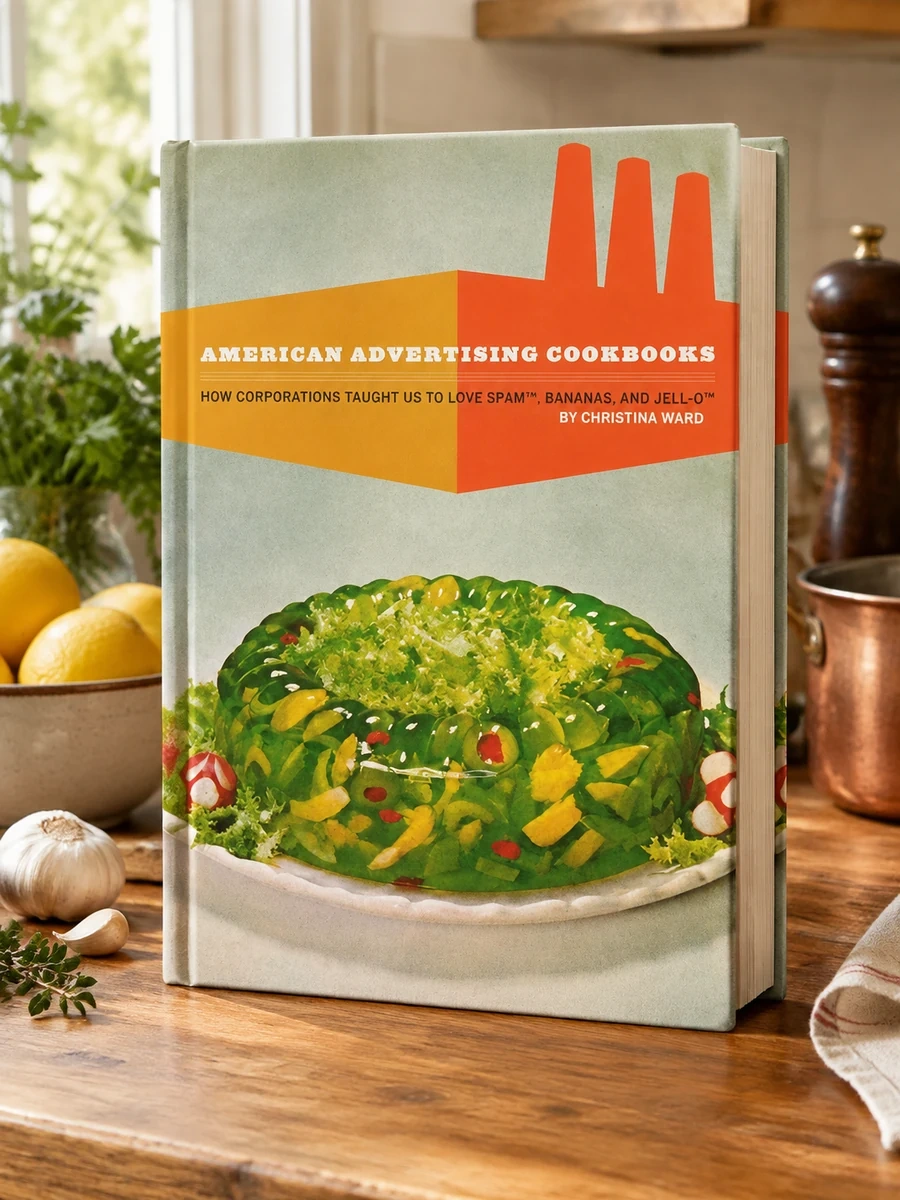
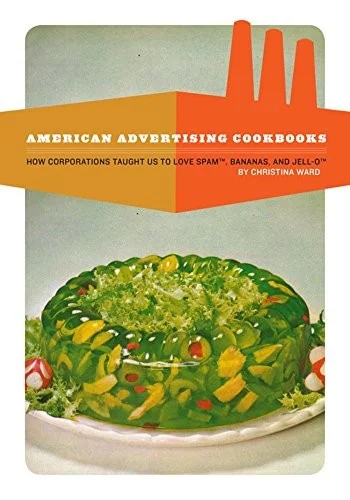
American Advertising Cookbooks: How Corporations Taught Us to Love Bananas, Spam, and Jell-O
✍️ Ward, ChristinaA history of corporate marketing that shaped American food preferences in the twentieth century.
Ward uses her expertise in preservation and canning to trace the influence of corporations on culinary culture. She combines historical cookbook images with research into social science and political policy. The book highlights how figures like Sigmund Freud's nephew impacted celebrity image-making for Carmen Miranda. It also explores the Puritan empire built on pineapples and the banana industry's link to the Iran-Contra scandal. Full-color visuals accompany essays that explain these origins.
This book sits within twentieth-century American food culture, linking culinary trends to geopolitical events like the Iran-Contra scandal. It bridges cooking history with social science and agricultural policy, showing how corporations influenced public taste through advertising and design.


📝 Description: American Advertising Cookbooks: How Corporations Taught Us to Love Bananas, Spam, and Jell-O
💎 Expert review
📖 Why choose it
Why this book is worth reading
Readers fascinated by the hidden mechanisms of food marketing and the geopolitical forces behind pantry staples will find this book essential. Christina Ward provides a unique lens through which to view twentieth-century American consumption, revealing how corporations engineered cravings for items like Spam, bananas, and Jell-O. Those interested in graphic arts, agricultural policy, or the biography of figures like Sigmund Freud’s nephew will appreciate the detailed connections between commerce, celebrity image-making, and political scandal. It offers a compelling look at the crackpots, scientists, and con men who shaped modern diets through persistent advertising rather than culinary merit.
⭐ Reader reviews
Reader rating
Ward’s work is a fascinating exploration of marketing’s power over taste, yet it explicitly warns away traditionalists. Readers seeking standard recipes, technical cooking advice, or practical kitchen tips will find this account largely useless, as it focuses on historical narrative and social science rather than instruction. The book suits those interested in the cultural and political origins of food preferences, using full-color visuals to support essays on corporate influence. While intriguing for its coverage of topics like the banana industry and Puritan pineapple empires, it is not a functional cookbook. It is best appreciated as a critical analysis of how we came to love specific ingredients through clever design and association.
❓ Frequently asked questions
📖 Who should read this
Readers fascinated by the intersection of food history and corporate marketing will find this book compelling. It suits those interested in social science, political policy, and the cultural impact of preservation techniques on American culinary habits during the twentieth century.
📜 Historical context
📖 Read on the blog
🏛 Books from this publisher Process
All books from this publisher →


You might also like
See more →
Have a question about this item?
Ask about the edition, condition, delivery or anything else — we reply by email or phone, usually within a day.
