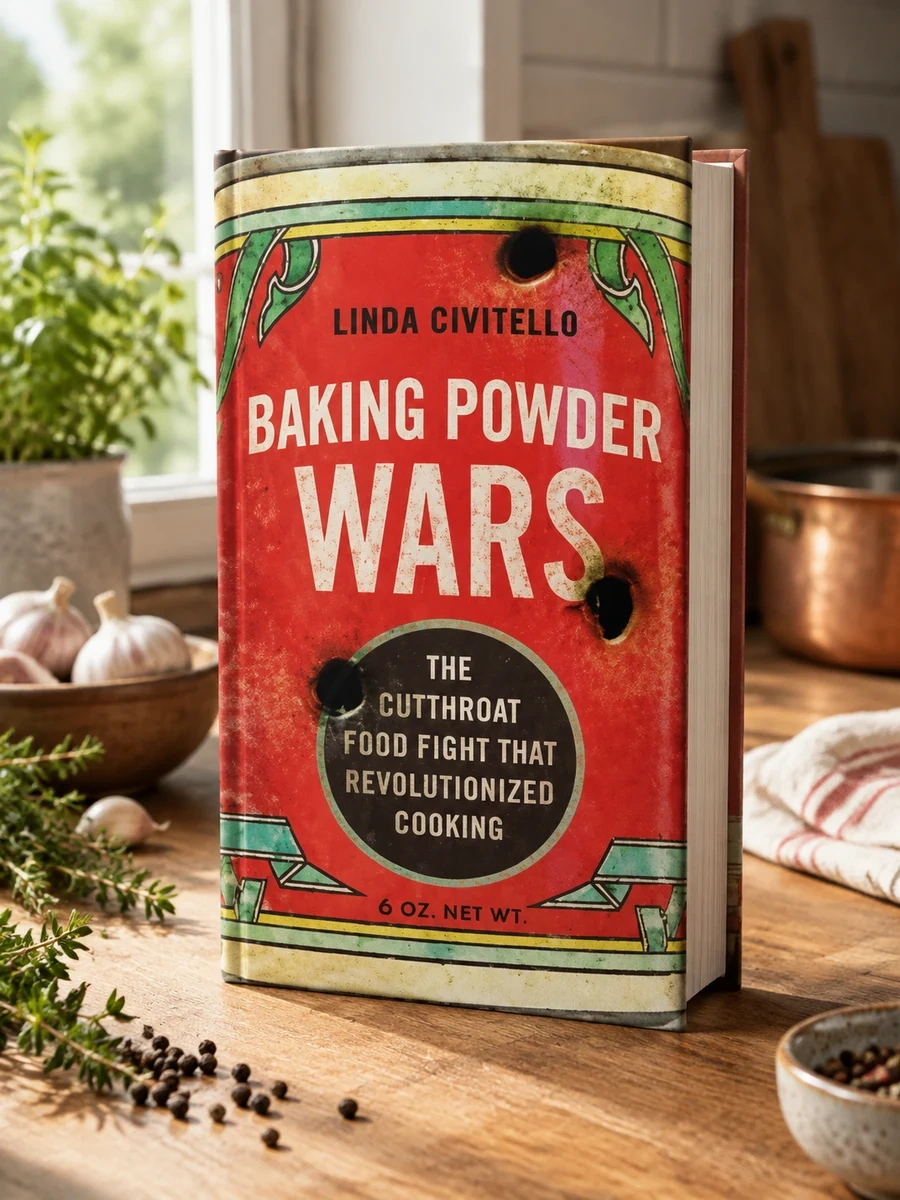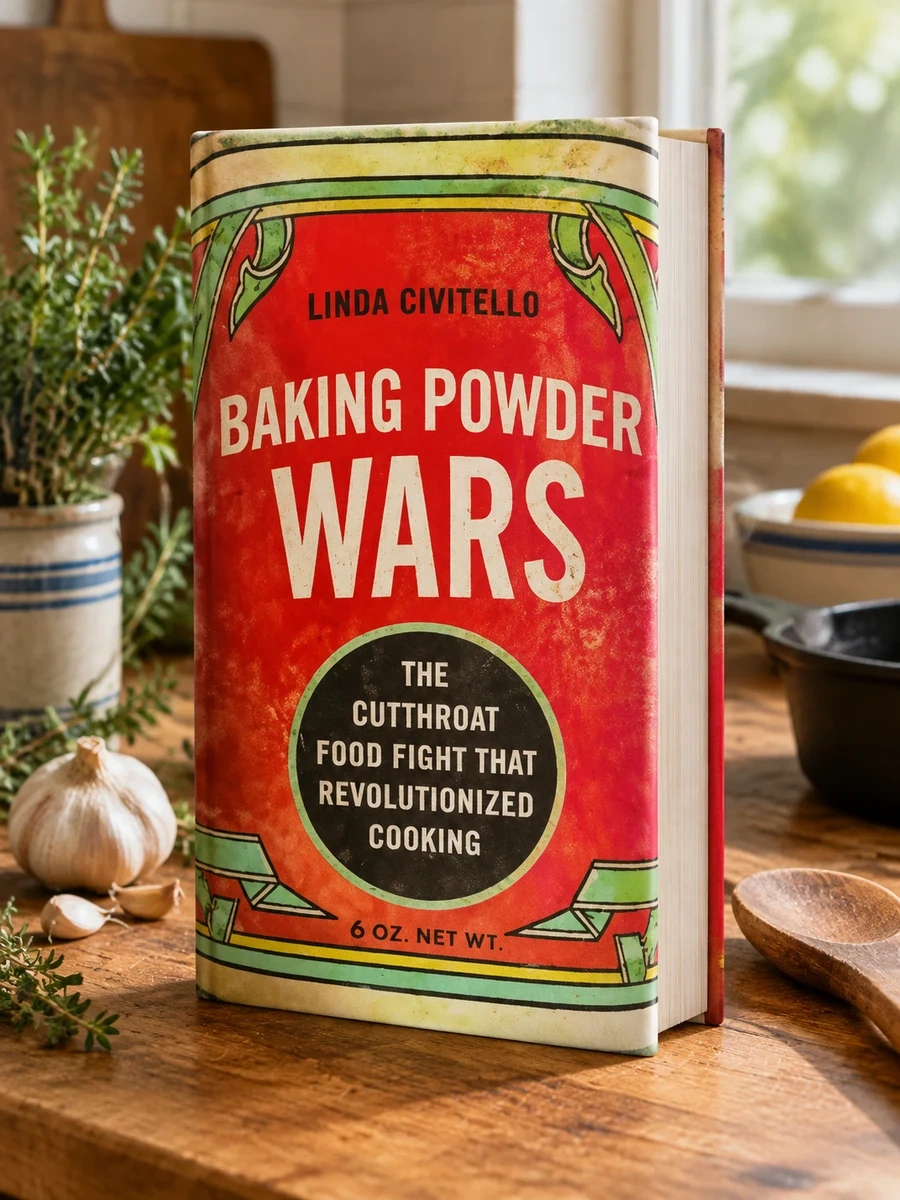
Baking Powder Wars: The Cutthroat Food Fight That Revolutionized Cooking
✍️ Civitello, LindaA historical account of the commercial battles between major baking powder brands.
The author analyzes how a single ingredient sparked a chemical revolution in kitchens while simultaneously driving changes in American commerce and advertising. The text highlights the ruthless pricing strategies and bold-faced bribery used by companies seeking market control. It also explores the social tensions embedded in these corporate wars, such as religious prejudice against German Catholic owners. The narrative connects these business maneuvers to the everyday transformation of home cooking across generations.
The book covers the period from 1856 through the twentieth century in the United States. It examines how a dawning industry raised Cain and changed the American diet during these specific decades.


📝 Description: Baking Powder Wars: The Cutthroat Food Fight That Revolutionized Cooking
💎 Expert review
📖 Why choose it
Why this book is worth reading
Readers fascinated by the intersection of commerce, technology, and daily life will find this book essential. Civitello reveals how corporate warfare over baking powder transformed American diets and advertising landscapes. Those interested in the hidden histories behind common ingredients or the rise of modern brand loyalty will gain significant insight. It offers a unique perspective on how chemical innovations reshaped home cooking practices across generations. The narrative provides context for understanding current food industry dynamics through historical precedent. It is particularly valuable for scholars and enthusiasts who appreciate detailed accounts of industrial rivalry, legal battles, and social tensions embedded in everyday consumer goods.
⭐ Reader reviews
Reader rating
This title serves as a dense historical analysis rather than a practical guide. While it offers compelling insights into advertising tactics and corporate bribery, it lacks the immediate utility of recipe collections or technical manuals. It will not appeal to readers seeking modern baking instructions, quick reference guides, or straightforward culinary advice without historical framing. The focus on commercial litigation and social prejudice may feel abstract to those purely interested in kitchen outcomes. However, for those willing to engage with the broader cultural implications of food production, it provides a rich, albeit academic, exploration of how market forces dictated domestic habits.
❓ Frequently asked questions
📖 Who should read this
Readers fascinated by the intersection of culinary history and corporate strategy will find this compelling. It suits those interested in how industrial competition shaped domestic routines and advertising norms during America's formative economic eras.