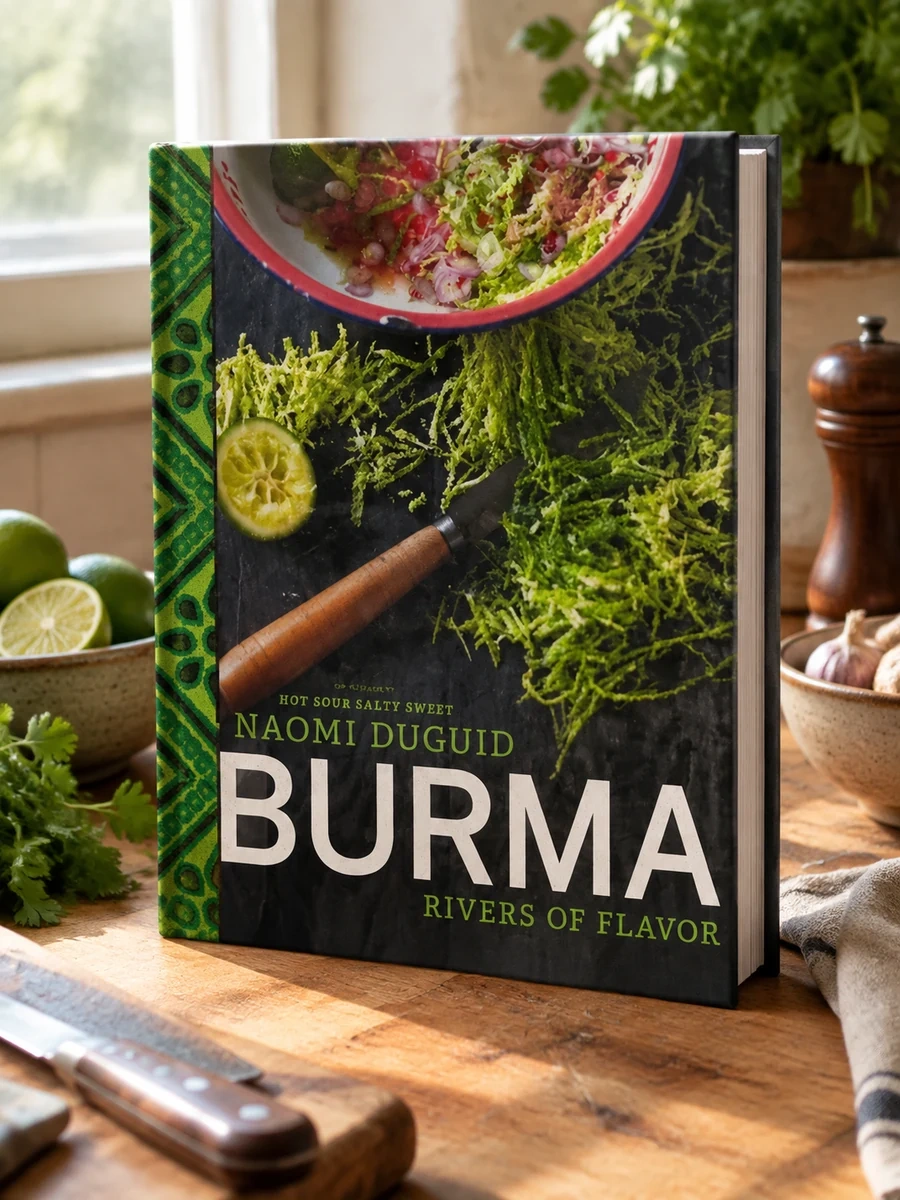
Burma: Rivers of Flavor
✍️ Duguid, NaomiA culinary journey through Burma's diverse regional dishes and salad traditions.
This guide examines how Burmese cuisine evolved at the crossroads of major Asian powers. Duguid traces the absorption of foreign elements like potatoes and Buddhism into everyday life. The text emphasizes flexibility in cooking, showing how ingredients transform into salads or soups based on local availability. It documents the layering of regional touches that define each area's food culture. The work serves as an introduction to Myanmar's culinary landscape for those unfamiliar with the region.
Burma sits at the crossroads between China, India, and Southeast Asian nations. The country absorbed outside influences over centuries before opening after half a century of seclusion. This geographic position allowed the development of a complex cuisine using easily available ingredients to create unique flavor combinations.


📝 Description: Burma: Rivers of Flavor
💎 Expert review
📖 Why choose it
Why this book is worth reading
Readers seeking a deep dive into the historical and geographical roots of Burmese cooking will find this essential. Duguid moves beyond simple recipes to explain how isolation and location shaped national identity through food. Those interested in the evolution of dishes like Mohinga or the cultural significance of Tea-Leaf Salad will appreciate the context provided. It is ideal for home cooks wanting to understand the flexibility of Burmese techniques, such as transforming ingredients into salads with crispy shallots and lime. The book serves as an educational bridge for Westerners unfamiliar with Myanmar’s diverse landscape, offering a respectful and detailed look at how local ingredients create distinct regional flavors rather than just providing a list of meals.
⭐ Reader reviews
Reader rating
This work is a scholarly exploration of Burmese culinary history rather than a practical weekly meal planner. It excels in explaining the absorption of foreign elements like potatoes and Buddhism into daily life, offering rich context for dishes such as Shan khaut swei. However, it may disappoint readers looking for quick weeknight solutions or standardized international recipes. The narrative prioritizes cultural geography over step-by-step instruction, making it less suitable for beginners seeking immediate culinary results. It is best enjoyed by those who view cooking as a study of tradition and place, accepting that the text serves as an introduction to Myanmar’s landscape rather than a rapid-fire guide to dinner.
❓ Frequently asked questions
📖 Who should read this
Home cooks curious about Southeast Asian cuisine who enjoy exploring regional variations and salad-based dishes. Ideal for readers seeking an accessible introduction to Myanmar's food culture without requiring advanced technical skills or prior expertise in Burmese ingredients.