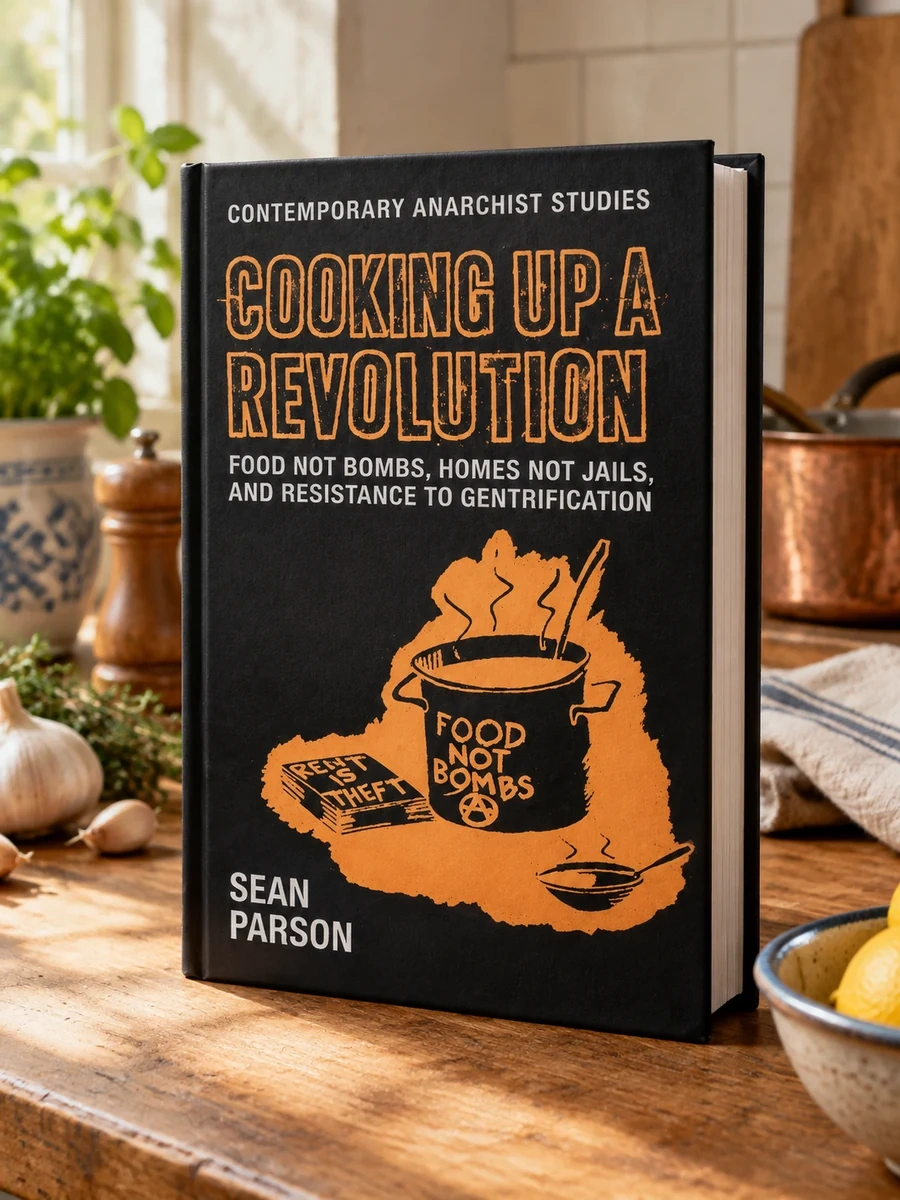
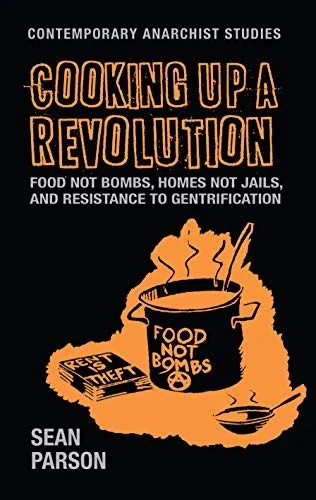
Cooking Up a Revolution: Food Not Bombs, Homes Not Jails, and Resistance to Gentrification
✍️ Parson, SeanA study of anarchist food activism and police conflict in 1990s San Francisco
Parson investigates the legal and social tensions arising from Food Not Bombs activities in California. He explores how distributing free meals became a site of political contention between citizens and municipal power structures. The analysis covers the theoretical underpinnings of anti-capitalism and the practical realities of resisting gentrification. It offers insights for those studying the history of homelessness and public space usage during this specific era.
This work focuses on San Francisco in the late 1980s and early 1990s. It addresses the city's war against homelessness and the subsequent arrests of activists. The context involves United Nations Sustainable Development Goal 2 and the specific legal environment of that time.


📝 Description: Cooking Up a Revolution: Food Not Bombs, Homes Not Jails, and Resistance to Gentrification
💎 Expert review
📖 Why choose it
Why this book is worth reading
Scholars, activists, and students of sociology, political science, and social history will gain critical insights from this deep dive into grassroots organizing and municipal power. The book provides a thorough examination of anarchist food activism, anti-capitalist theory, and the ongoing struggle against gentrification in 1990s San Francisco. By analyzing the legal, social, and physical conflicts surrounding free meal distribution, readers exploring the history of homelessness, public space usage, and urban policy will find a compelling framework for understanding how food systems intersect with municipal legislation and policing strategies.
⭐ Reader reviews
Reader rating
Sean Parson delivers an analytical and politically charged study of grassroots resistance, examining how a liberal municipality criminalized the distribution of free meals to the hungry. The text skillfully connects local police conflicts to broader theoretical discussions on agriculture, anti-homeless legislation, and broken-windows policing. However, prospective buyers should note that this is strictly a work of political sociology and social history rather than a culinary text. Readers seeking practical recipes, cooking instructions, or kitchen techniques will find it entirely unsuitable for their needs, as it focuses instead on the heavy intersection of law, urban policy, and systemic resistance.
❓ Frequently asked questions
📖 Who should read this
Readers interested in political history and social activism will find this text compelling. It suits those studying urban sociology or anti-capitalist movements rather than home cooks seeking meal ideas. The content is ideal for academic researchers examining the intersection of food distribution, public space rights, and municipal policy during periods of gentrification.
📜 Historical context
📖 Read on the blog
🏛 Books from this publisher Manchester University Press
All books from this publisher →




You might also like
See more →





Have a question about this item?
Ask about the edition, condition, delivery or anything else — we reply by email or phone, usually within a day.
