“If you are an academic, student, or deeply curious food scholar looking to expand your worldview beyond standard capitalist food politics, this scholarly collection is for you. Casual home cooks seeking weeknight recipes or cooking techniques will be entirely disappointed.
📝 Description: Ethical Eating in the Postsocialist and Socialist World
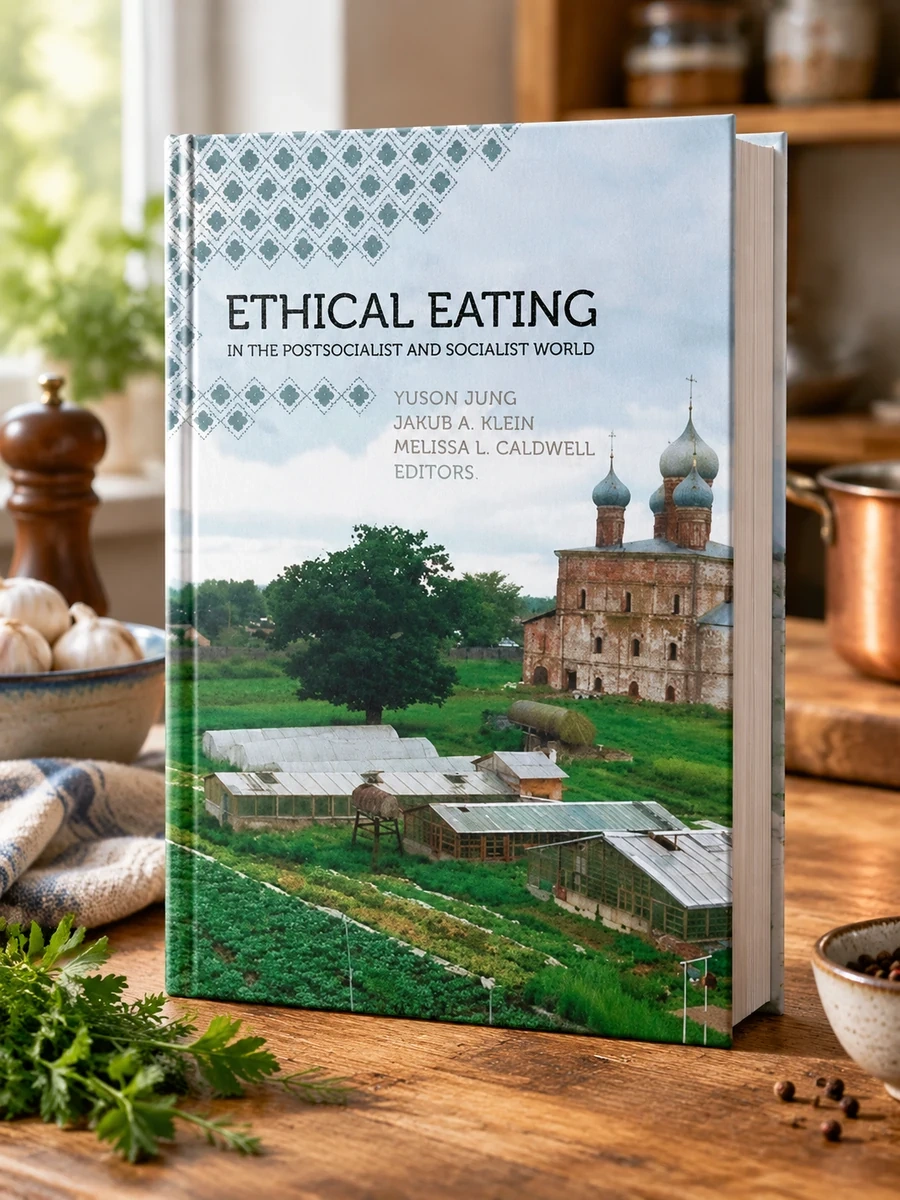
Current discussions of the ethics around alternative food movements--concepts such as "local," "organic," and "fair trade"--tend to focus on their growth and significance in advanced capitalist societies. In this groundbreaking contribution to critical food studies, editors Yuson Jung, Jakob A. Klein, and Melissa L. Caldwell explore what constitutes "ethical food" and "ethical eating" in socialist and formerly socialist societies. With essays by anthropologists, sociologists, and geographers, this politically nuanced volume offers insight into the origins of alternative food movements and their place in today's global economy. Collectively, the essays cover discourses on food and morality; the material and social practices surrounding production, trade, and consumption; and the political and economic power of social movements in Bulgaria, China, Cuba, Lithuania, Russia, and Vietnam. Scholars and students will gain important historical and anthropological perspective on how the dynamics of state-market-citizen relations continue to shape the ethical and moral frameworks guiding food practices around the world.
💎 Expert review
“
🍳
Eatbook Family editorial team
Cookbook desk
While intellectually rigorous, this text is not for casual cooks or hobbyists seeking recipes or kitchen tips. It is a dense academic anthology requiring patience with theoretical discourse on power and morality. Readers expecting practical cooking advice will be disappointed; this is strictly for those studying food politics, sociology, or regional history. The tone is analytical rather than instructional, making it unsuitable for general interest readers. However, for those analyzing the geography of ethics in consumption, it offers a necessary, nuanced look at how socialist legacies continue to inform contemporary dietary choices and trade practices worldwide.
✓ EDITOR'S REVIEW
⭐ Reader reviews
The starting rating comes from the team Eatbook Family —
If you are an academic, student, or deeply curious food scholar looking to expand your worldview beyond standard capitalist food politics, this scholarly collection is for you. Casual home cooks seeking weeknight recipes or cooking techniques will be entirely disappointed.
Reader rating
4.4
Based on 1 reviews
5
0
4
1
3
0
2
0
1
0
E
Eatbook Family editorial team
While intellectually rigorous, this text is not for casual cooks or hobbyists seeking recipes or kitchen tips. It is a dense academic anthology requiring patience with theoretical discourse on power and morality. Readers expecting practical cooking advice will be disappointed; this is strictly for those studying food politics, sociology, or regional history. The tone is analytical rather than instructional, making it unsuitable for general interest readers. However, for those analyzing the geography of ethics in consumption, it offers a necessary, nuanced look at how socialist legacies continue to inform contemporary dietary choices and trade practices worldwide.
❓ Frequently asked questions
No, this is a scholarly academic volume focused on critical food studies and anthropology, so it does not feature kitchen recipes, ingredient measurements, or cooking instructions.
There are no step-by-step cooking photographs or ingredient guides, as the book consists of academic essays analyzing food production, trade, and consumption rather than a traditional cookbook.
📖 Who should read this
If you are an academic, student, or deeply curious food scholar looking to expand your worldview beyond standard capitalist food politics, this scholarly collection is for you. Casual home cooks seeking weeknight recipes or cooking techniques will be entirely disappointed.
📜 Historical context
This politically nuanced volume explores the origins and contemporary meanings of alternative food movements within socialist and formerly socialist societies. Rather than focusing on standard culinary traditions, it examines the intersection of food, morality, state-market-citizen relations, and economic power across diverse nations like Bulgaria, China, Cuba, Lithuania, Russia, and Vietnam.