“This is strictly for food scientists, R&D professionals, and advanced postgraduates working in industrial or academic product formulation. Home cooks looking for everyday recipes or step-by-step culinary inspiration will be completely disappointed by this heavy scientific text.
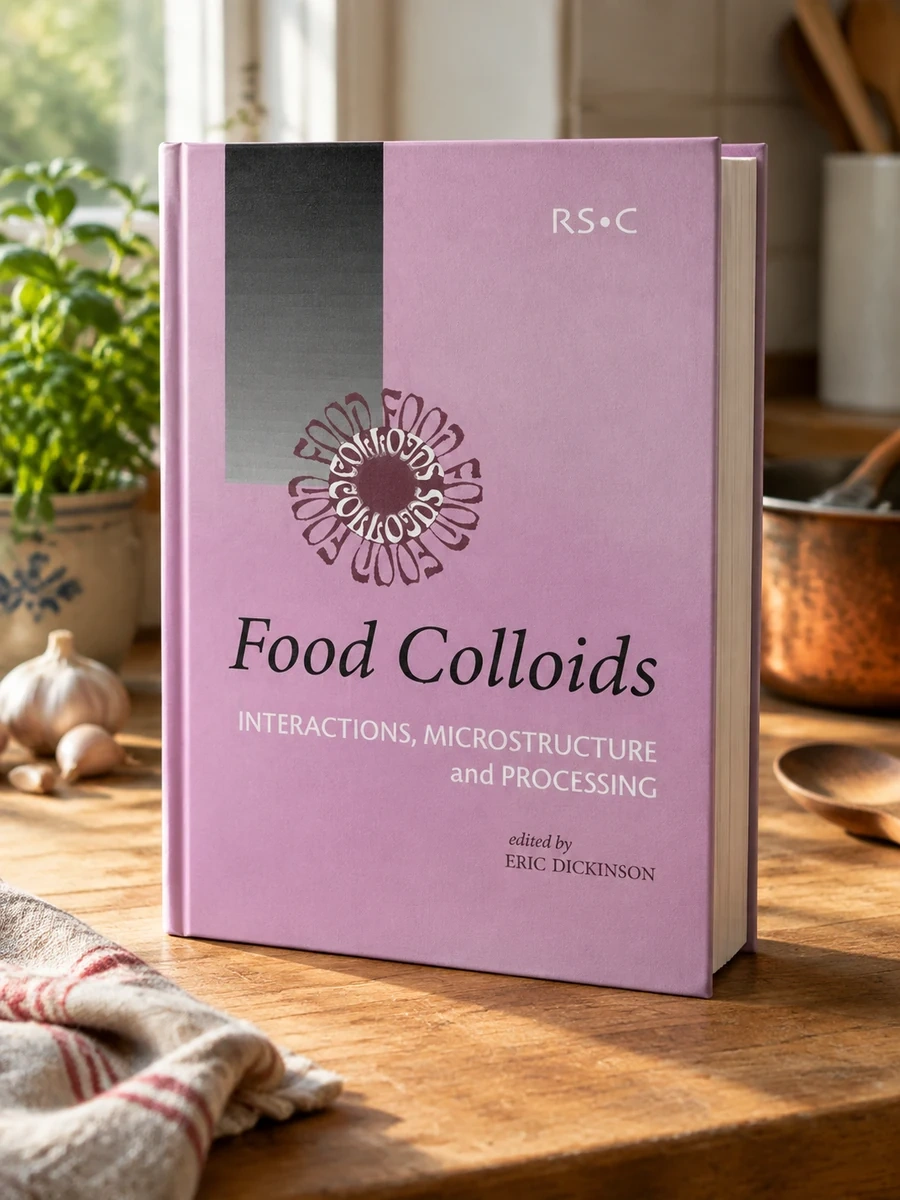
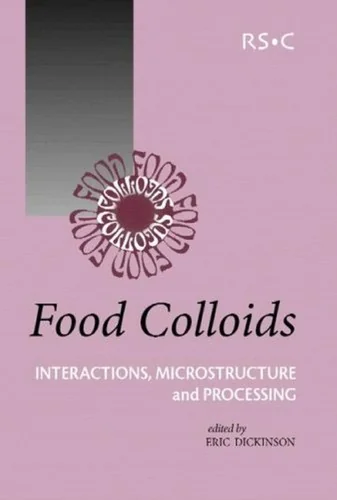
📝 Description: Food Colloids: Interactions, Microstructure and Processing
Food Colloids: Interactions, Microstructure and Processing describes the principles and practice underlying the formulation of food emulsions, dispersions, gels, and foams. Emphasis is on understanding how the functional properties of biopolymers and surfactants determine the texture and shelf-life of multiphase food materials. This book provides essential new findings by experts in the field on specific topics including: the interfacial rheological properties of proteins; the use of microscopy and image analysis to probe structure and phase transitions; the control of colloidal stability during thermal and mechanical processing; the interactions of proteins with polysaccharides and emulsifiers; the incorporation of neutraceuticals into food colloids; and the consumer perception of taste and texture. Food Colloids: Interactions, Microstructure and Processing provides a link between current research on the fundamental physical chemistry of colloidal systems and the requirements of the food technologist to use modern colloid science in new product formulation. It is suitable for postgraduates and researchers, both in industry and academia.
💎 Expert review
“
🍳
Eatbook Family editorial team
Cookbook desk
While indispensable for food technologists and academic researchers, this book is entirely unsuitable for home cooks or casual culinary enthusiasts. Readers seeking practical kitchen advice will find no utility here. Instead, it offers rigorous analysis of phase transitions and consumer perception. It is a specialized reference for those engaged in industrial R&D or academic study of food colloids, demanding a strong background in science to navigate its technical depth regarding protein-polysaccharide interactions.
✓ EDITOR'S REVIEW
⭐ Reader reviews
The starting rating comes from the team Eatbook Family —
This is strictly for food scientists, R&D professionals, and advanced postgraduates working in industrial or academic product formulation. Home cooks looking for everyday recipes or step-by-step culinary inspiration will be completely disappointed by this heavy scientific text.
Reader rating
4.6
Based on 1 reviews
5
0
4
1
3
0
2
0
1
0
E
Eatbook Family editorial team
While indispensable for food technologists and academic researchers, this book is entirely unsuitable for home cooks or casual culinary enthusiasts. Readers seeking practical kitchen advice will find no utility here. Instead, it offers rigorous analysis of phase transitions and consumer perception. It is a specialized reference for those engaged in industrial R&D or academic study of food colloids, demanding a strong background in science to navigate its technical depth regarding protein-polysaccharide interactions.
❓ Frequently asked questions
No, this is an advanced scientific monograph focused on physical chemistry and product formulation rather than culinary recipes.
Readers need a strong foundation in chemistry, food science, or colloid physics to engage with the technical discussions on emulsions, gels, and biopolymers.
📖 Who should read this
This is strictly for food scientists, R&D professionals, and advanced postgraduates working in industrial or academic product formulation. Home cooks looking for everyday recipes or step-by-step culinary inspiration will be completely disappointed by this heavy scientific text.
📜 Historical context
Rooted in the rigorous academic study of physical chemistry and food science, this work emerges from the specialized tradition of analyzing complex multiphase systems. Rather than focusing on a traditional geographic cuisine, it explores the fundamental principles governing the structure, stability, and processing of modern manufactured food materials.