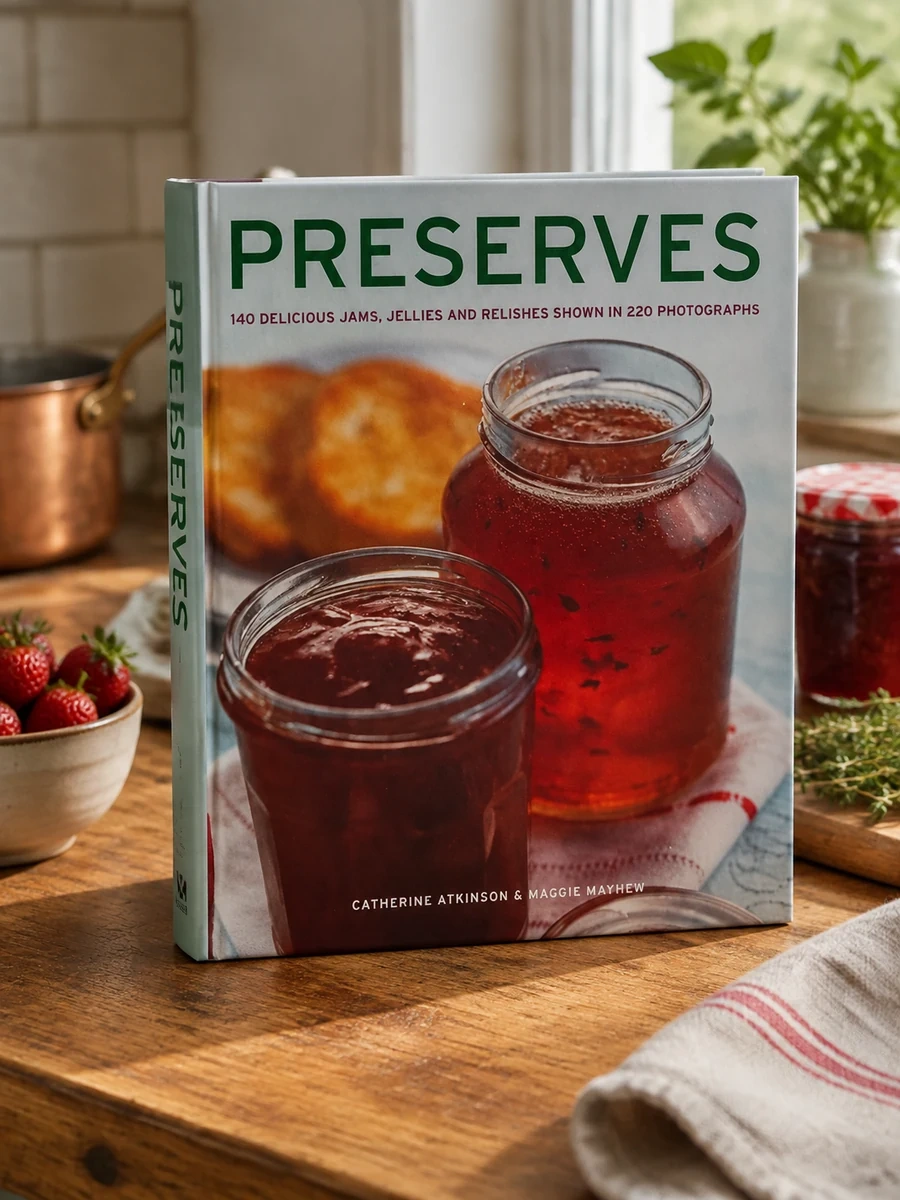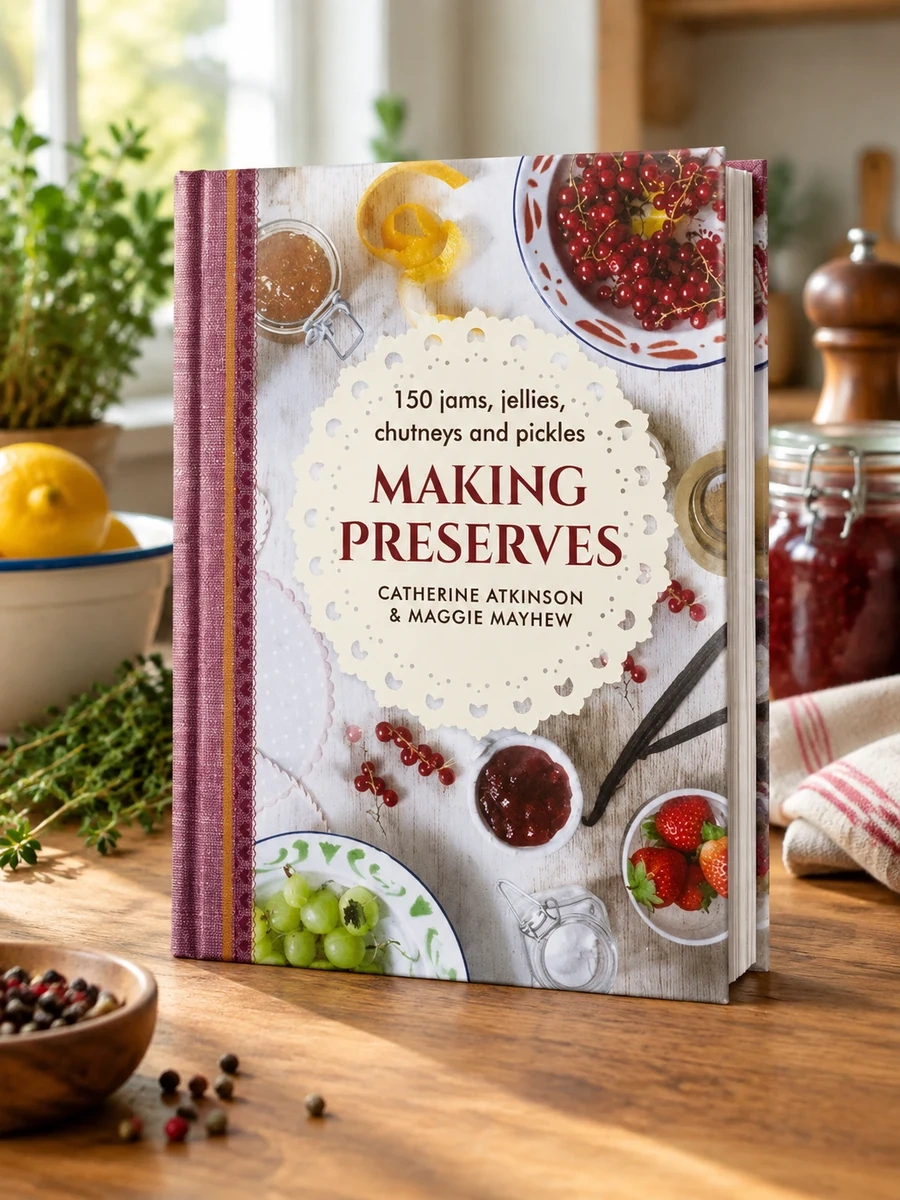
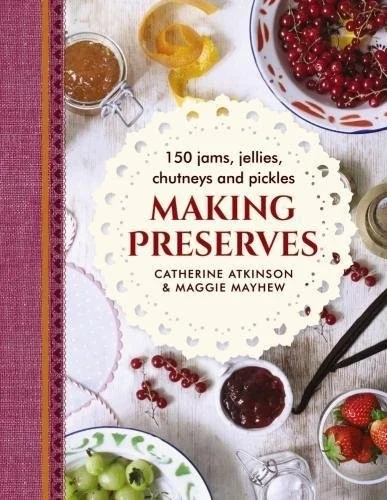
Making Preserves: 150 Jams, Jellies, Chutneys and Pickles
✍️ Atkinson, CatherineA practical guide to making jams, jellies, and pickles at home with clear photos.
Atkinson structures her advice around equipment selection and basic methods before presenting the recipes. This organization allows readers to grasp the technical requirements first. The visual elements complement the text by showing finished products and process stages. The inclusion of less common items like curds and mustards expands the scope beyond standard fruit preserves. The book avoids complex jargon, favoring straightforward instructions that align with the photographic guidance provided on each page.
Published in 2017 by Lorenz Books, this hardcover volume reflects a contemporary interest in home preservation. The content draws on established methods for creating jams, jellies, chutneys, and pickles. It addresses the American market through its focus on stocking store cupboards with homemade goods.


📝 Description: Making Preserves: 150 Jams, Jellies, Chutneys and Pickles
💎 Expert review
📖 Why choose it
Why this book is worth reading
Home cooks seeking to stock their cupboards with homemade goods will find this guide indispensable for its straightforward approach to small-batch preservation. Atkinson prioritizes practical application over historical theory, making it a functional reference for kitchen use. Readers benefit from clear photography that illustrates each step, ensuring they understand the mechanics behind successful preservation before attempting specific dishes. The inclusion of diverse options like wild strawberry conserve and mango relish expands the utility beyond standard jams, while instructions for curds and mustards offer additional value for those interested in expanding their preserving repertoire without navigating complex jargon.
⭐ Reader reviews
Reader rating
This text serves as a reliable, no-nonsense manual for the aspiring preserve-maker who values clarity over flair. It is an excellent resource for beginners who need visual confirmation of process stages and straightforward instructions. However, it explicitly does not suit those interested in large-scale commercial production or industrial canning methods, nor will it satisfy readers seeking deep academic study of food history. The scope is strictly limited to traditional small-batch preparation. While the two hundred fifty-six pages provide ample coverage of jams and pickles, the emphasis on practical application means it lacks theoretical depth. It is a functional tool for the shelf, not a narrative journey.
❓ Frequently asked questions
📖 Who should read this
Home cooks seeking a clear, visual guide to preserving fruits and vegetables. Ideal for beginners who want straightforward instructions without complex jargon. Perfect for those with basic kitchen tools aiming to create jams, chutneys, or pickles for personal use or gifting.