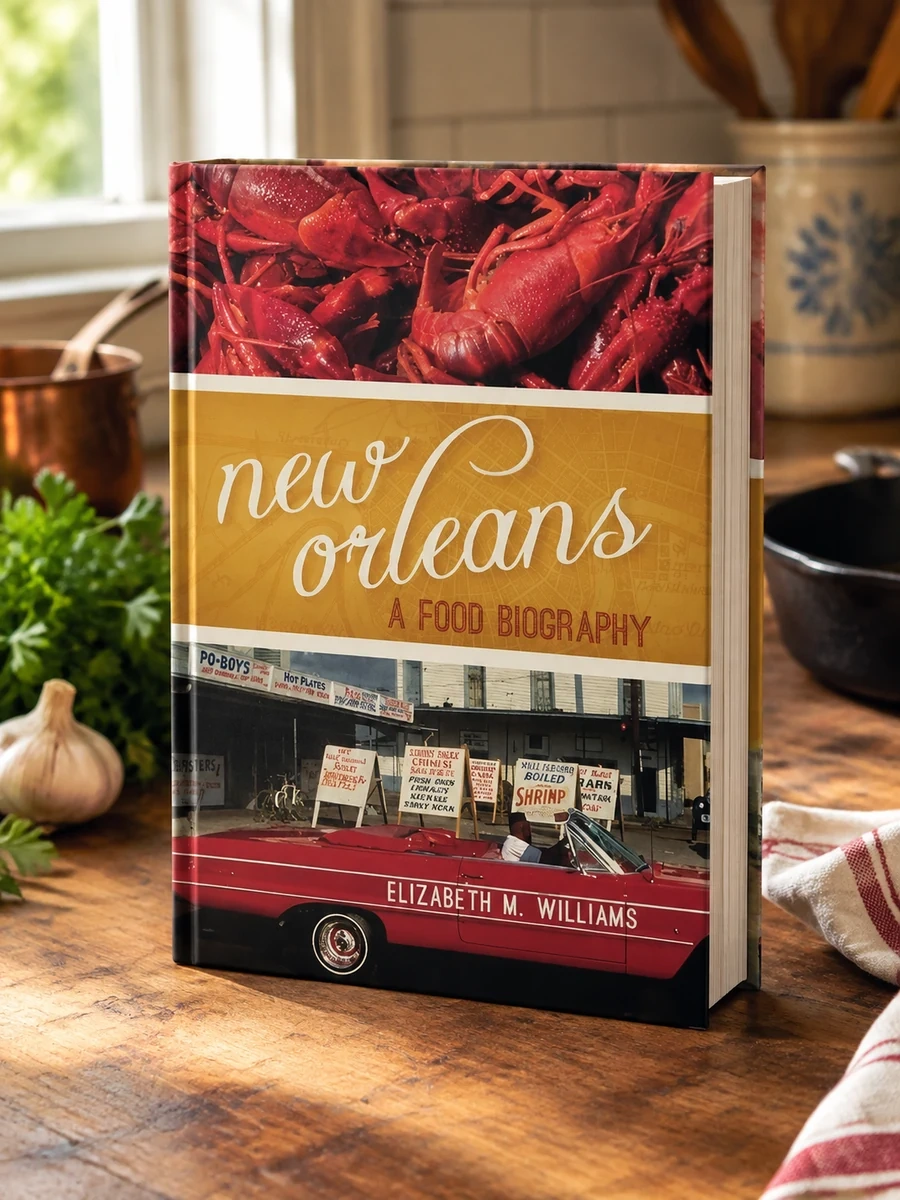
New Orleans: A Food Biography
✍️ Williams, Elizabeth MA historical account of New Orleans' Creole and Cajun food culture by Elizabeth M. Williams.
Williams connects the city’s culinary identity to its broader social and environmental history. The work examines how indigenous resources and immigrant contributions formed the basis of local eating habits. It details the growth of food businesses and the rise of famous dining spots. The author also looks at how residents cook at home and record their recipes in print. This approach offers a comprehensive view of how food defines the region's character over time.
Published in 2012 by Altamira Press, this book situates New Orleans' food culture within the broader context of American South history. It focuses on the period from indigenous times through the development of immigrant communities and modern culinary institutions.


📝 Description: New Orleans: A Food Biography
💎 Expert review
📖 Why choose it
Why this book is worth reading
Readers interested in American regional history, social science, and agriculture will gain a comprehensive understanding of how New Orleans developed its distinct culinary character over time. Authored by Elizabeth M. Williams, native of the city and founder of the Southern Food and Beverage Museum, this historical account moves beyond simple recipes to examine the foundational contributions of indigenous populations and immigrant groups. It traces the growth of local markets, food businesses, and iconic dining spots like Antoine's, while also detailing home cooking habits, regional cookbooks, and famous staples like gumbo, jambalaya, beignets, po'boys, and local drinking culture. It is an essential read for anyone seeking to understand how geography and diverse communities shaped Louisiana's foodways.
⭐ Reader reviews
Reader rating
Elizabeth M. Williams delivers a structured, informative social and environmental history of New Orleans' foodways. By tracing the journey from indigenous resources to iconic establishments, home kitchens, and regional cookbooks, the text offers a detailed exploration of how the city's cuisine was formed. It excels at connecting food habits to broader cultural and commercial developments in the American South. However, this volume is strictly a historical narrative rather than a practical kitchen guide. It will not suit readers looking for modern recipes, step-by-step cooking techniques, or contemporary restaurant reviews. For those seeking a factual, background-rich account of Creole and Cajun food culture, it serves as a valuable and grounded shelf reference.
❓ Frequently asked questions
📖 Who should read this
Readers interested in the social history of New Orleans will appreciate this work. It suits those who view food as a lens for understanding cultural shifts rather than just cooking instructions. Ideal for historians and curious diners seeking context behind regional cuisine.