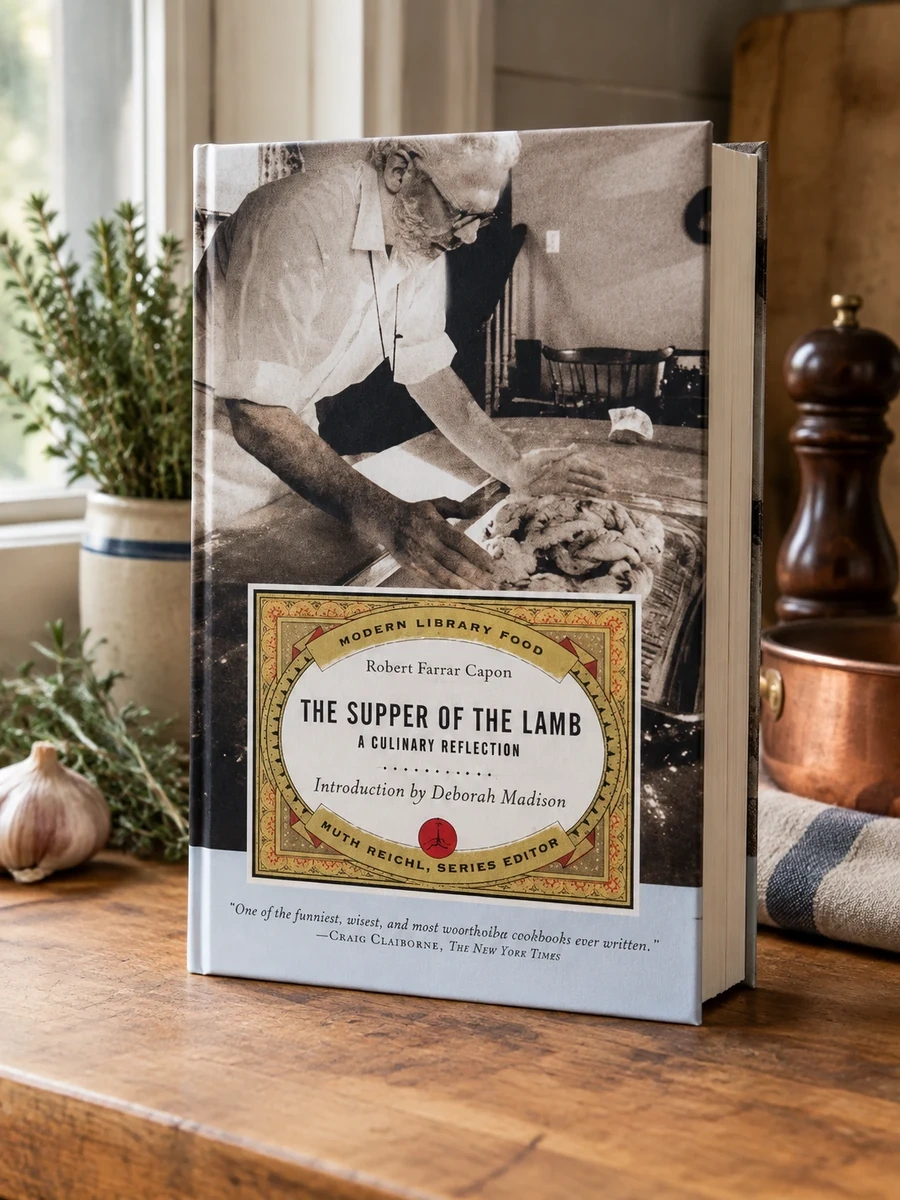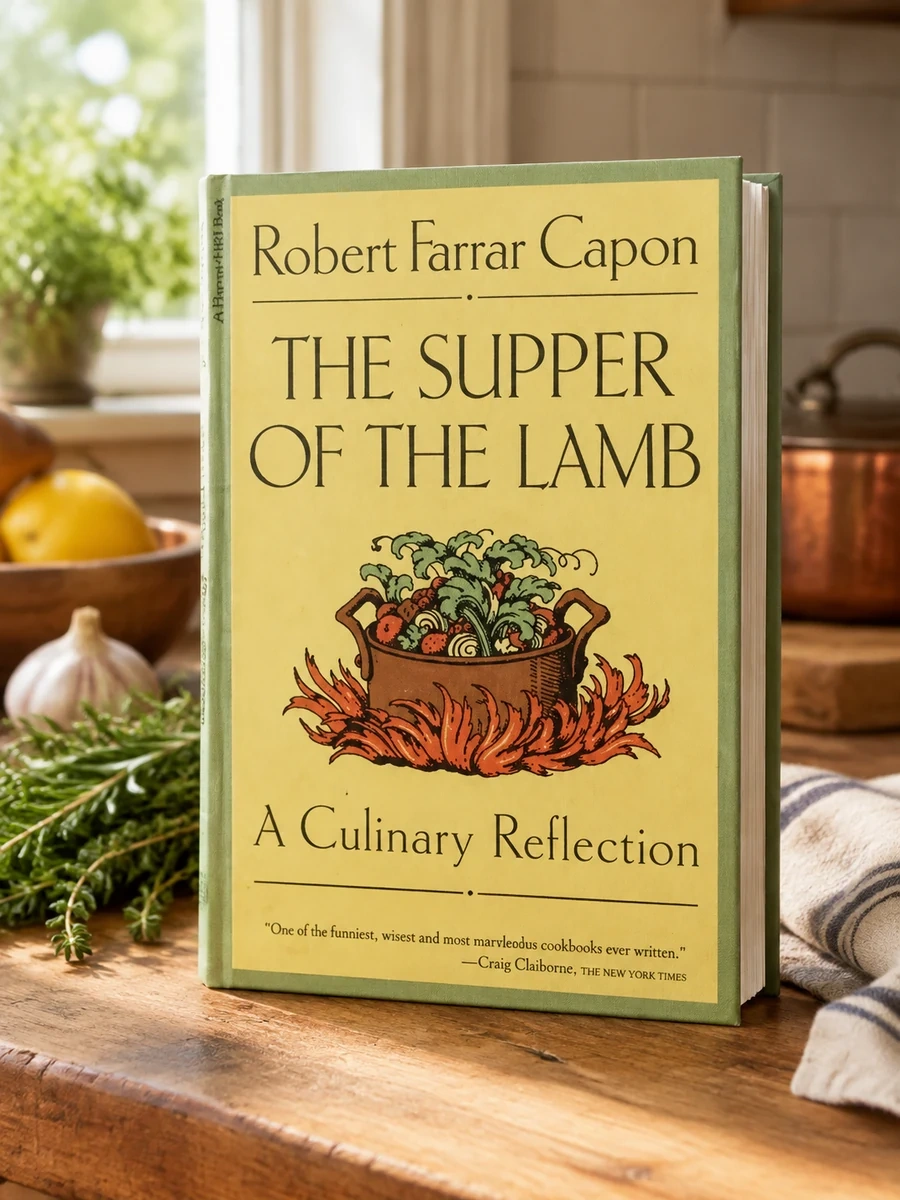
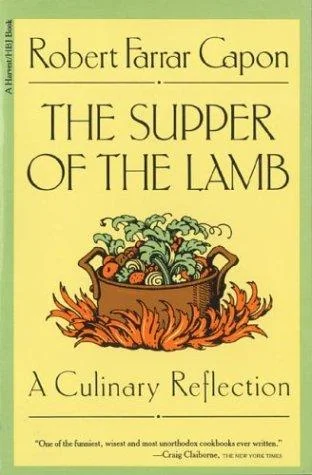
The Supper of the Lamb: A Culinary Reflection
✍️ Capon, Robert FarrarA priest-chef explores the spiritual and culinary links between faith and food through essays and recipes.
Capon uses his dual identity to examine how we prepare and consume meals as acts of devotion. He contrasts the indulgence of festival foods with the resourcefulness required for everyday fial cooking. The narrative draws on traditions of entertaining and gourmet preparation, including specific methods like handling raw food. By discussing topics from poetry to pastry, he frames the kitchen as a space for contemplation. The book does not offer rigid rules but rather offers a perspective on how taste and belief interact. It is ideal for those who appreciate food writing that challenges conventional boundaries between the sacred and the mundane.
Published in 1979 by Harvest Publications, this paperback reprint of a Doubleday edition reflects late twentieth-century American interest in gourmet entertaining and religiously inflected food writing. It sits within a tradition of culinary essays that treat the table as a site for philosophical inquiry rather than mere sustenance.


📝 Description: The Supper of the Lamb: A Culinary Reflection
💎 Expert review
📖 Why choose it
Why this book is worth reading
Readers seeking a profound intersection of faith, philosophy, and gastronomy will find this volume rewarding. It offers a unique perspective for those who view cooking as a spiritual discipline rather than mere sustenance. The book appeals to individuals interested in the historical and cultural significance of meals, particularly how festive indulgence contrasts with ferial resourcefulness. Those who enjoy literary nonfiction that treats eating as both a physical act and a meditative practice will appreciate its intellectual exposition on daily sustenance. It is ideal for enthusiasts of gourmet methods and raw food techniques woven into broader narratives about the table.
⭐ Reader reviews
Reader rating
Capon’s dual identity as priest and chef creates a distinctive voice that challenges conventional cookbook boundaries. While intellectually stimulating, this reflective pace may alienate readers seeking quick, utilitarian meal plans or rigid culinary rules. The text does not offer standard instructional clarity but rather invites contemplation on how taste and belief interact. It is best suited for those who appreciate food writing that explores the philosophical underpinnings of meals. Readers looking for straightforward recipes without spiritual context may find the volume sparse in practical utility, though rich in cultural and historical insight regarding the sacredness of the everyday table.
❓ Frequently asked questions
📖 Who should read this
Readers seeking literary food essays rather than standard recipes. Ideal for home cooks who view meal preparation as a spiritual act. Suitable for those interested in gourmet methods and the intersection of faith and cuisine. Perfect for quiet evenings or reflective moments in the kitchen.