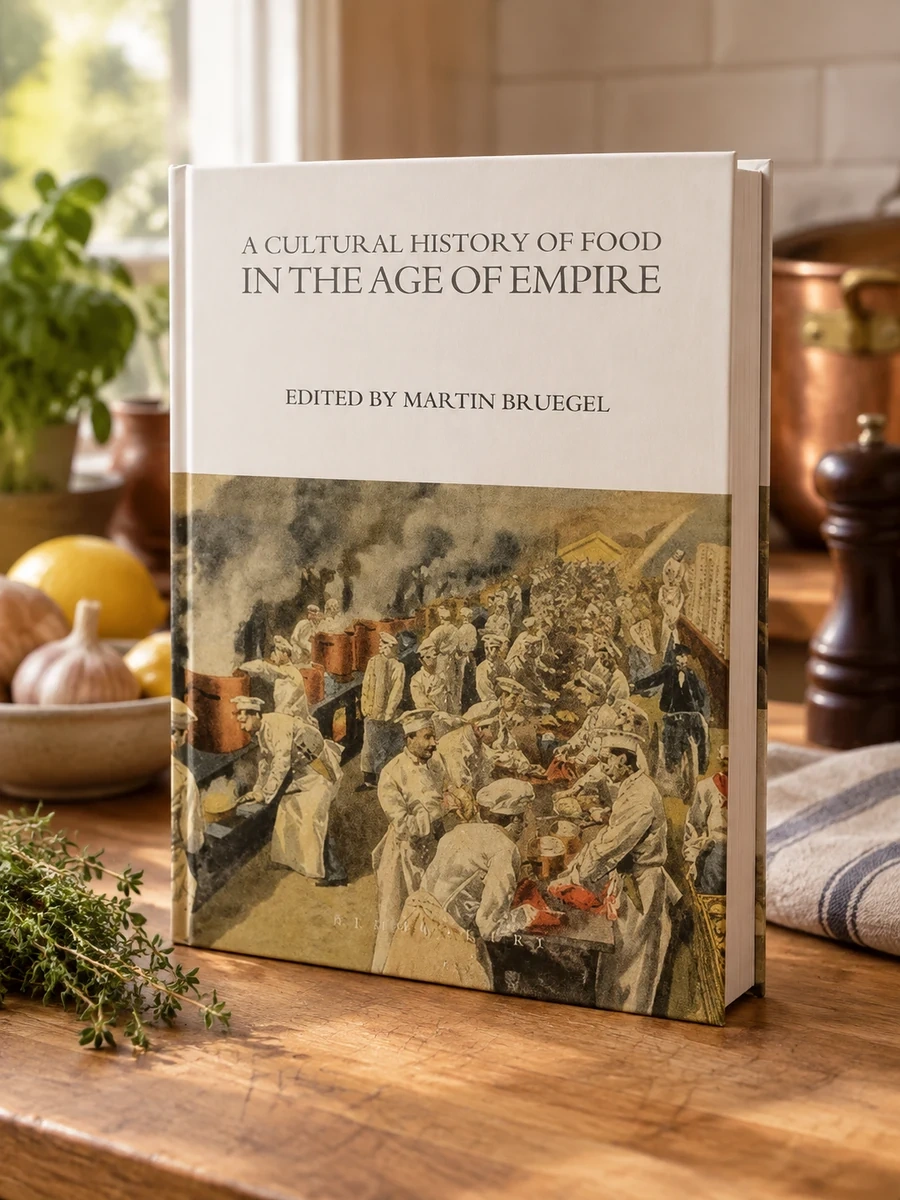
A Cultural History of Food in the Age of Empire
✍️ Bruegel, MartinA scholarly look at nineteenth-century food systems and cultural shifts
Bruegel analyzes the tension between improved food security and persistent famines in the nineteenth century. The text investigates how scientific norms and efficiency became central to understanding nutrition and the body. It also documents the growing interest in gastronomy as a refined activity for the wealthy. The volume connects these trends to broader political and social changes, offering a detailed view of how empire impacted global agriculture and consumption patterns.
This book covers the nineteenth century, a time of extraordinary economic growth in the West. It explores how this period saw the birth of the modern world through changes in how food was produced, consumed, and understood scientifically.


📝 Description: A Cultural History of Food in the Age of Empire
💎 Expert review
📖 Why choose it
Why this book is worth reading
Readers interested in social history, agricultural policy, and the evolution of culinary traditions will gain a structured, comprehensive overview from this volume. It appeals directly to historians and researchers examining the complex interplay between nineteenth-century economic forces, the rise of gastronomy as a luxury pursuit, and shifting scientific understandings of nutrition and the human body. By connecting broader political and social shifts to global agriculture and consumption, the text provides critical insights into how the Age of Empire impacted food systems, kitchen service dynamics, and domestic life.
⭐ Reader reviews
Reader rating
Martin Bruegel delivers a rigorous scholarly investigation into nineteenth-century food systems, tracing the stark paradox between improved food security and persistent famines alongside the emergence of gastronomy for the wealthy. Organized into thematic essays covering safety crises, professional cooking, and cultural representations of food, the volume offers deep historical analysis rather than practical kitchen guidance. Because it focuses entirely on academic inquiry and structural shifts, readers seeking simple recipes or contemporary cooking tips will find this text unsuitable. It stands strictly as a valuable resource for students of social history rather than a casual cookbook.
❓ Frequently asked questions
📖 Who should read this
Scholars and historians interested in nineteenth-century social shifts will find this volume essential. It suits readers analyzing how scientific norms reshaped nutrition and body image during the imperial era. Those studying the intersection of gastronomy, class, and global agriculture will appreciate its detailed examination of food security tensions.