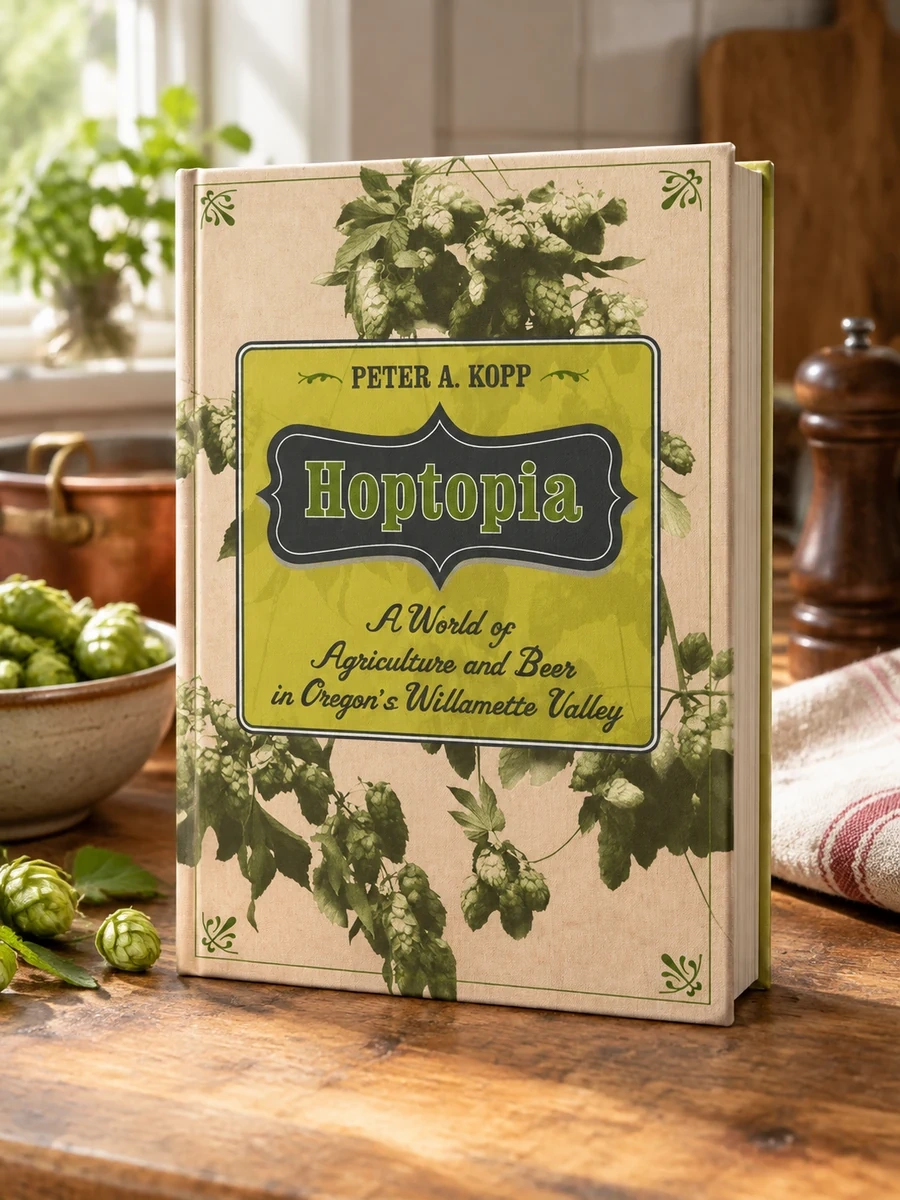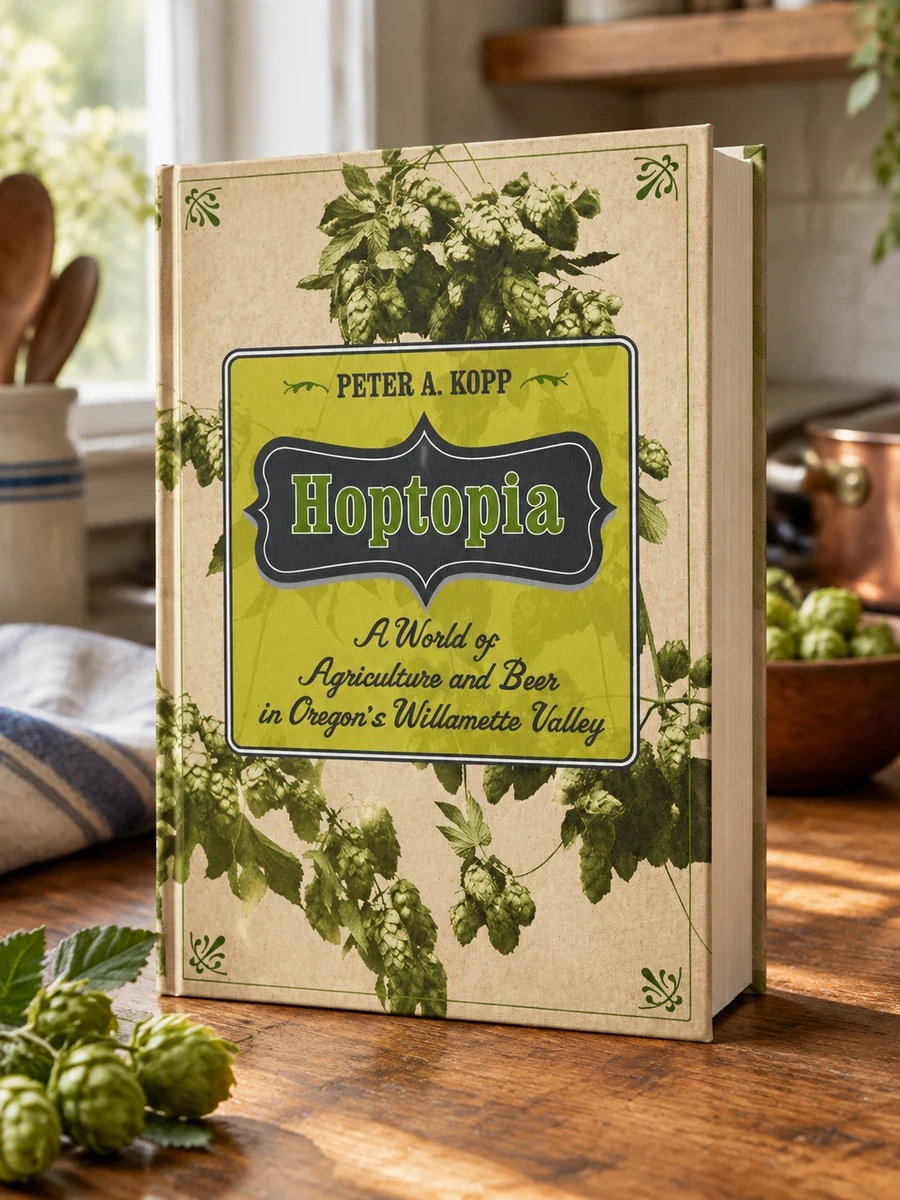
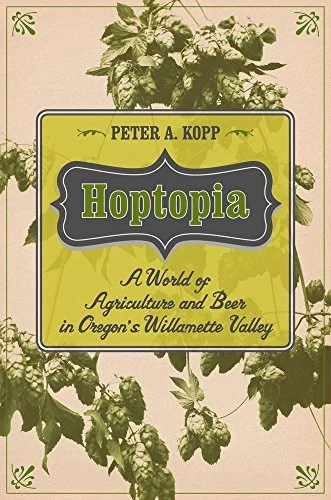
Hoptopia: A World of Agriculture and Beer in Oregon's Willamette Valley Volume 61
✍️ Kopp, Peter AA historical account of how global exchanges shaped Oregon's hop industry and craft beer culture.
This volume positions the common hop as a central character in a story of migration and adaptation. Kopp illustrates how the Willamette Valley became an agricultural Eden by integrating diverse biological and cultural inputs. The narrative highlights the dependency of local farmers on international networks for survival and growth. It challenges the notion of isolated regional success by showing how global trade routes and labor movements defined the area's economic landscape. The book serves as a case study in how local identities are constructed through external connections.
Published in 2016 by the University of California Press, this work sits at the intersection of regional American history and global agricultural studies. It addresses the late nineteenth to early twenty-first centuries, focusing on the Pacific Northwest's role in the broader context of industrial food production and craft revival.


📝 Description: Hoptopia: A World of Agriculture and Beer in Oregon's Willamette Valley Volume 61
💎 Expert review
📖 Why choose it
Why this book is worth reading
Readers interested in the sociological and economic underpinnings of craft beer will find this text invaluable. It moves beyond recipe collections to explore how the Willamette Valley’s status as a hop center was built on global labor and biological networks. Those studying environmental history or the migration patterns of agricultural knowledge will appreciate Kopp’s argument that regional success is dependent on international connections. It offers a nuanced perspective for those who wish to understand the hidden global supply chains behind their favorite beverages, connecting modern consumption to historical labor movements and scientific exchange.
⭐ Reader reviews
Reader rating
This volume is an academic study rather than a practical guide for home brewers or casual readers. While it provides a rich analysis of how global exchanges shaped Oregon’s hop industry, its dense focus on agricultural history and labor studies may alienate those seeking simple brewing instructions or light reading. It does not suit readers looking for recipes or straightforward cultural tourism advice. Instead, it appeals to scholars and serious enthusiasts who enjoy dissecting the complex economic and environmental forces that define regional food systems. The tone is analytical, making it best suited for those comfortable with historical narratives.
❓ Frequently asked questions
📖 Who should read this
Readers interested in agricultural history and regional economics will find this volume essential. It suits those who appreciate how global trade influences local food systems. Ideal for historians, farmers, and craft beer enthusiasts seeking to understand the complex cultural and biological inputs that shaped Oregon's hop industry and its enduring legacy.